
Last updated November 15, 2026
 Wrought iron
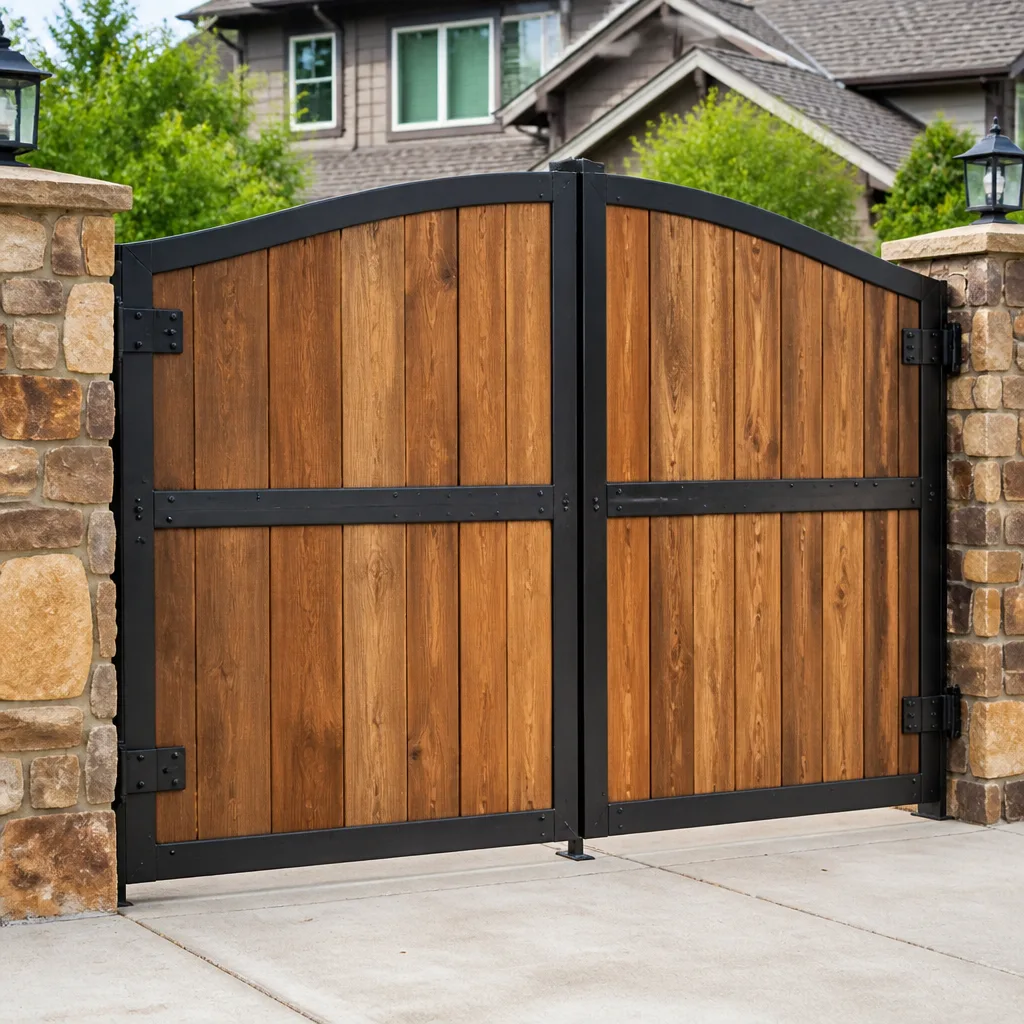 Wood & steel frame
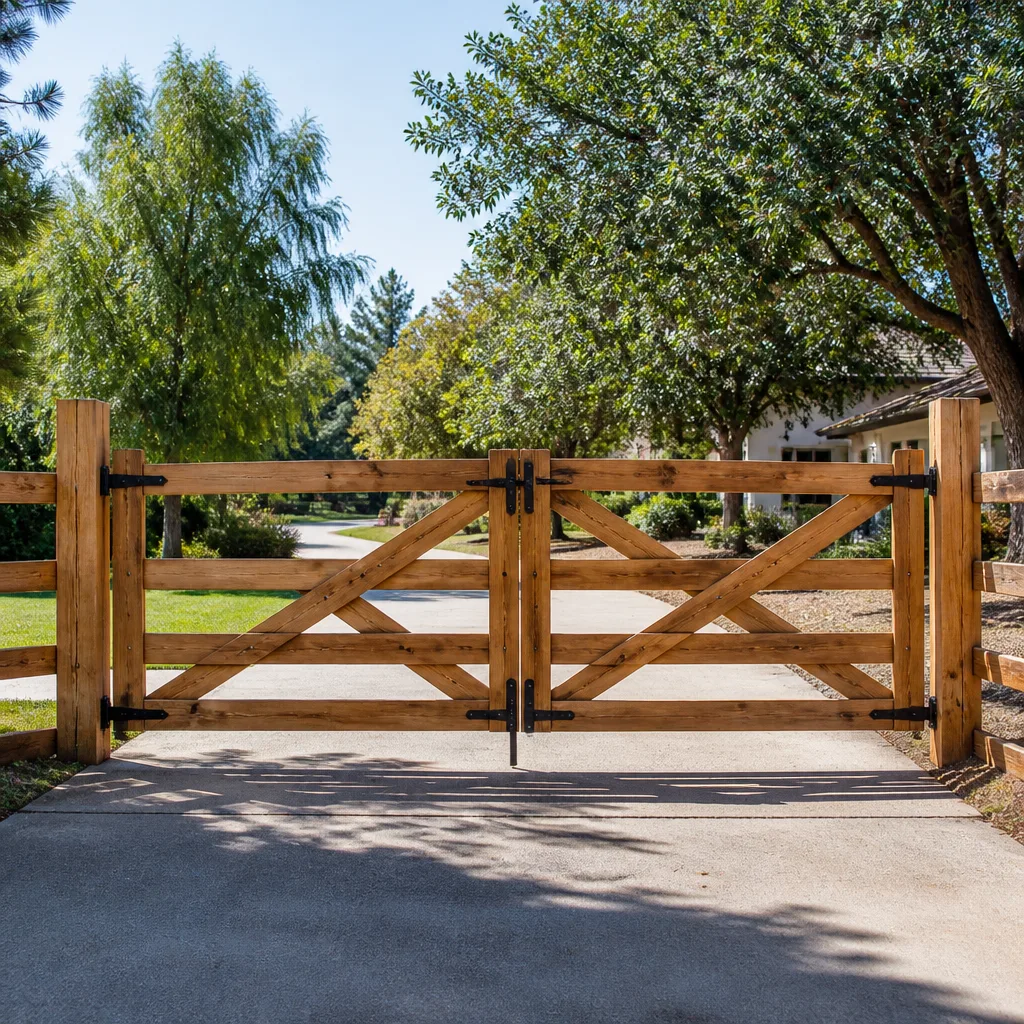 Farm & ranch
 Sliding driveway gates
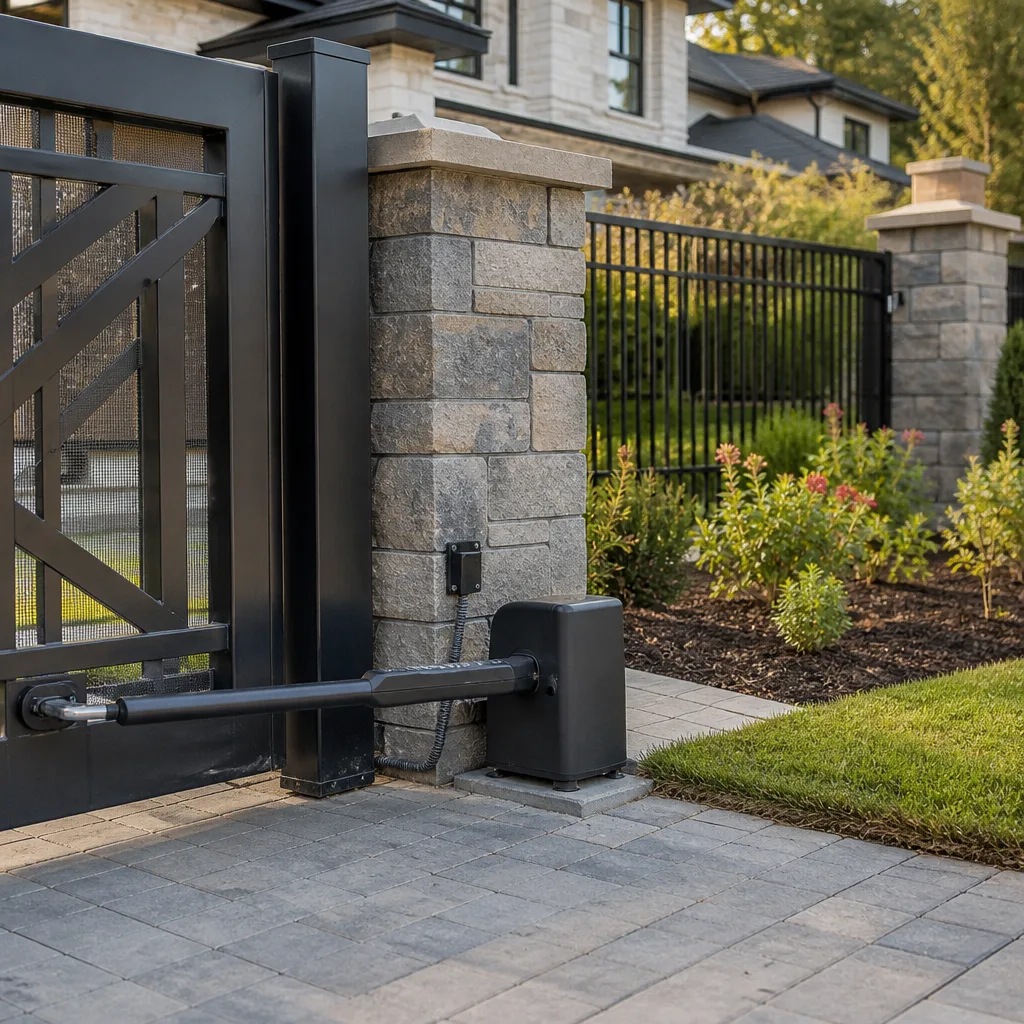 LiftMaster operators
Free on-site gate assessment - hinges, posts, and your LiftMaster or Nice gate operator checked before anything is quoted
The assessment is free and the quote is the invoice.
Get your free estimateGate Repair Maintenance Schedule: What to Do and When
Most gate maintenance advice tells you to do one tune-up a year and call it done. That advice is why so many automatic gates in Buffalo stop working in January, when the temperature drops and the last thing you want is a gate stuck open. The task that prevents more cold-weather failures than any other costs nothing and takes four minutes, but it has to happen in October, not “sometime before winter.” This guide lays out a schedule built around Buffalo’s actual seasons: what to check each month, which lubricants survive sub-zero temperatures, how to record a baseline so a shifted post doesn’t turn into a mystery, and what to write down so a technician can diagnose a problem that only shows up in one season.
Quick Answer
A gate needs more than one annual tune-up in Buffalo. The working schedule is four fixed checkpoints tied to the seasons: pre-winter preparation in October and November (lubrication, battery backup test, hardware tightening), a post-thaw alignment check in March, a storm-season hinge and hardware inspection in June, and a pre-winter repeat in the fall. Between those checkpoints, a four-minute monthly walk-around catches most problems before they become breakdowns. The single highest-value task is lubricating moving parts with a cold-rated product before the first hard freeze, because standard grease stiffens in the cold and strains the operator motor all winter.
Styles & brands we work with
- Wrought iron
- Wood & steel frame
- Farm & ranch
- Sliding driveway gates
- LiftMaster operators
Table of Contents
- Why a Generic 12-Month Calendar Fails in Buffalo
- October and November: The Pre-Winter Checkpoint
- The Right Lubricants for Sub-Zero Temperatures
- March: The Post-Thaw Alignment Check
- June: Storm-Season Hinge and Hardware Inspection
- Recording a Limit Switch Baseline Before Frost Heave
- Testing Battery Backup for Cold-Weather Voltage Drop
- What to Log After Every Maintenance Visit
Why a Generic 12-Month Calendar Fails in Buffalo
A single annual tune-up assumes the climate is mild and the ground is stable. Buffalo is neither. The gate on a typical Buffalo driveway goes through a hard freeze, months of freeze-thaw cycling, heavy snow loads, and a spring thaw that moves the ground under the posts. A gate that gets one service visit in, say, July is entering the worst part of its year with no preparation at all.
The problem is that gate failures are seasonal. They cluster. A stiff operator motor, a limit switch that’s drifted out of position, a hinge that’s worked loose, a battery that passed a load test in September and can’t hold voltage at 10 degrees in January: these are all cold-weather failures. They’re set up months earlier by conditions that don’t show any symptoms until the cold arrives.
We’ve seen this pattern repeatedly in our gate repair work across Buffalo. The gate gets serviced once, runs fine through summer, and then fails in the first cold snap because nobody lubricated the moving parts with a product rated for below-freezing temperatures or tested the backup battery under a realistic cold load. The service was done. It just wasn’t done at the right time, with the right products, or with the right checks.
The schedule below is built around four fixed checkpoints that line up with Buffalo’s seasons, plus a monthly walk-around that takes four minutes. That’s more than most guides recommend, but it’s what the local climate actually demands. Throughout this guide, when we say “schedule,” we mean scheduled preventive work, not a paid plan: every maintenance visit is priced per job after we look at the gate, and the written estimate you get before any work starts is what you pay.
If you’re already dealing with a gate that’s failed, skip ahead to the repair side of the schedule. For a full breakdown of what a repair call covers, see our gate repair page. If the problem is in the motor, control board, or safety sensors rather than the gate hardware, our electric gate repair page covers that work in more detail.
October and November: The Pre-Winter Checkpoint
This is the checkpoint that matters most. Get it done before the first hard freeze, and the gate enters winter with a fighting chance. Skip it, and you’re rolling into January with a system that’s more likely to fail than to hold.
We schedule these visits in mid-to-late October in Buffalo because the window before the ground freezes is short. Once the ground sets hard, some tasks (like post-footing checks and ground-level adjustments) get harder to complete. The October visit is the one where you can still easily reach every component and make corrections before the cold pins everything in place.
Here’s what this visit covers:
- Lubricate every moving part with a cold-rated product. Hinges, rollers, latches, and the operator’s drive chain or screw. Standard lithium grease is the wrong choice for Buffalo; we cover the right products in the next section.
- Test the battery backup under a realistic cold-weather load. A backup that passes in warm weather can fail in January because cold drops the voltage the battery can deliver. A backup that tested fine in September tells you nothing about January unless you test it with cold temperature in mind (see the battery section below).
- Tighten every accessible bolt and fastener. Vibration from daily cycling works hardware loose. Tighten before the cold sets things in place, or you’ll be fighting seized bolts in a January repair.
- Inspect and clean the operator’s tracks, rails, or guide rollers. Debris that collects over summer and fall becomes a mechanical load in winter.
- Test the safety sensors and the reversing function. Cold can affect sensor alignment and sensitivity. Confirm the gate reverses when it should and stops when it should.
- Check the post footings and the gate frame for existing damage or movement. Identifying a compromised footing in October gives you a chance to correct it; discovering it in December means a hard repair window.
- Clear drainage away from the gate area. Standing water that freezes under or near the gate creates a ground-shift risk.
- Write down the current limit switch positions. This is the baseline that lets you restore the settings if frost heave shifts the post over the winter (covered in the next section).
For gates on commercial access control (DoorKing systems, in our experience, are common on Buffalo commercial properties), add a check of the access credentials and the control board for any fault history that’s been logged over the past season.
The Right Lubricants for Sub-Zero Temperatures
This is one of the most common maintenance errors we see on Buffalo gates. A gate that’s lubricated with standard lithium grease in October will run fine through November and start straining the operator motor by February, because lithium grease stiffens in the cold and stops doing its job. The operator has to work harder to force the gate through the motion, and that strain is the mechanical load that shortens motor life.
The right choice for sub-zero temperatures is a synthetic cold-rated lubricant or a dry-film or silicone-based product. Synthetic grease stays flexible at low temperatures in a way that standard mineral-based greases don’t. Silicone-based lubricants work well for hinges, latches, and other small moving parts where a dry film is fine. For the operator’s drive chain or screw, use whatever the manufacturer specifies, and verify that it’s rated for below-freezing temperatures. Never mix brands or types; residues can react and gum up the mechanism.
What to avoid in Buffalo:
- Standard lithium grease for any mechanism exposed to freezing temperatures. It stiffens and causes strain.
- WD-40 as a standalone lubricant. It’s a solvent and water displacer, not a long-term lubricant, and it evaporates quickly. Fine for freeing a rusted part in a pinch; not for ongoing protection.
- Heavy gear oil or motor oil on hinges or rollers. It’s too thick at cold temperatures and attracts dust and grit.
- Petroleum jelly or Vaseline as a cheap substitute. It stiffens in the cold and doesn’t lubricate properly at sub-zero temperatures.
- Mixed products on the same mechanism. Two different lubricant types on top of each other can separate or cause buildup.
A few dollars more for the right product in October is the difference between a motor that lasts the winter and one that needs repair or replacement by spring. If you’re not sure what your gate’s operator requires, tell us the brand and model (we work on LiftMaster, Viking, Ghost Controls, and the other brands listed further down), and we’ll tell you what to use. When in doubt, a cold-rated synthetic is the safer choice in Buffalo.
March: The Post-Thaw Alignment Check
The March visit exists because of frost heave. Buffalo experiences freeze-thaw cycling all winter, and come spring, the ground under and around a gate’s posts has shifted. Posts that have been stable for years can lean or shift by an inch or more, and that movement shows up as a gate that drags, stops short, or reverses out of nowhere.
In our experience, most post-cold gate alignment problems are not operator failures at all. They’re a mechanical problem: the gate hasn’t moved, the ground has. A technician who isn’t paying attention to alignment will start adjusting the operator, making the underlying ground-shift problem worse. The March tune-up catches this before it becomes a bigger problem.
The post-thaw checkpoint covers:
- Walk the full gate path and look for dragging, scraping, or catching. Any new sound or resistance that wasn’t present in the fall points to a post that’s shifted or a footing that’s moved.
- Check each post for leaning or loosening. A visual check plus a gentle pressure test at the post surface (not forcing it) tells you whether anything has shifted since the pre-winter baseline.
- Restore or re-set the limit switches. If the post has shifted, the gate’s open and closed positions shift with it. Re-set the limit switches to match the new positions. If the post hasn’t shifted, restore them from your recorded baseline to make sure nothing has drifted from the cold-weather vibration.
- Inspect footings for frost heave damage. Look for cracking, rising, or separation around the base of the post. If a footing looks compromised, get it looked at before you keep cycling the gate. A gate on a failing footing can be a crush risk.
- Re-lubricate the moving parts with the same cold-rated product. Winter has consumed some of the lubricant you applied in the fall.
- Test the operator’s safety systems again. Snow and ice buildup through the winter can impact sensors and edge devices. Clear any debris and re-test.
- Check the battery backup. Winter is the toughest test a battery backup gets. If the system cycled on backup during a power outage and it held, note it. If it didn’t hold, replace it.
- Note any post-shift in your log. “Post shifted 1/2 inch in March, realigned limit switches, monitor” is exactly the kind of note that saves a future technician from wasted diagnostic time.
June: Storm-Season Hinge and Hardware Inspection
Buffalo gets serious storms in summer: high winds, heavy rain, and the occasional violent thunderstorm. A gate is a large surface area on a post-and-hinge assembly, and sustained wind gusts put hours of heavy load on the hinges and mounting hardware every season. The June visit is designed to catch hardware problems before a storm does.
We schedule this check in early-to-mid June, before storm season peaks in Buffalo. On a commercial property, the same logic applies; the access-control gate at a business entrance or parking area gets the same storm load, and a gate that fails during a storm is worse for a business than for a homeowner.
The June checkpoint covers:
- Inspect every hinge for wear and looseness. Wind load works hinges and their fasteners. Tighten and lubricate each one. Replace any hinge showing significant wear or deformation.
- Test the gate under load. With the operator disconnected, manually swing or slide the gate through its full range. It should move smoothly, without binding, and it should stop without excessive force. Any change since the pre-season check is worth noting.
- Check the operator mounting points. The operator bracket and mounting hardware take the same wind load as the gate. Confirm nothing has loosened.
- Inspect for damage from any spring or early-summer storm. Gates take impact damage from hail (rare in Buffalo) less often than from wind-blown debris. Look for dents, bends, and any strike damage.
- Test the safety reversing system and photoelectric sensors. Dirt, debris, or misalignment from spring cleaning can affect safety sensor functions.
- Clean and inspect the operator’s control enclosure. Confirm it’s dry, sealed, and without corrosion.
- Test the manual release. You want it to work in an outage, not to discover it’s seized when you actually need it.
- Re-check limit switch positions. If frost heave settled in March, some drift can still show up by June. Confirm the settings are still where they should be.
Recording a Limit Switch Baseline Before Frost Heave
This is a task almost no general home maintenance guide mentions, and it’s the one that saves the most time and money in Buffalo. Limit switches tell the operator where the gate’s fully open and fully closed positions are. When a gate post shifts (from frost heave, from wind load, from footing settling), the gate’s physical position changes, but the limit switch positions stay where they were. That mismatch is what produces a gate that stops short, overruns, or reverses in the middle of travel.
Recording a baseline before winter gives the March and June technician a reference point. Instead of guessing what the correct positions should be, the technician can compare the current positions to the recorded baseline and know exactly how far things have drifted.
Here’s how to record a limit switch baseline:
- Note the operator brand and model. The exact recording method depends on the system. For example, Viking and Ghost Controls operators differ in how limit switches are adjusted and documented, and DoorKing access-control systems have their own interface.
- Cycle the gate through a full open-close-open sequence. Confirm the gate stops in exactly the intended positions on both ends. Take a photo of the gate’s physical stop positions at each end.
- Access the limit switch adjustment points. Depending on the operator, this may be a mechanical cam system, a set of digital settings, or a knob-and-mark setup. Document whatever marks or numbers indicate the current positions with a photo.
- Write the positions into your maintenance log. “Fully-open limit: [indicator value]. Fully-closed limit: [indicator value]. Baseline recorded [date].” Photos plus written notes are the strongest record.
- Repeat the check at the March and June tune-ups. If the values match the baseline, nothing has drifted. If they don’t, that’s your sign that the gate’s physical position has moved and needs correcting.
Any time a technician comes out for a repair or tune-up, hand over the log. Even if the operator brand is unfamiliar, the log saves diagnostic time and tells the technician which positions are “correct” from the customer’s point of view. It’s also useful for spot-checking: if the gate opens to a slightly different position than it did in the fall, the log confirms it.
If you don’t have a baseline yet, the pre-winter visit is the time to make one. Our technicians have up to 15 years of experience across nine leading gate and operator brands, including LiftMaster, FAAC, BFT, Linear, Viking, Ghost Controls, DoorKing, Elite, and Mighty Mule. We record the baseline on the first visit so future visits have something to compare against.
Testing Battery Backup for Cold-Weather Voltage Drop
A battery backup that tested fine in September can still fail in January. This is one of the most misunderstood parts of gate maintenance, and it’s why a battery check on a mild fall day tells you almost nothing about how the backup will perform when you actually need it.
The reason is cold-temperature voltage drop. A battery’s ability to deliver current drops as temperature drops. A backup battery that reads healthy at 70 degrees Fahrenheit can deliver meaningfully less voltage at 10 degrees, and in some cases can’t deliver enough to cycle the gate at all. A gate’s operator cycles the gate under load, which draws a lot of current. That’s the exact moment a cold-stressed battery fails.
Standard battery load testers use an indoor-room-temperature load. That’s not a realistic test for a gate that runs in winter. The test that matters for Buffalo is a cold-weather test, and the right protocol looks like this:
- Test the battery in the cold part of the year, not just in fall or spring. The most meaningful battery backup test for Buffalo is a January test, or a test after a cold spell that’s brought temperatures well below freezing.
- Test under load. Disconnect the operator from AC power, cycle the gate through at least one full open-close sequence on backup, and time it. A battery that passes load testing in warm weather but cycles slowly or fails to complete a cycle in the cold is failing.
- Check the battery’s rated temperature range. The manufacturer’s specifications tell you the temperature range where the battery is rated to deliver its full rated capacity. If your Buffalo winter sits near or below that range, the battery’s real-world capacity is lower than its rated capacity.
- Note the battery age. Batteries decline over time. A battery that’s been in service for several seasons is more susceptible to cold-temperature voltage drop than a new one.
- Log the results. “Battery backup test: -5°F, cycled gate in 27 seconds under load, passed.” Then compare to the previous test. If the cycle time is increasing or the battery isn’t holding, replace it before winter.
Do not assume a battery is fine because it passed a test months ago. A gate that loses power during a winter storm and has a failed backup is a gate stuck open or closed until the power comes back, or until a technician comes out to release it. Testing the backup in the cold is what tells you whether the system is actually ready for winter.
Gate operators on the newer side use smart battery management features that can warn you before a cold-related failure. If you’re not sure what your operator supports, call us with the brand and we’ll tell you what to look for. We answer 24/7.
What to Log After Every Maintenance Visit
A maintenance log is the single most useful document a gate owner can keep. Intermittent gate problems that only show up in one season are some of the hardest things to diagnose because the failing part looks fine in the shop; it only misbehaves in the cold, or under a particular wind load, or on a particular day of the week. A maintenance log turns a mysterious intermittent into a documented pattern.
The log doesn’t need to be formal. A notebook or a note on a phone works. What matters is consistency. Here’s what to record after every tune-up, repair, or system check:
- Date and weather at time of test. “January 14, 15°F, overcast” is worth more than “January.” Cold-related problems need cold-weather context.
- Gate brand and operator brand and model. LiftMaster, FAAC, BFT, Linear, Viking, Ghost Controls, DoorKing, Elite, and Mighty Mule are the brands we work on. Note which one is on your gate.
- What was checked and what was found. Lubricant applied, hinges tightened, limit switch positions, safety sensor test result, battery backup result.
- Any adjustment made. If a limit switch position was changed, note the new value and the reason. If a hinge was replaced, note it.
- Any observed damage, movement, or wear. Note anything that looks like it’s starting to fail, even if it’s not failing yet. “Right hinge shows early wear, monitor” saves a future technician time.
- Battery backup test result with temperature noted. “Backup tested under load at 20°F, cycled gate successfully in 30 seconds, passed.” Then compare against the next test.
- Who did the work. If a technician did the tune-up, note who. If you did it, note that.
When you call for a repair, have the log ready. If you can say “the gate failed on the cold morning of January 14, the battery was last tested in November at 70°F,” a technician has a much better starting point for diagnosis than a customer who can only say the gate stopped working. It also helps a technician avoid recommending the wrong repair.
A log that covers several seasons is what tells you whether your gate is in a slow decline or just had a bad season. When the log shows a pattern (a hinge that needs tightening every season, a battery that’s slowly losing cold-weather performance), it’s time to address the underlying problem, not to keep patching it. Our technicians have up to 15 years of experience with these patterns and can tell the difference between a part that needs service and a system that needs replacement.
Common Mistakes to Avoid
- Doing one annual tune-up on a generic schedule. A single mid-summer appointment leaves the gate unprepared for Buffalo’s cold season. The gate needs at least four seasonal checkpoints plus a monthly walk-around to enter winter in good shape.
- Using standard lithium grease on the gate mechanism. It stiffens at sub-zero temperatures and strains the operator motor. Use a cold-rated synthetic or silicone-based product instead.
- Skipping the October visit because the gate “is working fine.” Most cold-weather failures are prepared months in advance by conditions that don’t show symptoms until the cold arrives. “Working fine” in September tells you nothing about January.
- Not recording a limit switch baseline before winter. Without a baseline, the March technician can’t tell what’s drifted and what’s correct. Take photos and write down the positions in the fall.
- Assuming a battery backup that passed in September will pass in January. Cold-temperature voltage drop is the failure mode that matters. Test the backup in the cold, under load.
- Ignoring a post that’s shifted after the thaw. A gate on a shifted post is a crush risk, and readjusting the operator to compensate makes the underlying problem worse. Fix the alignment before cycling the gate.
- Not keeping a maintenance log. Intermittent seasonal problems are hard to diagnose without one. The log is what separates a 20-minute diagnostic from hours of wasted trial-and-error.
See the difference
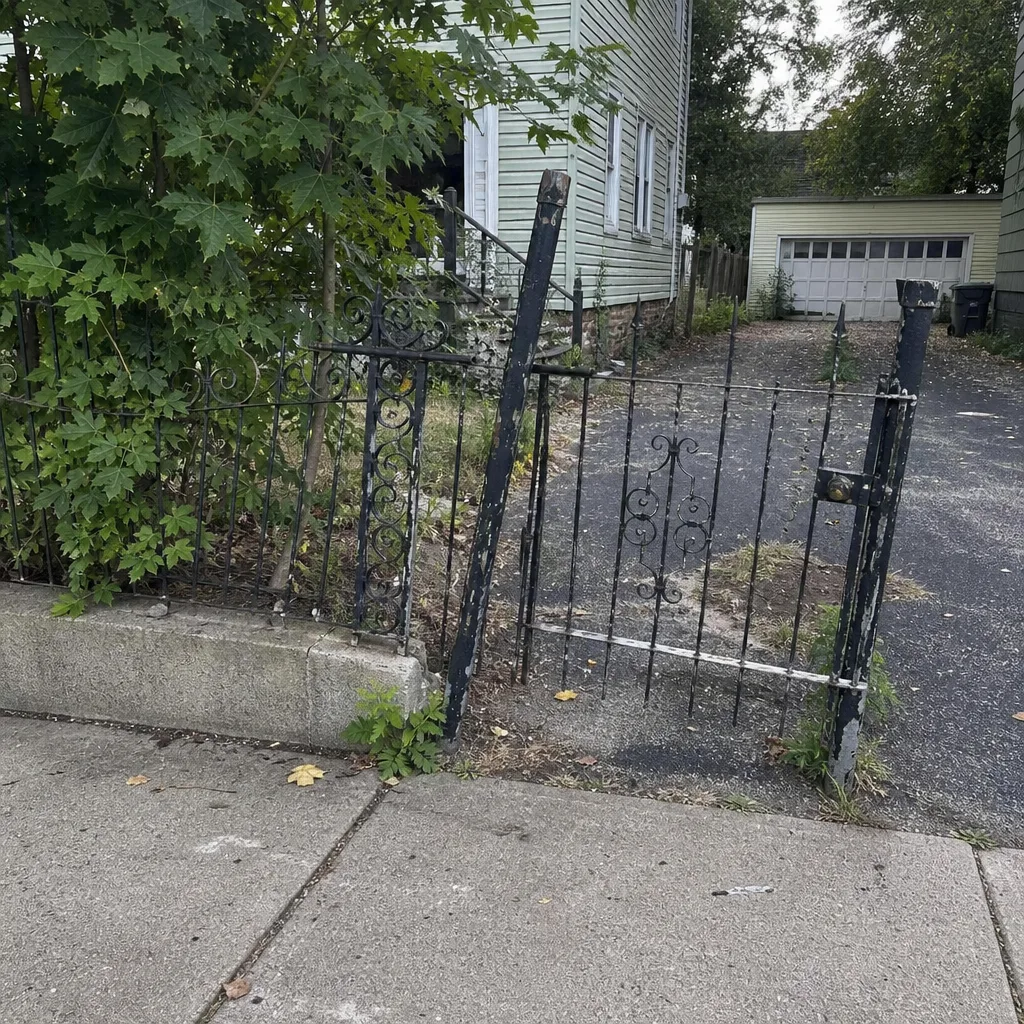 Before
 After
 Before
 After
 Before
 After
When to Call a Professional
Some tasks are safe to do yourself, and others aren’t. The gate specialist call is the right one when the work involves the operator’s motor, control board, wiring, or power supply, or when the gate’s post and footing show movement. A gate post that has shifted is a crush hazard; a gate that fails to reverse is a safety hazard; a power run to a gate is an electrical hazard. These aren’t jobs to learn on.
Call a professional if:
- A post has visibly shifted, is leaning, or has cracked around the footing.
- The operator fails, smokes, or makes a new grinding or clicking noise.
- The battery backup test fails and you can’t determine whether it’s a battery issue or a charger issue.
- The safety reversing system or safety sensors are not working, or you can’t confirm they’re working.
- Any wiring, power supply, or control board work needs to be done.
- The gate has an intermittent problem that shows up seasonally and hasn’t been resolved.
We offer free estimates in Buffalo, and we’ll tell you exactly what’s wrong and what it takes to fix it before any work starts. Call (877) 283-9515. We answer 24/7. Fast dispatch from 7am to 7pm, Sunday through Friday.
Frequently Asked Questions
At least four times a year in Buffalo: a pre-winter checkpoint in October or November, a post-thaw alignment check in March, a storm-season inspection in June, and a repeat pre-winter tune-up in the fall. A four-minute walk-around monthly catches problems between checkpoints. A single annual tune-up isn’t enough for Buffalo’s climate because the gate has to handle a hard freeze, months of freeze-thaw cycling, and heavy snow loads.
A cold-rated synthetic grease or a silicone-based lubricant. Standard lithium grease stiffens at sub-zero temperatures and strains the operator motor. Synthetic greases stay flexible at low temperatures. For hinges and small parts, silicone-based dry-film lubricants work well. For the operator’s drive chain or screw, use whatever the manufacturer specifies, and confirm it’s rated for below-freezing temperatures. Call us if you’re not sure which product to use on your brand.
Test it in the cold, under load. Disconnect AC power, cycle the gate through a full open-close sequence, and time it. A battery that reads healthy at 70 degrees can fail at 10 degrees because cold drops the voltage it can deliver. Test in January, or after a cold spell, so you’re checking the battery in the conditions where it’ll actually be used. If it cycles slowly or fails to complete a cycle, replace the battery before winter.
A limit switch baseline is a written and photographed record of the gate’s fully-open and fully-closed positions, made before winter. It matters because when a gate post shifts from frost heave, the gate’s physical position changes but the limit switch positions don’t. Without a baseline, the technician has no way to tell what’s drifted. With a baseline, the technician can quickly restore the correct settings or identify that the post has shifted and needs alignment work.
Lubrication, tightening accessible fasteners, and cleaning the operator tracks are safe to do yourself. Anything involving the motor, control board, wiring, power supply, safety sensors, or a post that has shifted should be handled by a professional. A shifted post is a crush hazard. A safety reversing system that’s not working is a hazard. Power and wiring work is an electrical hazard. If in doubt, call us for a free estimate.
We work on your brand. We service LiftMaster, FAAC, BFT, Linear, Viking, Ghost Controls, DoorKing, Elite, and Mighty Mule, and we’re independent of those manufacturers. We repair and service whatever gate system you currently have installed, and we won’t recommend replacement just because a system is unfamiliar. Call (877) 283-9515 for a free estimate.
The Bottom Line
Buffalo’s climate doesn’t reward a generic one-tune-up-a-year schedule. Frost heave shifts posts, cold temperatures stiffen standard grease and drop battery voltage, and storms in summer load hinges past their rated capacity. The schedule that actually protects your gate runs four fixed checkpoints a year: pre-winter preparation in October and November, a post-thaw alignment check in March, a storm-season hardware inspection in June, and a repeat pre-winter tune-up. Record a limit switch baseline before winter, test the battery backup in the cold under load, and keep a maintenance log so seasonal problems don’t stay mysteries. If you’re in Buffalo and want a schedule built around your gate, Buffalo is where our work is grounded, and Buffalo Gate Repair is one call away.
Call (877) 283-9515 for a free estimate. We answer 24/7. Fast dispatch from 7am to 7pm, Sunday through Friday. Our technicians have up to 15 years of experience, and every estimate is written and agreed before any work starts, so you know the price before we touch the gate.
Written by the team at Buffalo Gate Repair.