
Last updated November 15, 2026
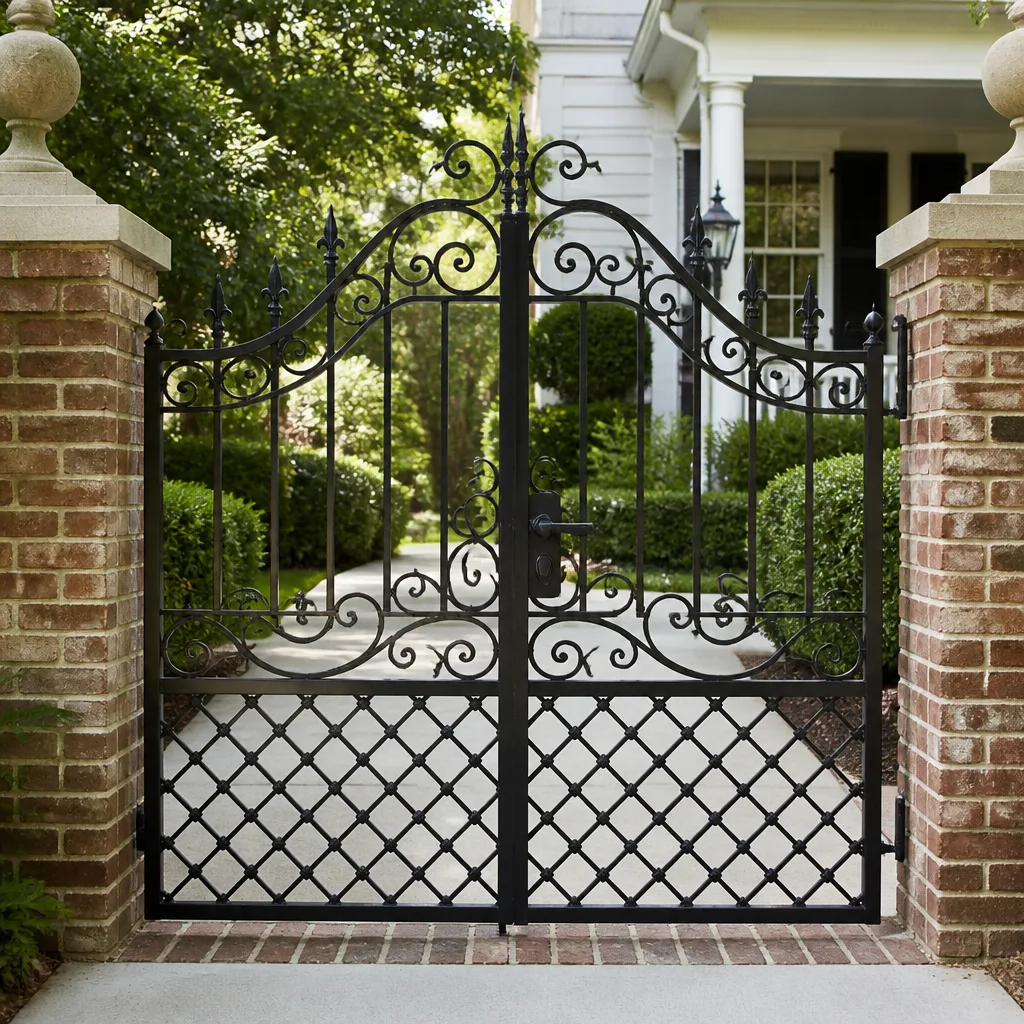 Wrought iron
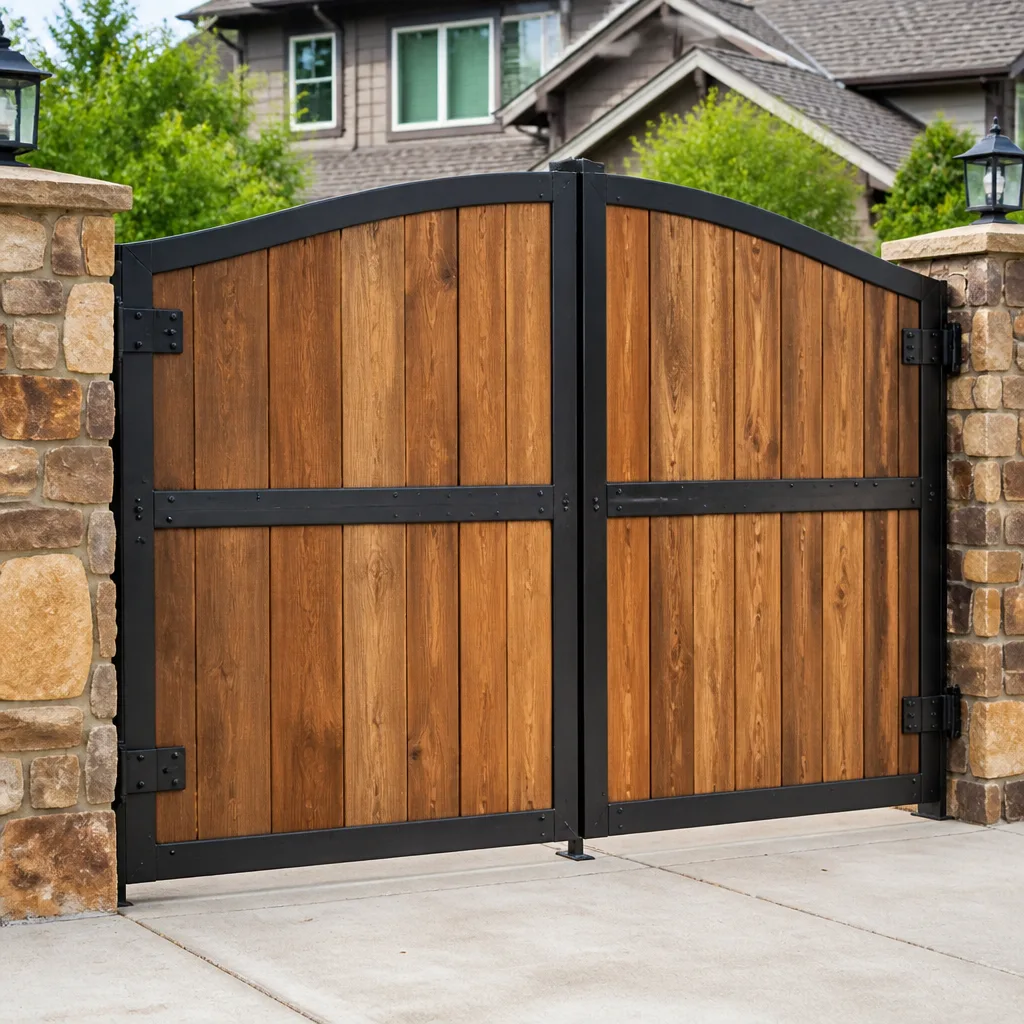 Wood & steel frame
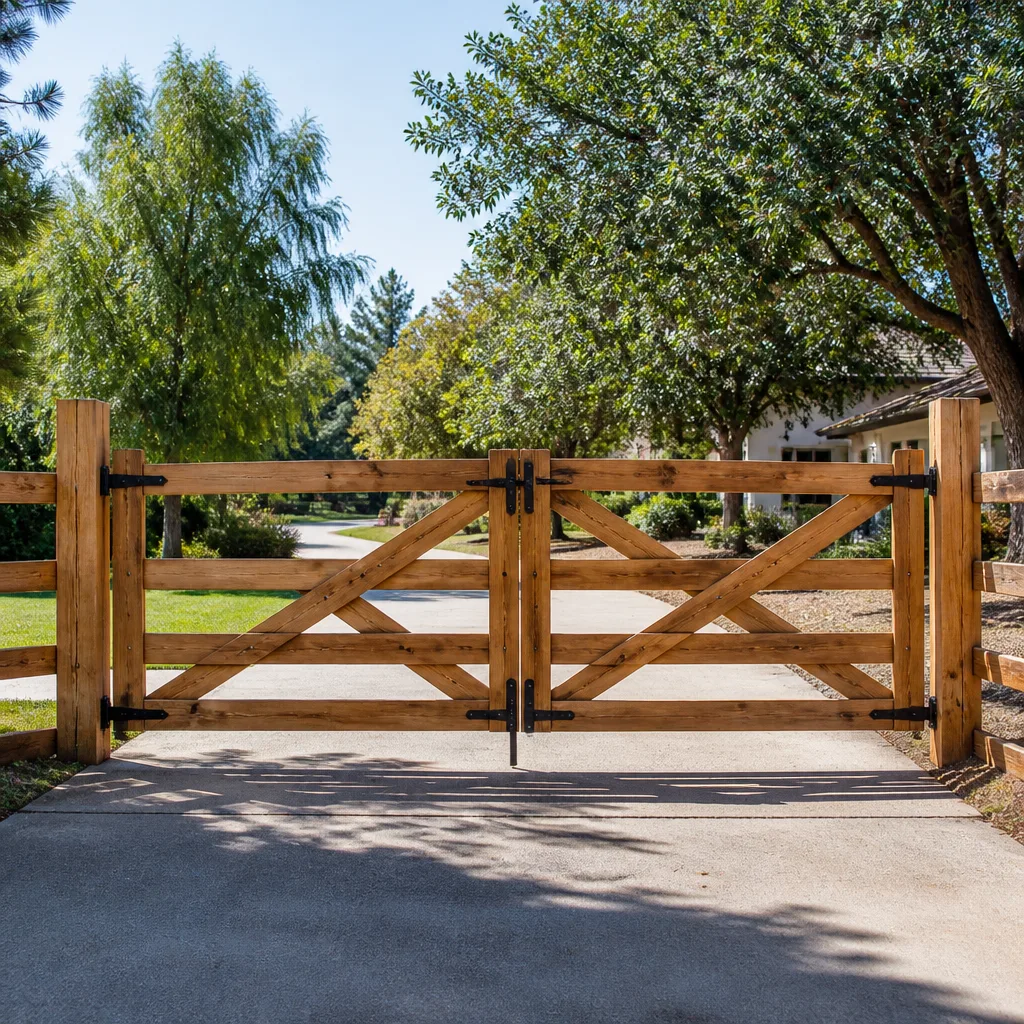 Farm & ranch
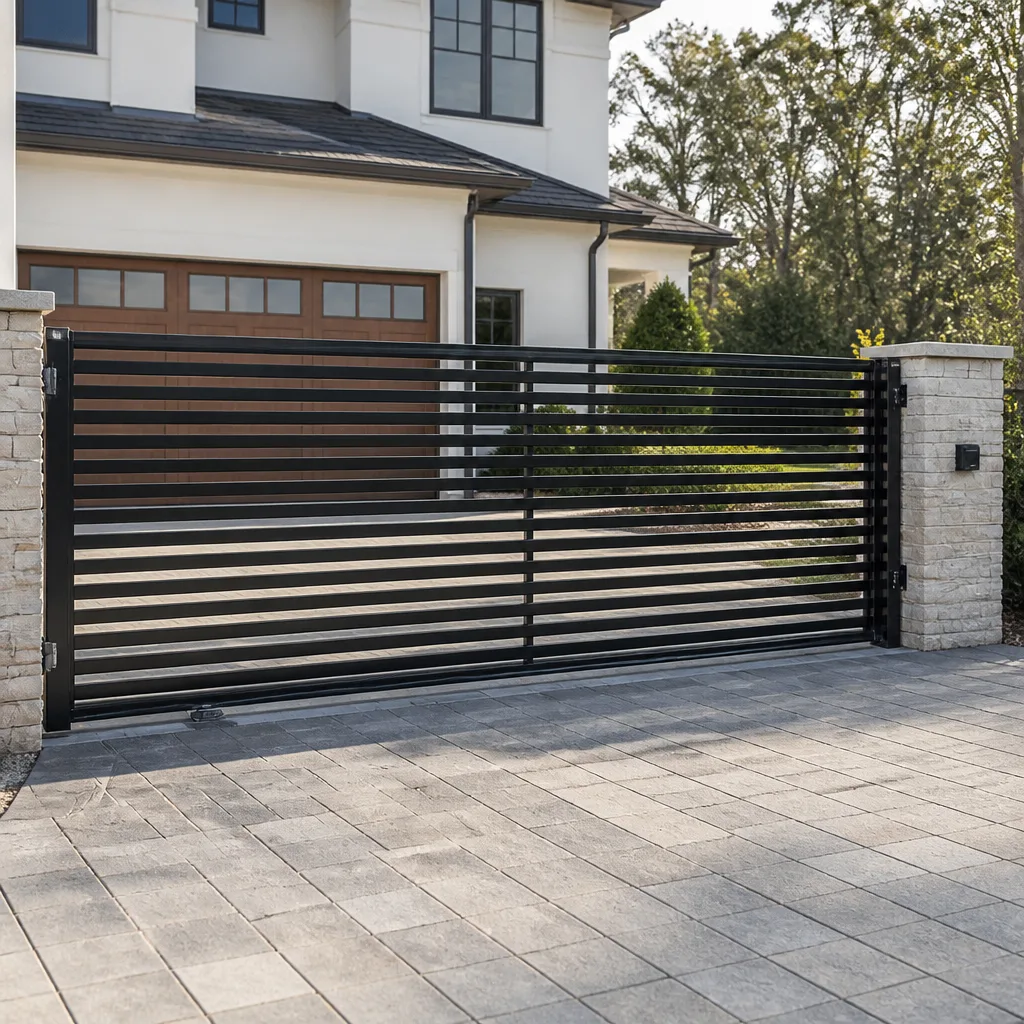 Sliding driveway gates
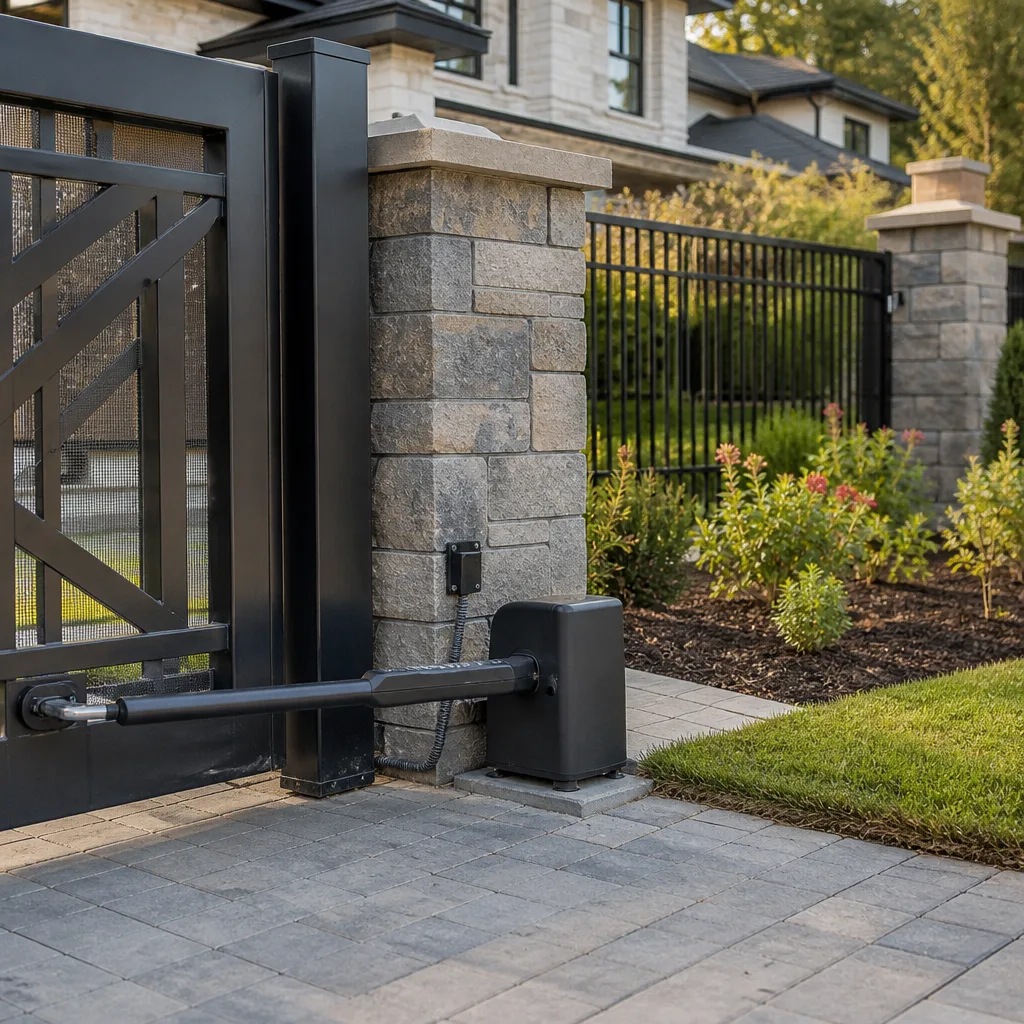 LiftMaster operators
Free on-site gate assessment - hinges, posts, and your LiftMaster or Nice gate operator checked before anything is quoted
The assessment is free and the quote is the invoice.
Get your free estimateGate Repair Permits, Codes & Inspections in Buffalo, NY: What You Need to Know
Unpermitted gate operator installations are one of the most common property disclosure surprises in Erie County real estate transactions. Not because owners skipped permits deliberately, but because their contractor told them none were needed. Here’s the part that catches people off guard: swapping a dead motor on an existing gate can pull in New York State electrical permitting requirements, while rebuilding a sagging hinge almost never does. The line between those two jobs is what this guide is about. You’ll learn where gate work crosses from maintenance into permitted construction in Buffalo, how City of Buffalo and Erie County jurisdiction differ, when a survey becomes necessary, and how to sort out an unpermitted gate before a sale.
Quick Answer
In Buffalo, NY, a gate repair that restores existing mechanical parts usually needs no permit, but installing or replacing a motorized gate operator typically requires an electrical permit because it involves a new or altered power connection. Structural changes to the gate, posts, or fencing near a property line may also require a building permit and, in some cases, a survey to confirm setback compliance. Requirements vary between the City of Buffalo and surrounding Erie County towns, so confirm with the local building department before work starts.
Styles & brands we work with
- Wrought iron
- Wood & steel frame
- Farm & ranch
- Sliding driveway gates
- LiftMaster operators
Table of Contents
- Where Gate Work Crosses the Permit Line in New York
- City of Buffalo vs. Erie County: Who Has Jurisdiction
- Why Gate Operators Trigger Electrical Permits
- Setbacks, Surveys, and Property Lines
- HOA Overlay Rules Around Buffalo
- How to Permit an Existing Gate Before You Sell
- What an Inspection Actually Checks
- Repair or Replace: How Permits Affect the Decision
Where Gate Work Crosses the Permit Line in New York
Most gate work in Buffalo is maintenance, and maintenance doesn’t need a permit. When the work changes the structure, the power supply, or the footprint, it generally does. That’s the short version. The useful version is knowing which bucket your job falls into before anyone shows up.
Under New York State building and electrical code as administered locally, the dividing line centers on whether you’re restoring what exists or creating something new or altered. A gate that won’t latch, a hinge that’s pulling loose from a post, a roller that’s jumped the track on a slide gate: these are repairs. A new operator wired into your panel, a taller gate, a wider opening, or posts moved closer to a property line: these are permit-territory projects.
Here’s the practical breakdown we walk Buffalo homeowners and property managers through:
- Usually no permit: hinge and roller replacement, latch adjustment, track realignment, replacing a control board or remote receiver with a like unit, tightening or replacing safety sensors on an existing circuit.
- Usually a permit: installing a new automated operator, replacing an operator with a different model that changes the electrical load or wiring, running a new power feed to the gate location, adding a pedestal or keypad with new conduit.
- Varies by municipality: replacing a gate leaf of the same size and style, changing post footings, adding height to an existing gate.
One thing worth saying plainly: the permit question is separate from the safety question. Gate operators are powerful machines, and the wiring, safety edges, and photo-eye systems on them are not a homeowner project. We recommend a trained technician for anything involving the operator’s power or its safety devices, regardless of what the permit office requires.
City of Buffalo vs. Erie County: Who Has Jurisdiction
Buffalo sits inside Erie County, but that doesn’t mean one office handles gate and fence permitting across the region. The City of Buffalo issues its own permits through its own building department. Towns and villages outside the city, like Amherst, Cheektowaga, Tonawanda, West Seneca, and Hamburg, each run their own permitting process with their own forms, fees, and review timelines. Unincorporated areas sometimes fall to the county or the town, depending on the topic.
What this means for you in practice: a gate contractor who tells you “no permit needed” based on how it works in one town may be flat wrong two miles away. The safest move is to call the building department for the specific address before work begins. Ask two questions: does this project require a permit, and does it require a plot plan or survey.
In our experience working throughout the Buffalo area, the differences that matter most are:
- Front yard vs. back yard. Many local codes are stricter about gates and fences in front setbacks and corner-lot sight triangles than behind the house.
- Corner lots. Visibility requirements at intersections often restrict gate and fence height near the corner, even inside your own property.
- Historic districts. Parts of Buffalo have design review overlays that add a step beyond the standard building permit.
- Commercial access control. A DoorKing or Elite system serving a parking lot or gated community often gets reviewed as a commercial installation, with different electrical and egress requirements than a residential driveway gate.
None of that should scare you off a project. It just means the permit conversation belongs at the beginning, not after the concrete is set.
Why Gate Operators Trigger Electrical Permits
This is the point most Buffalo homeowners have never heard. Replacing a motorized gate operator, even reusing the existing gate structure, can require an electrical permit under New York State code because it’s a new or altered electrical installation. The gate frame isn’t the trigger. The power is.
Any operator that connects to line voltage, whether it’s a LiftMaster, FAAC, BFT, or a Ghost Controls unit on a residential driveway, falls under electrical code when it’s installed or replaced. New conduit, a new disconnect, a new circuit, or a change in the operator’s power requirements all push the job into permitted territory. A like-for-like swap on existing wiring is sometimes treated as a repair, sometimes not; that’s a call your local inspector makes, and it’s worth asking before you commit.
Three situations we see around Buffalo where this matters:
- Aging operators swapped out. An older unit fails and the owner wants a modern replacement with battery backup or smart controls. Different electronics, different load, different permit conversation.
- New power runs. A gate that was never automated gets an operator added, and now a circuit has to be run from the house or a pedestal. That’s electrical work, full stop.
- Commercial access systems. A Viking or DoorKing system tied into a building’s entry controls, loops, or intercom has more wiring and more inspection attention than a single residential operator.
Permit or not, the wiring inside an operator cabinet and the high-voltage feed to it can hurt you. We don’t walk homeowners through that work. If your gate’s power needs touching, use a licensed electrician or a gate technician who handles it properly, and make sure the permit question is answered before the first wire is pulled.
Setbacks, Surveys, and Property Lines
A gate doesn’t exist in isolation. It sits on a property line, opens toward a street or a shared driveway, and swings or slides through space that may be regulated. That’s why setback compliance comes up on gate projects more often than people expect, and why the survey question is the one that stalls jobs.
When a gate is being replaced in the same location and at the same size, a survey is rarely needed. When it’s being moved, widened, or built new, the building department may want a plot plan showing exactly where the gate and posts sit relative to the property line. On older Buffalo properties, especially in neighborhoods where lot lines have been fuzzy since the last subdivision, that can mean a surveyor gets involved.
This directly affects the repair-versus-replace decision. If your existing gate is 20 years old but sits in full compliance and only needs a hinge, roller, or operator repair, you’re in maintenance territory: fast, simple, no survey. If the gate has drifted out of alignment with a moved property line, or you’re replacing it with a wider opening to fit a larger vehicle, you may be looking at survey costs and a permit review before anything gets built.
Say you’re weighing two options:
- Repair the existing gate. Fix the operator or hardware, keep the structure where it is, skip the survey and the permit. Usually the right call when the frame is sound.
- Replace the gate. New structure, possible new location, likely a permit and possibly a survey. Worth it when the existing gate is genuinely failing or the opening no longer fits the property’s needs.
The honest answer is that replacement is sometimes the right decision, but it’s almost never the right decision made quickly. If your gate is stuck, we can get it working while you figure the rest out.
HOA Overlay Rules Around Buffalo
Municipal code is the floor, not the ceiling. In many Buffalo-area communities, homeowners associations and planned developments layer their own rules on top of what the city or town requires, and those rules frequently govern gate appearance, height, color, and even operator style.
What HOA overlays typically add:
- Design approval. Many HOAs require architectural review before a new gate or a visible replacement is installed, even if the municipality doesn’t require a permit.
- Style restrictions. Matching gate materials and finishes to the surrounding neighborhood, which can rule out the cheapest replacement option.
- Access control requirements. In gated communities, operators and entry systems may need to integrate with a shared access platform or meet specific safety standards, which pushes owners toward DoorKing or similar systems.
- Shared-gate maintenance obligations. On a shared driveway with a single gate, the HOA or a recorded easement may spell out who pays for repair, replacement, and permitting.
Before you commit to a repair or replacement in Buffalo, pull your HOA documents or call the management company. A permit from the town won’t save you from an HOA violation, and an HOA approval won’t substitute for a building permit. Both have to be satisfied, and the two processes don’t always run at the same speed.
How to Permit an Existing Gate Before You Sell
If you’re preparing a Buffalo property for sale and discover that a prior owner’s gate installation was never permitted, don’t panic. Retroactive permitting is possible, and handling it proactively is far better than letting a buyer’s inspector find it. The process varies by municipality, but the shape is consistent.
- Find out what’s on record. Call the building department for the property’s municipality and ask for any permit history on the gate, fence, or electrical work. Sometimes a permit exists that the owner simply didn’t know about.
- Determine what should have been permitted. Was it the operator installation, the structure itself, the electrical, or all three? The answer tells you what you’ll need to file.
- Request a survey or plot plan if needed. If the gate is near a property line or a corner sight triangle, the department may ask for documentation of where it sits.
- Hire a licensed electrician for the electrical side. If the operator was installed without an electrical permit, the electrical work typically has to be reviewed and inspected, not just documented.
- Schedule the inspection. The inspector will confirm the installation meets current safety requirements, including that the operator’s safety devices function as designed.
- Disclose accurately on the seller’s disclosure. If work was unpermitted and you’re choosing not to permit it retroactively, disclose it. In Erie County, an undisclosed unpermitted gate tends to surface at the worst possible moment, and the cost of resolving it usually comes out of the seller’s side.
The best time to sort this out is months before listing, not the week before closing. Retroactive permitting takes as long as the local office takes, and there’s no shortcut around that.
What an Inspection Actually Checks
An inspection on a gate project isn’t glamorous, but knowing what the inspector looks at helps you understand what your contractor should be building to. It’s also the reason a properly permitted job usually lasts longer and performs better than one that skips the process.
Expect the inspector to check:
- Electrical compliance. The operator’s power source, conduit, disconnects, and grounding are reviewed against the permitted scope.
- Safety devices. Photo-eyes, safety edges, and the operator’s reversal or obstruction response must function as designed. This is the single most common inspection failure on automated gates.
- Structural placement. Posts, footings, and setback distances match the approved plan or plot plan.
- Clearances. The gate’s swing or slide path doesn’t encroach on public right-of-way, sight triangles, or a neighbor’s property.
- Signage on commercial or shared gates. Warning signage requirements on automated gates serving multiple users.
In our experience, the inspections that fail aren’t the ones with obvious structural problems. They’re the ones where an operator was installed without a functioning safety edge or where the photo-eyes were mounted just out of alignment. A trained technician builds to the inspection the first time. If you’re having an operator repaired and the safety devices have never worked properly, that’s worth knowing now rather than at the inspection.
Repair or Replace: How Permits Affect the Decision
Here’s where the paperwork quietly changes the economics of a gate project. The repair-versus-replace decision isn’t just about the price of parts and labor. A permitted replacement has a review timeline, an inspection, potential survey costs, and an electrical sign-off. A repair has none of those. That’s not a reason to avoid replacement when it’s needed, but it is a reason to check whether replacement is genuinely needed.
Three questions worth asking before you replace:
- Is the failure mechanical or electronic? A failing control board is an operator repair. Failing hinges are a hardware repair. Neither requires replacing the whole gate.
- Is the operator brand-specific? Diagnosis matters as much as the fix. We work on equipment from LiftMaster, FAAC, BFT, Linear, Viking, Ghost Controls, DoorKing, Elite, and Mighty Mule, and knowing a brand’s failure patterns cuts diagnostic time. A technician who doesn’t recognize a Ghost Controls unit’s known quirks may recommend a full replacement for a part swap.
- Is the frame sound? Rusted or bent frames don’t repair reliably in Buffalo’s winters. If the structure is failing, replacement starts to make sense even with permits and inspection overhead.
When replacement is the right answer, don’t let the permit question scare you out of doing it properly. When it isn’t, don’t let a contractor talk you into a new gate because the brand is unfamiliar. A gate specialist should be able to diagnose a mechanical failure and an operator failure in a single visit, and tell you which one you’re actually looking at.
Common Mistakes to Avoid
- Assuming no permit is needed because a contractor told you so. Contractors get this wrong. The permit office is the authority, not the person with the truck. Call the building department for your specific address before work begins.
- Filing a repair permit on a job the office considers a replacement. If you move, widen, or restructure a gate, count on it being treated as new construction even if you called it a repair. Ask first.
- Installing a new operator without sorting the electrical permit. Buffalo-area building departments review operators as electrical work. Skipping that step is what turns into an inspection surprise at sale.
- Ignoring the HOA in Buffalo communities with architectural review. A town permit doesn’t override an HOA restriction. Both paths need to be checked, and they don’t always move at the same pace.
- Skipping the survey when the gate is near a property line. If the gate is replaced at a different location or width, expect a survey requirement. Get it priced before the estimate, not after.
- Replacing the entire gate because a brand-specific part wasn’t diagnosed properly. A technician unfamiliar with your operator brand may default to replacement when a component swap would fix it. Get a second opinion before you commit to a new system.
- Letting an unpermitted gate sit on a property you’re preparing to sell. Erie County buyers’ inspectors find these routinely. Sorting it before listing costs far less time and negotiation than sorting it during closing.
See the difference
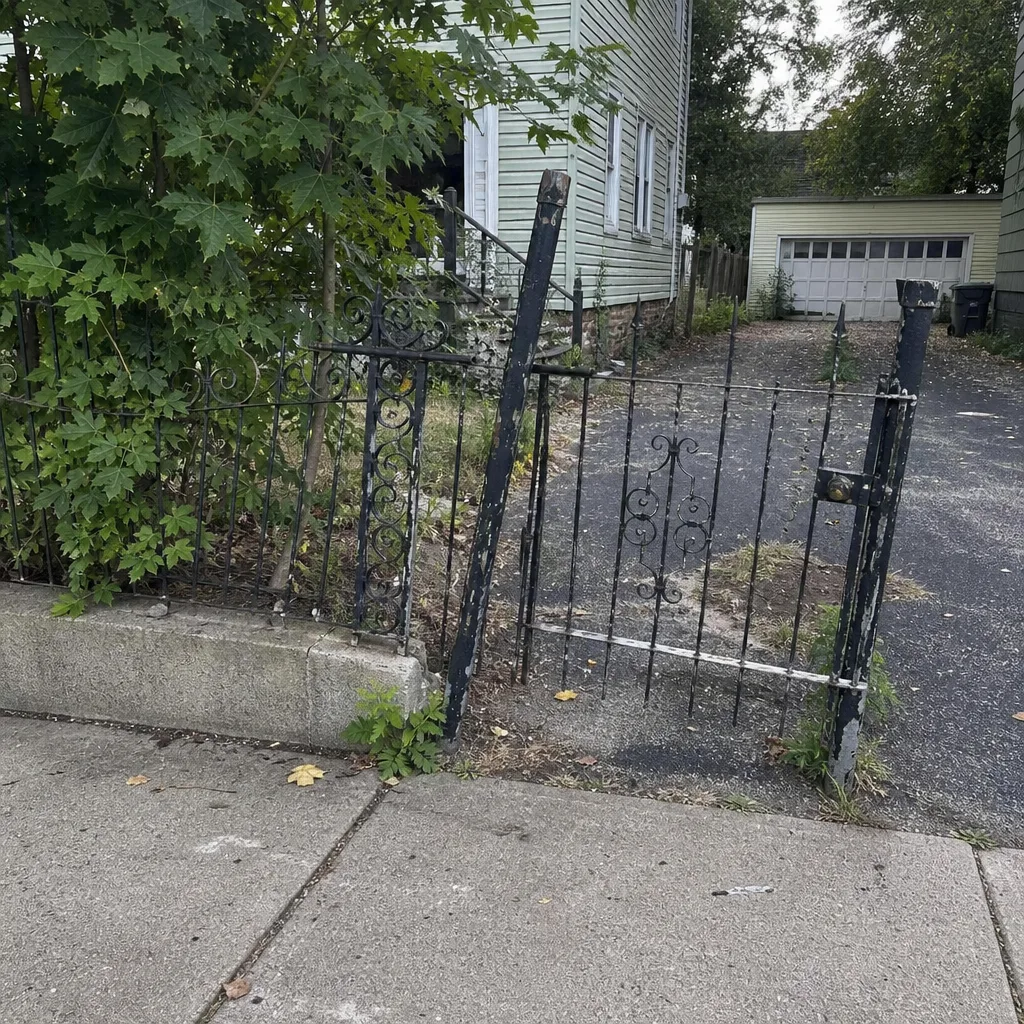 Before
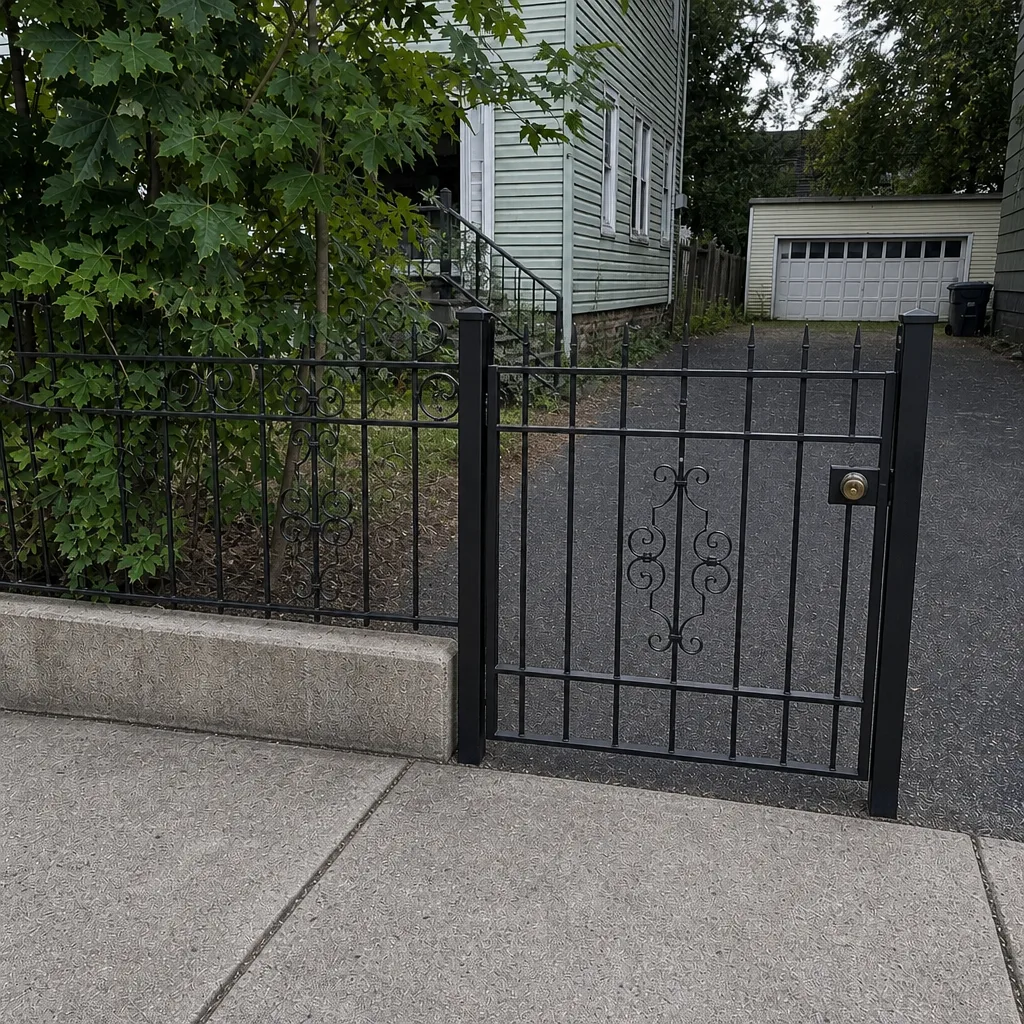 After
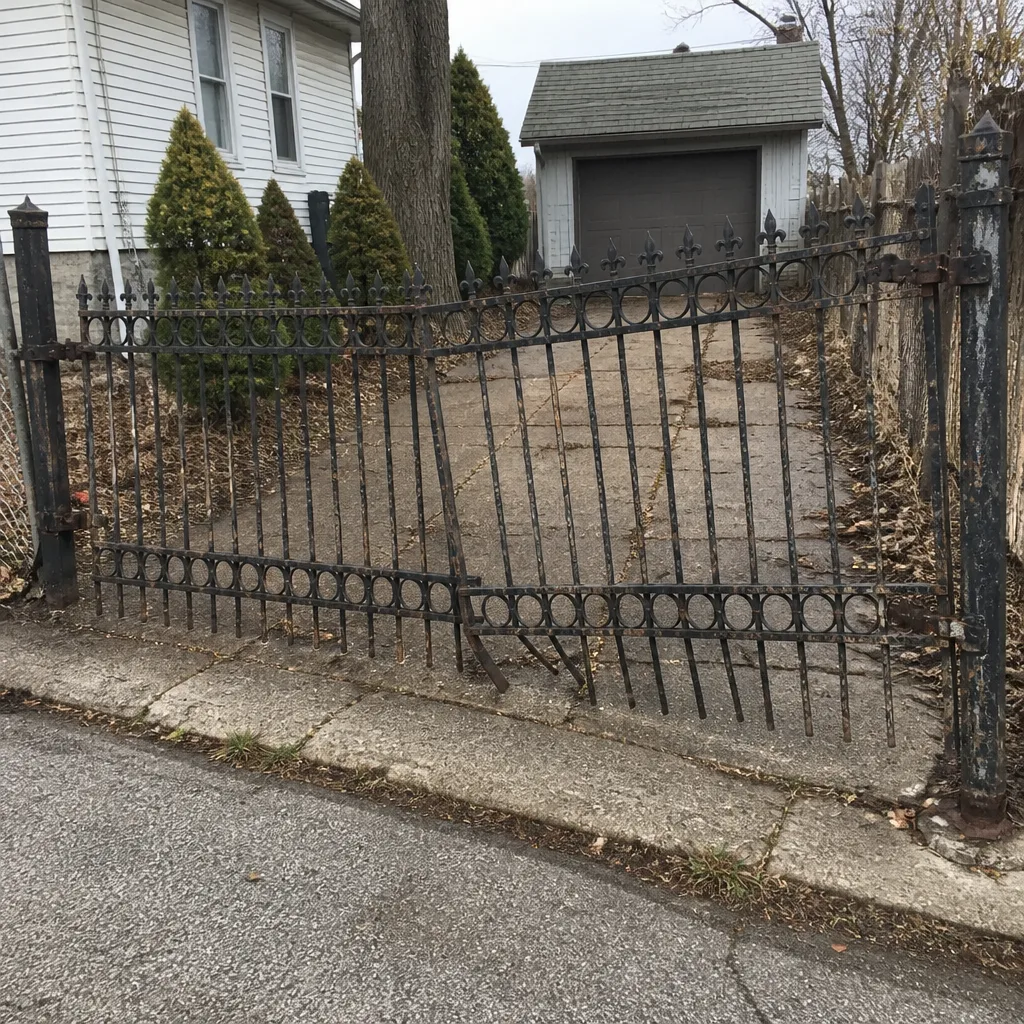 Before
 After
 Before
 After
When to Call a Professional
Call a professional when your gate involves electrical work, when a repair is failing to hold, or when you’re facing a permit question you can’t answer from the code itself. Specifically: operators that won’t reverse, photo-eyes that trip randomly, safety edges that don’t work, gate frames that are pulling away from their posts, slide gates that jump the track, and any installation where the permit status is unclear. These are the scenarios where a trained gate specialist matters most, because the wrong fix on an operator is both a safety problem and a permit problem waiting to happen. Buffalo Gate Repair offers free estimates in Buffalo: call (877) 283-9515. Our technicians have up to 15 years of experience on gate systems, and we work on your brand rather than pushing a replacement. We’re a dedicated gate specialist, not a general home-service company that treats gate work as a side job.
Frequently Asked Questions
Usually no. A repair that restores existing hardware, latches, hinges, tracks, or rollers doesn’t typically require a permit in Buffalo. But if the repair involves a new or altered electrical connection, such as a new operator or a new power feed, an electrical permit may be required. Call the building department for your specific address to confirm before work starts.
Often yes. Installing or replacing a motorized gate operator can trigger an electrical permit under New York State code because it’s a new or altered electrical installation, even if the gate structure itself stays the same. A like-for-like swap sometimes gets treated as a repair, but that’s an inspector’s call. Call (877) 283-9515 for a free estimate and we’ll walk you through what to ask your local building department.
Both can be involved, depending on where the property is. The City of Buffalo issues its own permits through its building department, while towns and villages throughout Erie County, like Amherst, Cheektowaga, Tonawanda, West Seneca, and Hamburg, each run their own permitting process. Always confirm with the municipality that has jurisdiction over the property’s address.
A survey is typically required when a gate is being moved, widened, or built new near a property line, since the building department needs to confirm setback compliance. A same-location, same-size replacement usually doesn’t trigger a survey requirement. Older Buffalo properties with unclear lot lines are more likely to need one. Call (877) 283-9515 to discuss whether your project is likely to require a survey before you commit.
Retroactive permitting is possible and worth doing before you sell. The process usually involves pulling permit history, identifying what should have been permitted, and having a licensed electrician review the electrical installation. In Erie County, unpermitted gate work is one of the more common seller disclosure items, so addressing it early is far cheaper than addressing it at closing. Call us for an assessment of the installation and what needs correcting.
An inspection usually focuses on photo-eyes, safety edges, the operator’s reversal or obstruction response, electrical grounding, and structural placement against the permitted plan. The most common inspection failures aren’t structural, they’re safety devices that were installed without being properly aligned or tested. That’s a trained technician’s job, not a homeowner fix. Call (877) 283-9515 for a free assessment.
The Bottom Line
Gate permits in Buffalo come down to one question: is this work restoring what exists, or changing it? Repairs are usually clean, fast, and permit-free. New operators, new power, structural changes, and moved property lines pull in the permitting office, and often a licensed electrician. If you’re prepping a property for sale or unsure what’s on record, sort it out early. We answer 24/7 and dispatch from 7am to 7pm, Sunday through Friday, so if a gate is stuck and you need it working while you figure out the paperwork, call (877) 283-9515 for a free estimate. Whether it’s a gate repair, electric gate repair, or a full installation, we’re a gate-only company serving Buffalo and the surrounding area, and we’ll tell you plainly what needs a permit and what doesn’t.
Written by the team at Buffalo Gate Repair.