
Last updated November 15, 2026
 Wrought iron
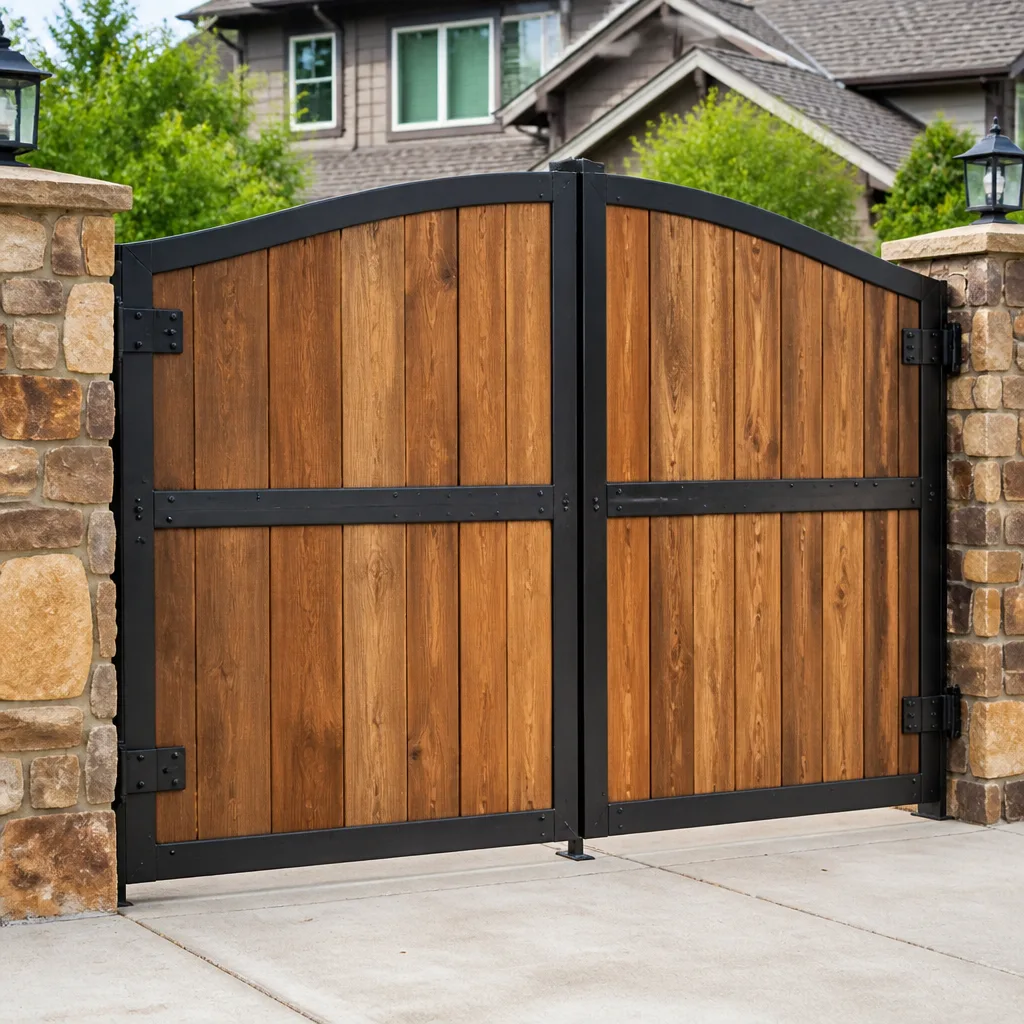 Wood & steel frame
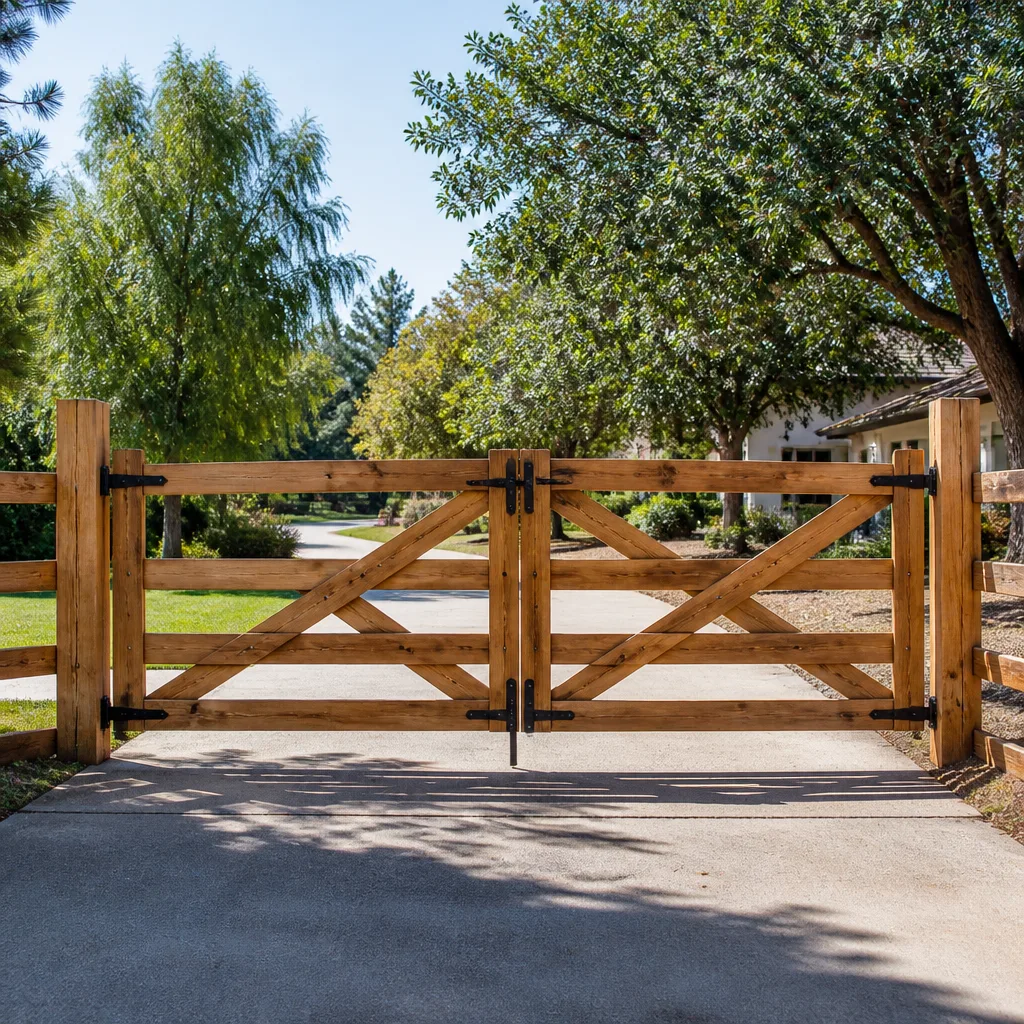 Farm & ranch
 Sliding driveway gates
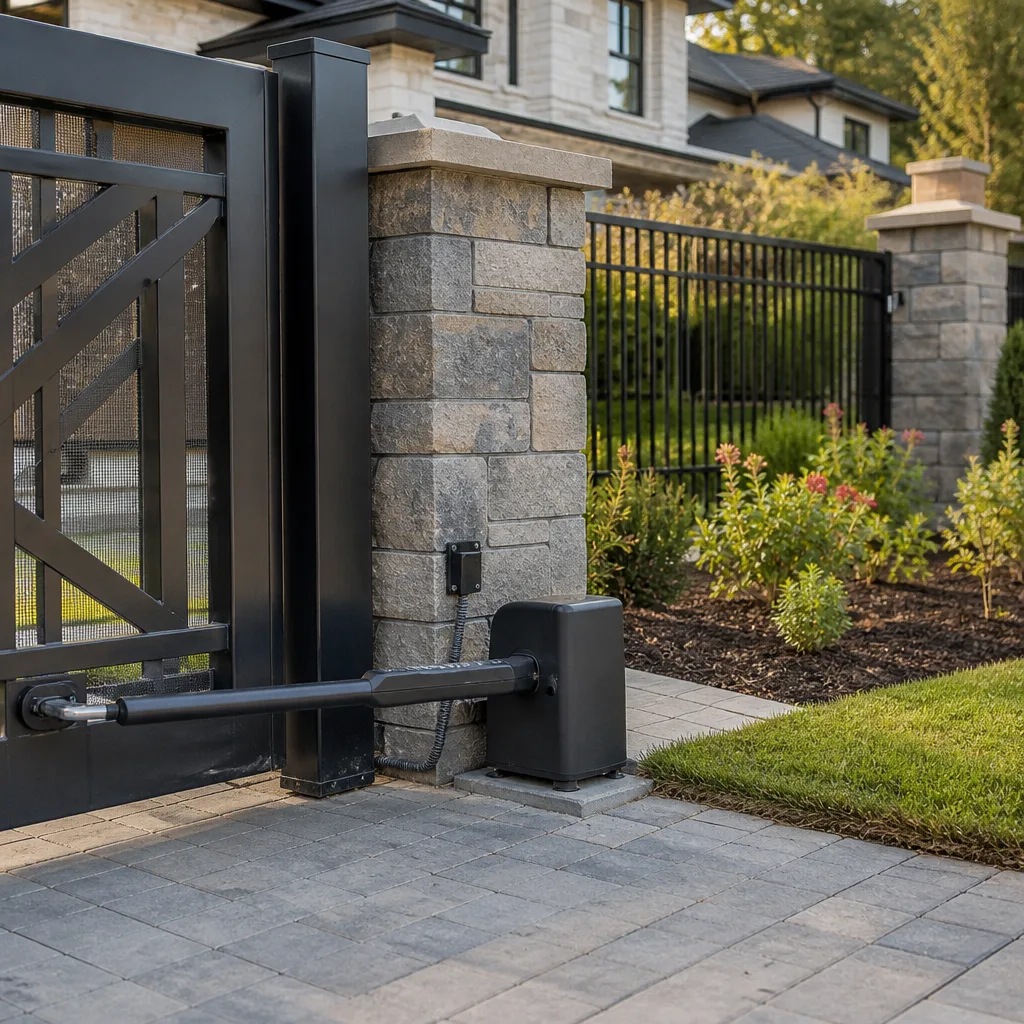 LiftMaster operators
Free on-site gate assessment - hinges, posts, and your LiftMaster or Nice gate operator checked before anything is quoted
The assessment is free and the quote is the invoice.
Get your free estimateDIY vs Professional Gate Repair: The Buffalo Homeowner’s Decision Guide
Adjusting a gate hinge yourself is genuinely low-risk, and we’ll never tell you otherwise. But adjusting that hinge when the actual problem is a shifted post means you’re shimming a moving target. Every turn of the wrench hides a diagnostic clue from the person who eventually has to unwind the mess. That’s the heart of the DIY question in Buffalo, and it has nothing to do with whether you’re handy. It’s about which failures are reversible if you get them wrong. This guide sorts gate repairs into what you can safely handle, what needs tools you probably don’t own, and what can create real danger or hidden damage. By the end you’ll know exactly where your project sits.
Quick Answer
Most Buffalo homeowners can safely handle visual inspections, clearing debris from the gate path, and tightening exposed hardware. Anything involving the operator’s wiring, safety sensors, control board, or the alignment of a heavy post or panel should go to a professional. The dividing line isn’t skill, it’s consequence: if a mistake can crush, shock, or void a safety system, it belongs with a trained technician.
Styles & brands we work with
- Wrought iron
- Wood & steel frame
- Farm & ranch
- Sliding driveway gates
- LiftMaster operators
Table of Contents
- Categorizing gate repairs by DIY risk
- Why automated gate work in New York carries extra risk
- The hidden cost of DIY misdiagnosis
- What Buffalo’s freeze-thaw cycle does to self-repair
- Where professional knowledge is about speed, not skill
- Brand-specific diagnostics and why guesswork fails
- A step-by-step gate inspection you can do yourself
Categorizing Gate Repairs by DIY Risk
Not every gate problem is the same kind of problem. When we walk a Buffalo homeowner through their options, we sort the work into three buckets based on what happens if the repair goes wrong. Understanding which bucket your issue falls into is the single most useful thing you can do before you pick up a tool.
Safe to attempt yourself: Clearing leaves, snow, and debris from the gate’s swing or slide path. Tightening a loose handle or latch that isn’t structural. Touching up paint on a rust spot. Clearing obstructions from the photo-eye or safety sensor line of sight. These are low-consequence tasks, and a mistake reveals itself quickly.
Needs tools most homeowners don’t own: Realigning a sagging gate panel, welding a cracked hinge, resetting a post that has heaved, or replacing a bent track or roller assembly on a slide gate. These jobs need levels, jacks, cutting and welding equipment, or heavy lifting gear. Doing them with a hammer and hope tends to make the sag worse.
Creates safety or liability risk if done wrong: Anything touching the operator’s electrical supply, its control board, the safety reversing system, or the force settings on an automatic gate. A gate that fails to reverse on contact is a serious hazard, particularly on a driveway where kids and pets move. This work should belong to a trained technician, every time.
We work on gates every day, and the pattern is consistent: the homeowner who calls early usually needs a smaller repair than the one who “had a go” first and made the problem harder to read. If you’re unsure which bucket you’re in, a quick phone call settles it faster than a forum thread.
Why Automated Gate Work in New York Carries Extra Homeowner Risk
Automated gates aren’t just mechanical; they’re governed by a safety standard. UL 325 is the standard covering gate operators, and it’s why every automatic gate sold today ships with entrapment protection: photo eyes, safety edges, or both. That’s also why tampering with those systems is a bad idea, even when the tampering is unintentional.
The most common non-compliant adjustment we see isn’t malicious. It’s a homeowner who disconnects a malfunctioning photo eye because the gate “works fine without it,” or who cranks up the operator’s force setting so the gate stops stalling. Both fixes solve the symptom on the surface while quietly defeating the safety layer designed to protect anyone in the gate’s path.
New York doesn’t treat automatic gates with the same code scrutiny as, say, a pool barrier, but the liability picture is straightforward: if an automatic gate injures someone and the safety system was disabled, that’s a problem for whoever disabled it. When we repair electric gate repair issues, restoring the safety system is never optional, even when the customer only called about a stuck gate.
Wiring is the other place to stop. Gate operator power runs at line voltage. If a junction box is loose, a wire is nicked, or a control board has a short, that’s a job for someone with the right testing gear and the training to use it. We’d rather you call and let a technician trace the fault than open a live panel on a Saturday.
The Hidden Cost of DIY Misdiagnosis
Here’s the part that doesn’t show up on a parts receipt: when you fix a symptom, you often erase the evidence the professional would have used to find the real failure. That masking effect is why the DIY question can’t be answered on cost alone.
Consider a gate that stalls halfway open. A homeowner might loosen the operator’s clutch or boost the force setting. The gate moves again, problem solved. Except the real cause was a worn roller, a slightly bent track, or a post that shifted an eighth of an inch over the winter. Now the operator is working harder against a mechanical bind, and the next failure is the gearbox or the motor itself, a much bigger repair than the roller would have been.
Or a sagging double gate. A homeowner shims one hinge to level the leaf, and it looks fine. Three months later the post has leaned further, the opposite hinge has taken the load, and now the whole frame needs resetting. The shim didn’t create the problem, but it hid the progression.
We’ve seen both patterns in Buffalo more than once. The fix isn’t that homeowners are careless; it’s that a symptom and a cause look identical from the outside. A thorough diagnostic visit separates them, and that separation is often the difference between a modest repair and a major one. When the diagnosis is fuzzy, gate repair from a specialist is usually cheaper over the full arc of the problem than the guesswork path.
What Buffalo’s Freeze-Thaw Cycle Does to Self-Repair Attempts
Buffalo winters are hard on gate posts, and the repair that holds in July may not hold by November. That timing trap is specific to this climate, and it’s the reason we caution homeowners against patching post alignment on their own.
Our ground freezes and thaws repeatedly through the cold months, and each cycle shifts soil around a post footing. A post that has heaved a fraction of an inch over the winter gets “fixed” in spring with a shim at the hinge. Through summer the shim looks like a win. Then the next freeze moves the post again, the shim no longer compensates, and the gate is out of alignment worse than before, with a hinge that may have bent from the extra stress.
City crews and plows push snow against gates every winter, and that load alone can nudge a footing that was already marginal. Homeowners who shovel out a gate can help themselves by keeping the swing path clear and not piling snow against the post, but the deeper issue is the footing.
A professional repair addresses the cause. That usually means checking the post footing depth against what the gate’s weight and wind exposure actually demand, resetting the post if needed, and only then aligning the hardware. The proper footing depth depends on the gate, the soil, and the load, and a technician’s eye is what tells you which one you’ve got. A Buffalo repair done this way survives the season change; a hinge shim usually doesn’t.
Where Professional Knowledge Is About Speed, Not Skill
Some repairs aren’t dangerous or complicated. They’re just faster with the right parts access and the right tool on hand, and that difference tips the economics toward calling. We tell homeowners this openly because it’s an honest part of the decision.
Take a worn roller on a slide gate. The mechanical idea is simple: pull the old roller, fit the new one. But the right roller has to match the track profile, the gate weight, and the mount, and a generic hardware-store roller may or may not fit. A technician who carries the common sizes gets it done in one visit. A homeowner driving to two stores and ordering a part online often spends more time than the repair costs.
The same goes for operator remotes and keypads. Programming a LiftMaster or a Mighty Mule remote is quick with the manual and the model number in hand, and unexpectedly fiddly without them. On a FAAC or BFT operator, the programming sequence differs by model, and the wrong button combination can lock the board into an unexpected state.
Our technicians have up to 15 years of experience, and a good share of that is pattern recognition: knowing which part fits, which sequence applies, and which failure tends to follow which. A homeowner starting from zero can absolutely learn it, but the learning curve has a cost. For repairs where the answer is a phone call away, that cost is usually the deciding factor. A quick diagnostic conversation with our team tells you which category you’re in before you commit.
Brand-Specific Diagnostics and Why Guesswork Fails
Automatic gate operators are not interchangeable. A symptom that points to a bad control board on one brand can point to a wiring fault or a failed limit switch on another, and the diagnostic path depends entirely on which system is on your property.
We’re trained on nine major gate and operator brands, and knowing the brand changes how we read a problem. On a Mighty Mule, the most common mystery is a limit setting that’s drifted, and the fix often begins in the manual’s setup routine. On a LiftMaster, the pattern that looks like a dead motor is frequently a safety sensor or a wiring issue the operator’s own diagnostics can flag. On FAAC and BFT systems, the board’s fault codes tell a story if you know how to read them, and guessing at those codes can cost you a control board.
That brand knowledge is also what keeps a repair honest. If a technician doesn’t recognize your operator, they may recommend replacement simply because they can’t diagnose it. We’re brand-agnostic in the sense that we repair what you already own, and we don’t push a new unit just because the system is unfamiliar. If you want to skip the diagnosis debate entirely, our Buffalo Gate Repair team can look at the operator and tell you what the brand-specific path looks like.
A Step-by-Step Gate Inspection You Can Do Yourself
Before you decide whether a repair is DIY or professional, do a basic inspection. This won’t fix anything, but it’ll tell you what kind of problem you’re facing, and it makes a phone call far more useful. Do the inspection with the operator powered off where you can, and never put your hands near moving parts or wiring.
- Walk the swing or slide path. Look for debris, a raised edge, a broken hinge, or a track obstruction that could be causing the stall.
- Look at the posts. Sight along the post for lean. A plumb post means a hinge problem; a leaning post means a footing problem.
- Check the hinges and hardware. Look for loose bolts, worn pins, and rust or cracking at the weld or mount.
- Test the safety sensor. With the operator on, block the photo eye’s line of sight and confirm the gate stops or reverses. If it doesn’t, that’s a safety failure, not a DIY repair.
- Listen to the operator. A grinding or whining sound as the gate moves points to mechanical wear. Silence on a command points to power, control, or remote issues.
- Note the brand and model. This saves diagnostic time, and the technician can match the right parts and sequence on the first visit.
If steps 2 through 6 turn up anything concerning, stop there and call. The inspection is a triage tool, not a repair manual, and treating it as one is exactly the kind of move that hides the real problem.
Common Mistakes to Avoid
- Shimming a hinge when the post is the problem. A shim treats the symptom, and a Buffalo freeze-thaw cycle will undo it within a season. Address the footing before you touch the hardware.
- Disconnecting or bypassing the safety sensors. A gate that won’t reverse on contact is a hazard. If the photo eye is failing, that’s a repair, not a bypass.
- Boosting the operator’s force setting to clear a bind. That moves the stall to a more expensive part: the motor or gearbox. Find the mechanical bind instead.
- Opening the operator’s control panel without training. Line voltage and control boards can be dangerous, and a mishandled board can cost more than the original repair.
- Buying the first roller or hinge that fits loosely. A slip-fit part accelerates wear on the track or post, and the second repair gets bigger.
- Repainting over a cracked weld or a rust pocket. Paint hides the structural failure until it fails under load, which is exactly when you need it to hold.
- Assuming a slow gate is a motor problem. Wear in the hinges, track, or footing is at least as common, and it’s cheaper to fix early.
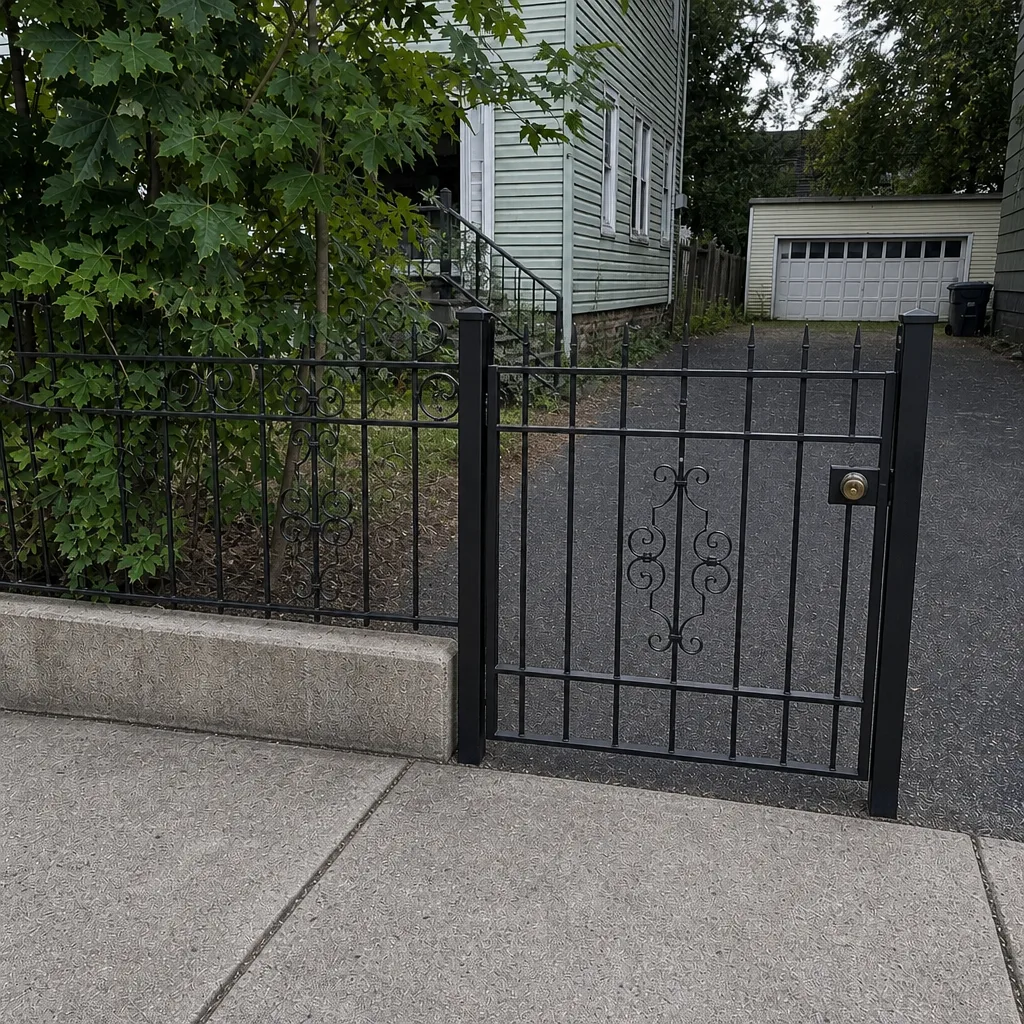
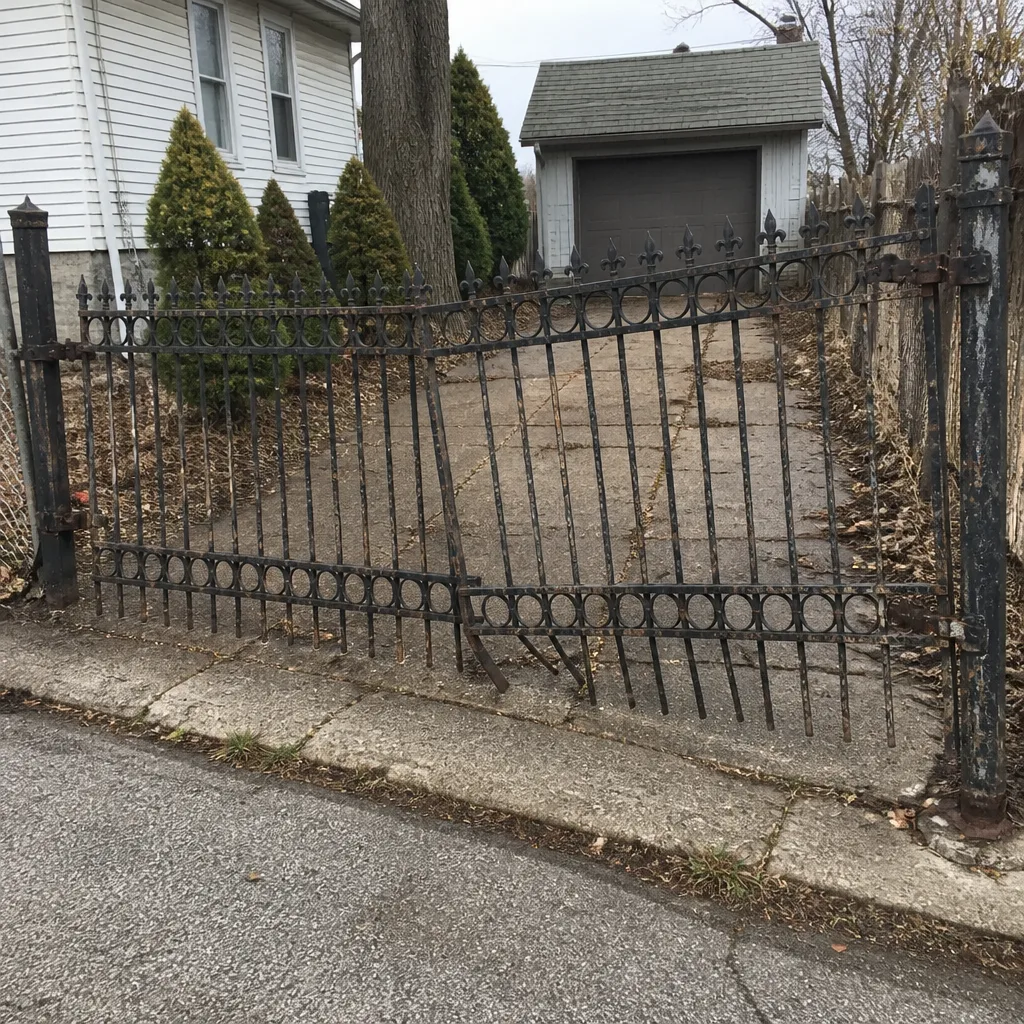
See the difference
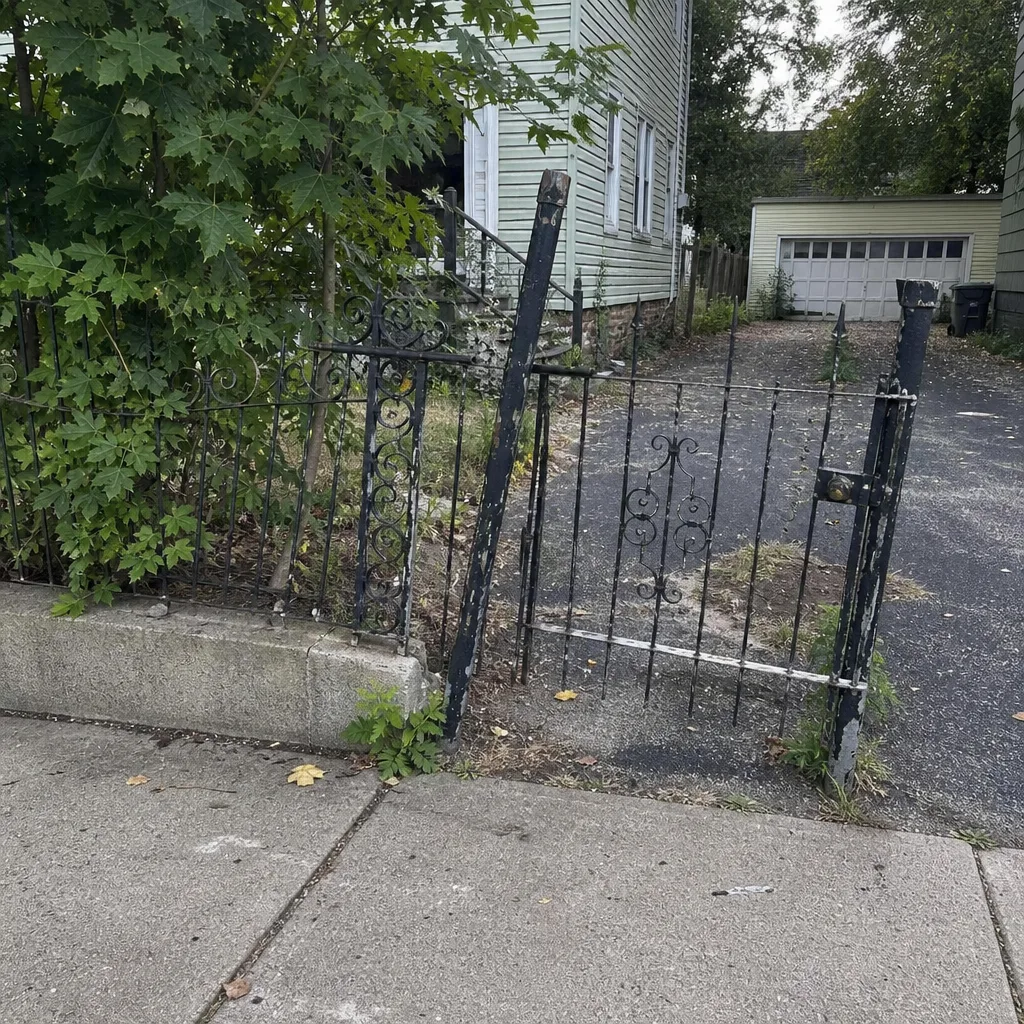 Before
 After
 Before
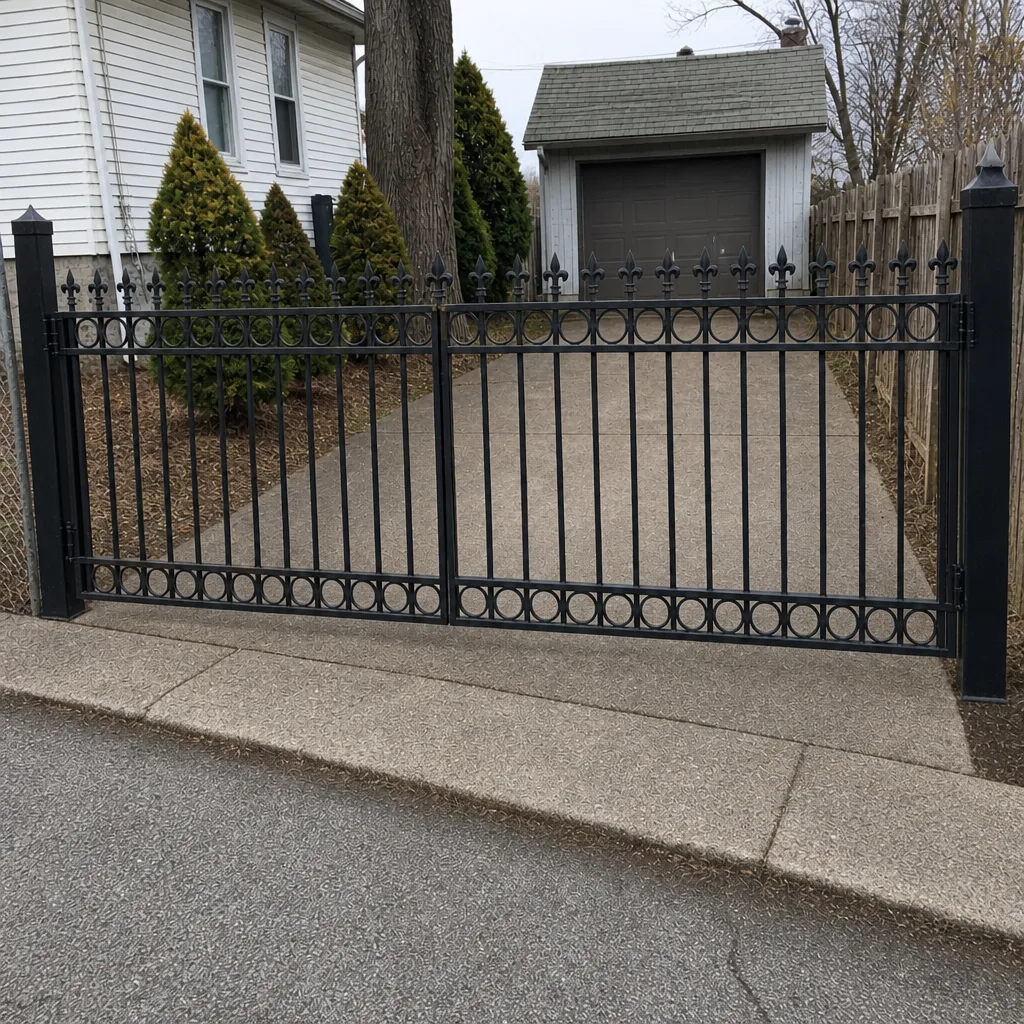 After
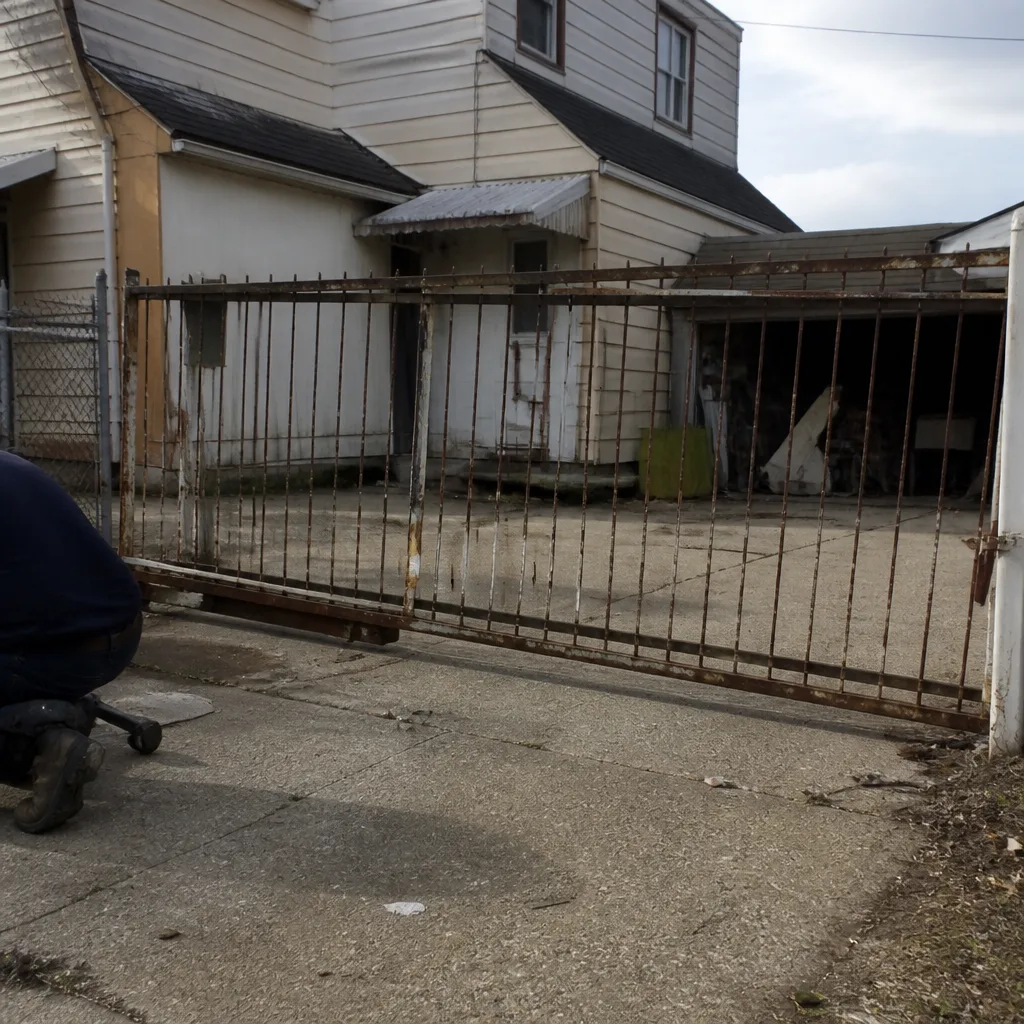 Before
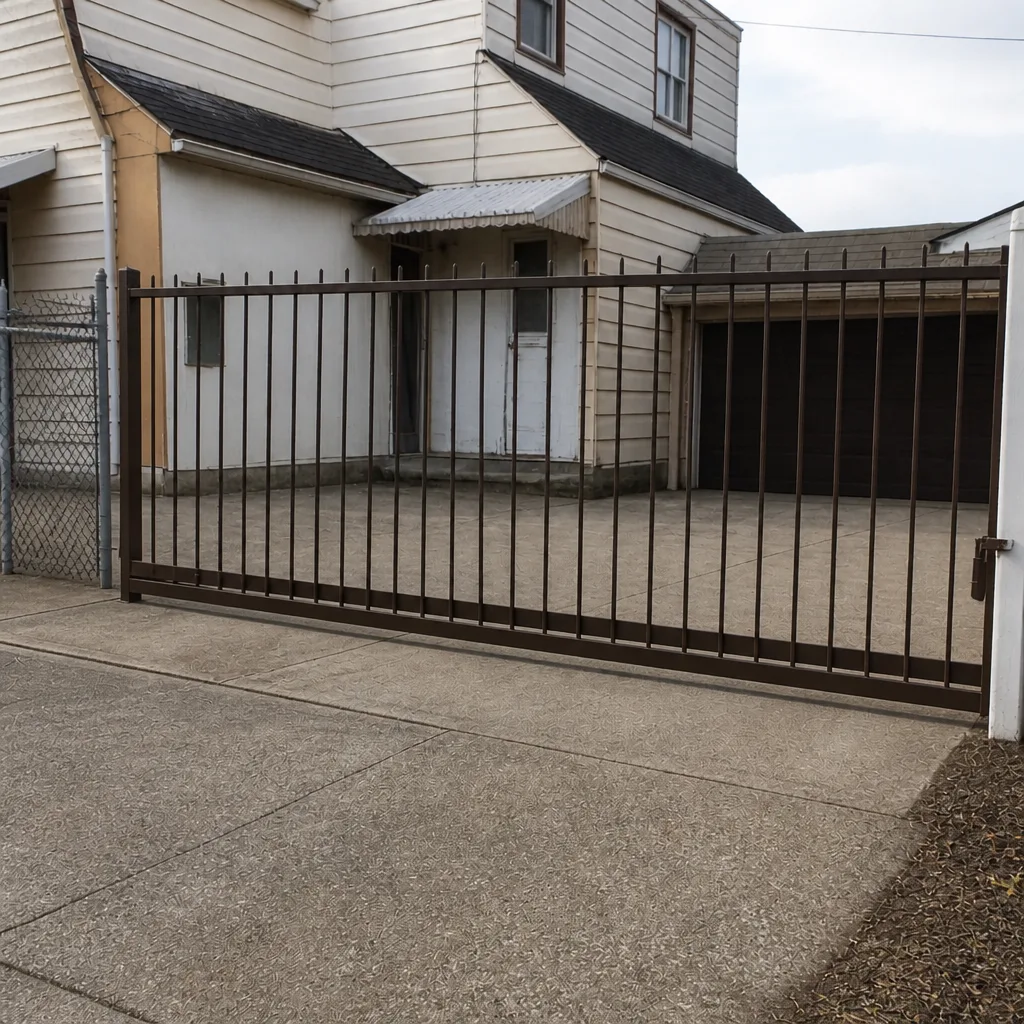 After
When to Call a Professional
Call a professional when the repair touches the operator’s wiring, safety sensors, or control board; when a post has heaved, leaned, or needs resetting; when a heavy gate panel or slide gate has come off its track; when the gate “works” but doesn’t reverse on contact; or when you’ve replaced a part and the problem returned. Those are the cases where a wrong move can create injury risk or hide the cause of a bigger failure. We answer 24/7 at (877) 283-9515, with fast dispatch from 7am to 7pm, Sunday through Friday. Buffalo Gate Repair offers free estimates in Buffalo, and the price is quoted and agreed before any work starts.
Frequently Asked Questions
You can safely handle visual inspections, clearing debris, tightening exposed hardware, and touching up paint. Anything involving wiring, safety sensors, the control board, operator force settings, or a post that’s heaved should go to a technician. The dividing line is consequence: if a mistake can shock, crush, or disable a safety system, it’s a professional job. Call (877) 283-9515 for an exact quote, estimates are free.
Sometimes it is, and we won’t pretend otherwise. A loose handle or a cleared path costs nothing and works. But cosmetic fixes rarely hold through a Buffalo winter, and a shimmed hinge on a leaning post can hide a post-heave that gets worse every freeze-thaw cycle. When the DIY fix hides the real cause, the later repair is often larger than the original would have been. Call (877) 283-9515 for an exact quote, estimates are free.
The gate keeps operating, which is exactly why it’s tempting, but you’ve removed the entrapment protection that makes an automatic gate safe around people and pets. That’s a safety and liability problem, not a convenience trade. We always restore the safety system alongside the repair, even when the call was about something else. Call (877) 283-9515 for an exact quote, estimates are free.
Usually no. A sagging gate after a Buffalo winter most often points to a post that’s moved in the freeze-thaw cycle, and resetting the hinges just hides the shift. A proper repair checks the footing depth against the gate’s weight and wind load, resets the post if needed, and then aligns the hardware. Call (877) 283-9515 for an exact quote, estimates are free.
Yes. We work on both the mechanical failures and the operator, control board, and sensor side in a single visit, because most gate problems involve both. That’s part of what a dedicated gate specialist brings compared with a general handyman who only handles one side. Call (877) 283-9515 for an exact quote, estimates are free.
We’re trained on nine major gate and operator brands, including LiftMaster, FAAC, BFT, Mighty Mule, Linear, Viking, Ghost Controls, DoorKing, and Elite. That brand knowledge is why we diagnose by the system on your property rather than guessing at interchangeable parts. We repair what you already own and won’t recommend replacement just because the operator is unfamiliar. Call (877) 283-9515 for an exact quote, estimates are free.
The Bottom Line
The DIY-versus-professional question for Buffalo gate repair comes down to reversibility, not cost. Some repairs you can handle: clearing the path, tightening hardware, a quick inspection with the operator off. Others create hidden damage that outlasts the fix, and still others carry real danger around wiring, safety sensors, and heavy panels. Buffalo’s freeze-thaw cycle makes post and hinge repairs especially prone to failing within a season. When the cause is unclear, calling early keeps the repair small. From stuck to secure, a specialist diagnoses the real failure instead of treating the symptom. We answer 24/7 at (877) 283-9515 with fast dispatch from 7am to 7pm, Sunday through Friday.
Written by the team at Buffalo Gate Repair.