
Last updated November 15, 2026
 Wrought iron
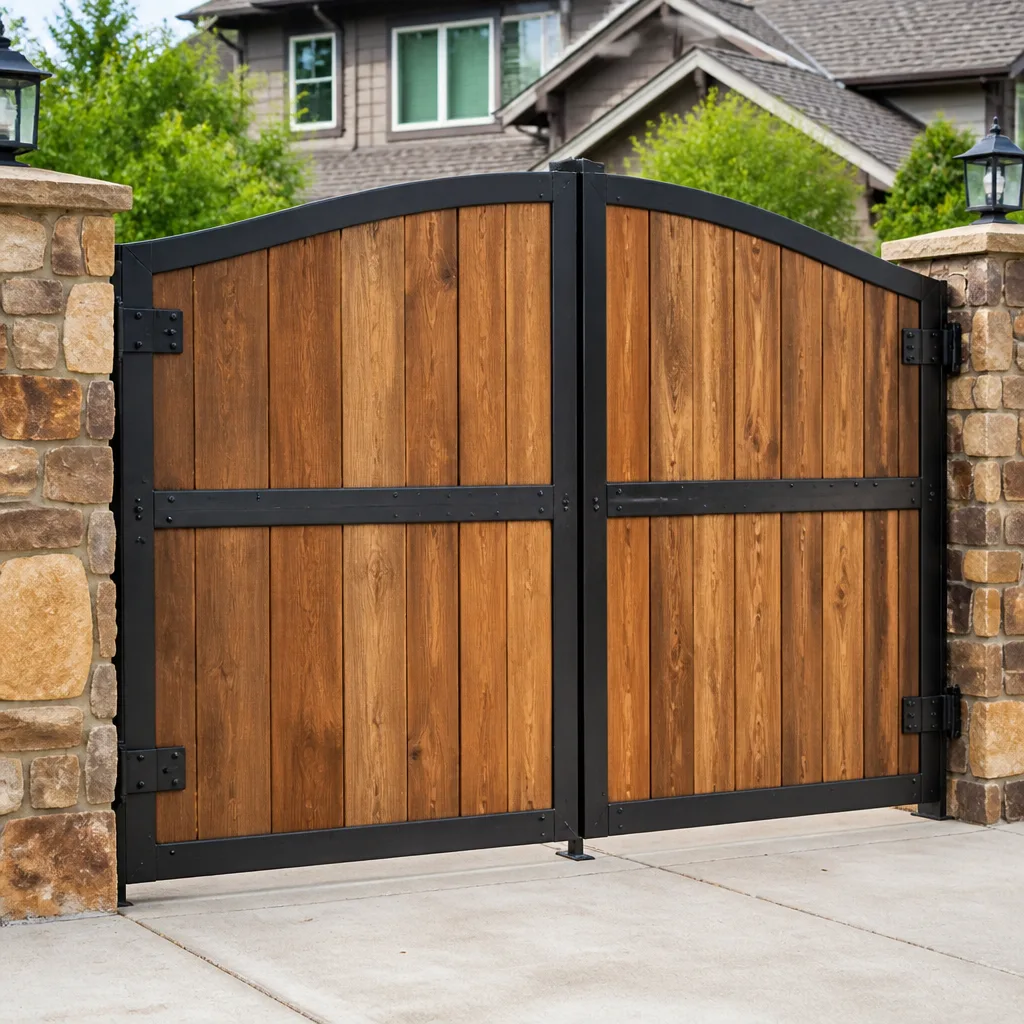 Wood & steel frame
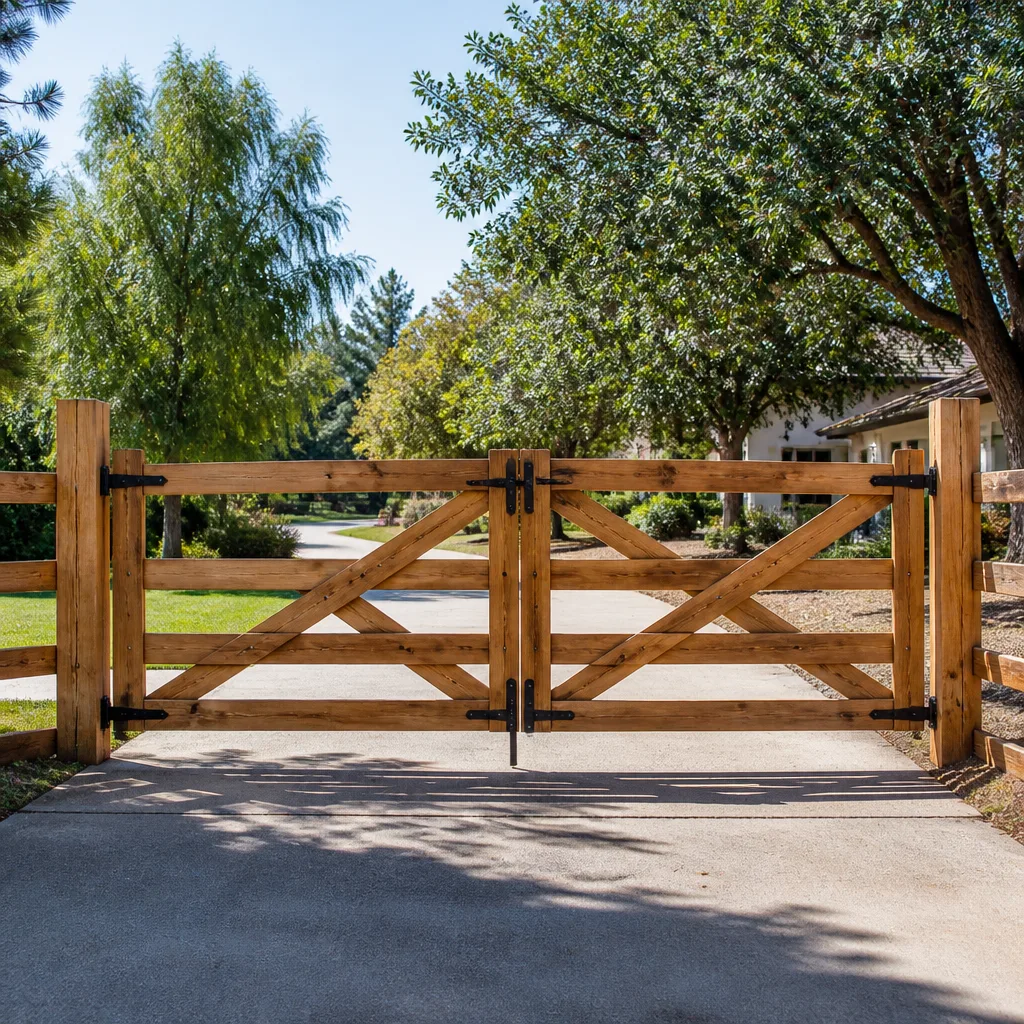 Farm & ranch
 Sliding driveway gates
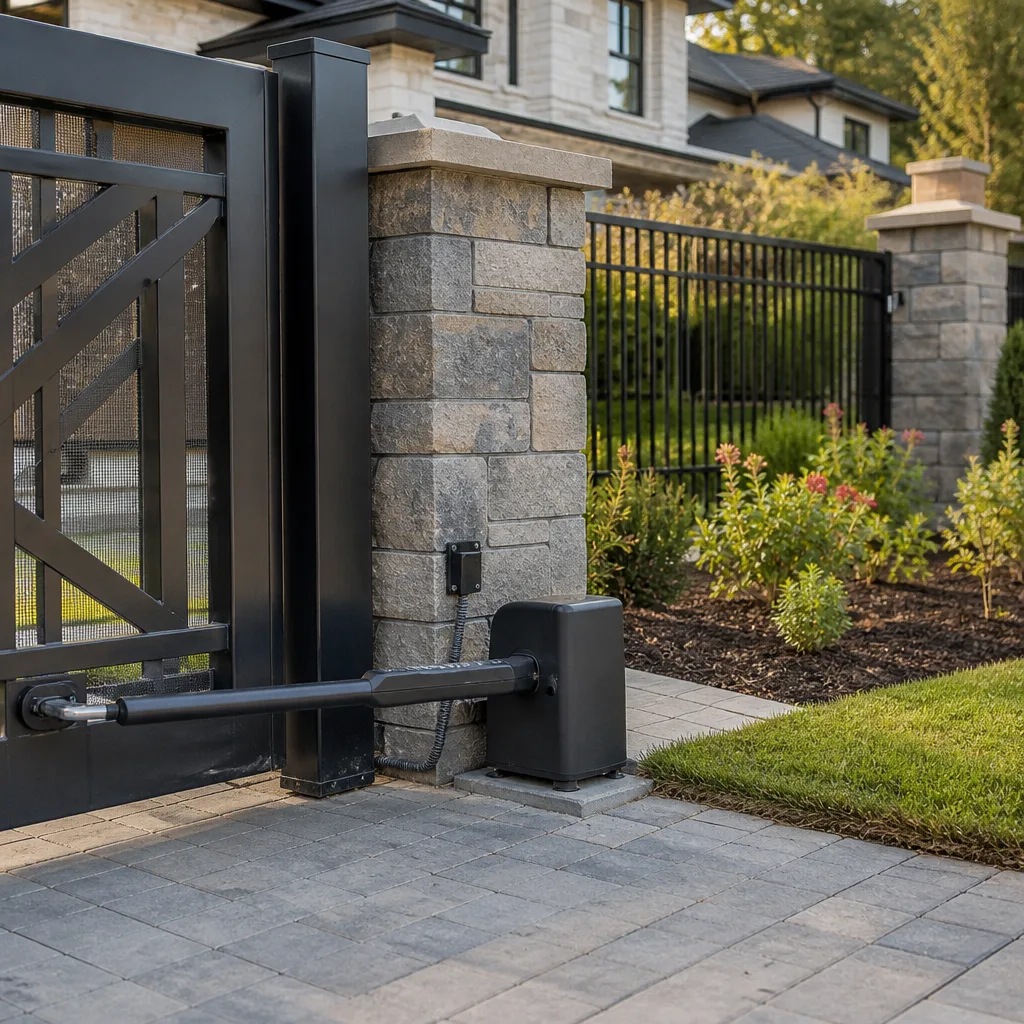 LiftMaster operators
Free on-site gate assessment - hinges, posts, and your LiftMaster or Nice gate operator checked before anything is quoted
The assessment is free and the quote is the invoice.
Get your free estimateGate Repair Maintenance Checklist for Buffalo Homeowners
Lubricating your gate hardware in November is close to useless in Buffalo. Most standard lubricants thicken below 20°F, so the film you applied in the fall is nearly solid by January, right when the gate needs it most. The same logic breaks the usual calendar advice: a checklist organized by months misses the moments that actually matter here, which are temperature thresholds. This guide is built around the first hard freeze, the freeze-thaw cycles that follow, the sensor lens on a cold morning, and the July humidity that swells a wood gate in its frame. You’ll learn what to check, when to check it, and which adjustments are worth doing yourself versus calling a gate specialist for.
Quick Answer
A Buffalo gate maintenance checklist should be organized around temperature milestones, not months. The triggers that matter are the first sustained freeze, the repeated freeze-thaw cycles of late winter, the first warm humid stretch in July, and the fall drop before the ground hardens. At each one you check lubrication viscosity, post movement, electrical conduit seals, battery backup, sensor lenses, and hardware torque. Miss these and small seasonal shifts turn into misalignment, operator faults, and a gate that jams at the worst possible moment.
Styles & brands we work with
- Wrought iron
- Wood & steel frame
- Farm & ranch
- Sliding driveway gates
- LiftMaster operators
Table of Contents
- The First Hard Freeze: What to Do Before the Ground Locks
- Choosing Lubricants That Hold Up Below 0°F
- Inspecting Gate Posts for Early Frost Heave
- Electrical Checks Built for Buffalo Winters
- The Thaw Cycle: Torque and Alignment Checks
- Wood Gate Swelling During the July-August Humidity Window
- Operator and Automation Checks by Brand
- Building Your Yearly Gate Maintenance Timeline
The First Hard Freeze: What to Do Before the Ground Locks
The single most useful maintenance window in Buffalo is the stretch before the ground freezes solid. Once the soil is locked, post adjustment becomes much harder and small problems wait until spring. This is the moment to walk the full gate system with a critical eye, not just a can of lubricant.
Start at the ground. Check the base of each post for cracks in the surrounding concrete, loose anchor bolts, and any gap where water can pool and refreeze. A post that has shifted a quarter inch over summer will shift more once the frost pushes. Check the hinges and rollers next: hardware that’s slightly loose in October becomes noticeably sloppy by December. Look at the bottom of the gate leaf for daylight where the ground has settled or where the gate has dropped.
Pre-Freeze Checklist
- Walk the entire fence line and gate travel path for obstructions, heaved pavers, or debris that will freeze in place.
- Check each post base for concrete cracks, loose anchors, or water pooling.
- Test hinge, roller, and latch hardware by hand for wobble and side play.
- Clean and re-lubricate the operator’s drive chain, track, or arm per the manufacturer’s spec, using a cold-rated product.
- Clear the track, guide rail, and any underground loop area of leaves and grit.
- Confirm the manual release works and that you know how to use it if the operator fails.
- Test the safety sensors and the auto-reverse function with a physical object in the path.
Buffalo winters arrive with little warning, so if the first freeze is forecast within the week, prioritize the mechanical checks over the cosmetic ones. A gate that closes cleanly in the cold is worth more than a freshly painted one. If anything in this list looks beyond a simple adjustment, this is the ideal time to book a visit rather than wait for a January failure.
Choosing Lubricants That Hold Up Below 0°F
Most consumer lubricants are formulated for mild climates. Below 20°F, standard petroleum grease stiffens, chain lube turns tacky and drags, and white lithium sprays can cake. Below 0°F, the wrong product becomes a semi-solid paste that loads the operator motor and accelerates wear. Choosing the right lubricant is the single easiest upgrade to winter reliability in Buffalo.
What you want is a product that stays fluid across the full Buffalo winter range. In practice that means synthetic or low-temperature greases rated for cold service, thin synthetic oils for chains and pivot points rather than heavy tacky sprays, and dry-film or PTFE-based products for exposed sliding surfaces where grit and ice collect. Read the label for a cold temperature rating rather than assuming.
Which Product for Which Component
- Drive chain and sprockets: a low-temperature chain lubricant or thin synthetic oil, applied to a clean chain, not a heavy grease that collects grit.
- Hinges and pivot pins: a cold-rated grease or synthetic grease rated well below freezing.
- Latches and sliding hardware: dry-film or light synthetic oil so it doesn’t hold ice.
- Operator arm joints: per the operator manufacturer’s recommendation, which may specify synthetic grease.
- Rollers on sliding gates: the manufacturer’s specified grease, applied sparingly.
Avoid the instinct to over-lubricate. Too much grease traps grit and moisture that then freeze. A thin, correct film beats a heavy coat. If you’re unsure which product suits your operator, check the manual or ask a specialist. Brand-specific operators, including Viking and DoorKing systems, often specify particular lubricants, and following that spec protects the warranty and the motor. The wrong fall lube job is a common reason operators strain and fail in cold weather, and it’s an easy one to avoid.
Inspecting Gate Posts for Early Frost Heave
Frost heave is the slow, invisible enemy of a Buffalo gate. As the ground freezes and thaws, soil expands and shifts, and posts that were plumb in October can be visibly out of alignment by March. The trick is catching movement early, before misalignment makes the gate drag or the operator bind.
Posts move in millimetres, not inches, at first. You catch it by checking one post against the next. Line up along the fence and sight down the row: any post leaning out of line against its neighbors is showing early movement. Check the post’s vertical with a level. Look at the base plate and surrounding concrete for a fresh crack or a widening gap. Standing water that refreezes at the base is the mechanism that pushes a post up and out of plumb.
Not every wobble means a post is failing. A post that’s solid but has a slight seasonal lean may just need a hardware adjustment. A post that moves when you push it, or shows a fresh crack radiating out from the base, needs a proper look. Spreading a small gravel apron around the base to shed water before the freeze helps slow the process; it doesn’t fix a post that’s already moved.
Early Heave Warning Signs
- A post that’s no longer parallel to its neighbors when you sight down the row.
- A level laid against the post showing any lean.
- Fresh cracks or a widening gap where the post meets concrete or soil.
- Water pooling around the base, then freezing overnight.
- The gate suddenly dragging on one side or the operator reversing without cause.
- Latch alignment drifting so the gate no longer sits flush.
If you spot early movement in the fall, before the ground locks, you have the best chance to correct it. In deep winter, the fix often waits for spring thaw. A dedicated gate technician can advise on whether a post needs resetting or just hardware adjustment, and that’s a call worth making early rather than after the gate drags on frozen ground. For a full walkthrough of what a gate repair visit covers, we’ve laid it out separately.
Electrical Checks Built for Buffalo Winters
Automated gates have a set of winter failure points that have nothing to do with the gate leaf itself. They’re in the conduit, the control box, the battery, and the sensors. Cold weather stresses every one of them, and a five-minute inspection in the fall prevents most cold-morning surprises in Buffalo.
Conduit and moisture intrusion. Water gets into conduit at every joint, then freezes, expands, and can crack fittings or introduce intermittent faults in the wiring. Check that all conduit fittings are sealed, that the control box door closes tightly, and that the enclosure has no cracks. If the box interior shows condensation or rust, moisture is already in.
Battery backup drain in cold. Many operators carry a backup battery for power cuts. Cold weather cuts a battery’s effective capacity significantly, and an aging battery that’s fine in summer may not hold up the gate for the same duration in January. Test the backup by simulating a power loss and watching whether the gate completes a full cycle. If it doesn’t, the battery is a candidate for replacement before winter.
Sensor lens icing. Safety sensor lenses fog, frost, or ice up and cause the operator to refuse a close command or reverse unexpectedly. Clear the lens and the surrounding housing of grit and debris in your fall check. A dark, wet sensor on a cold afternoon will trip on moisture rather than an obstruction.
Electrical Winter Checklist
- Inspect conduit and control box seals for moisture, cracks, or loose fittings.
- Open the box and check for condensation, rust, or water stains.
- Test the backup battery by simulating a power cut and completing a full cycle.
- Clear sensor lenses and test the safety reverse function with a physical object.
- Check all wiring connections at the operator and any keypads or entry units for corrosion.
- Test the manual release mechanism in cold conditions and confirm it operates smoothly.
These are inspection steps, not DIY repair tasks. Wiring inside the operator and control box carries a shock hazard, and a commercial 120-volt feed to an automated gate should only be opened by someone qualified. If a fault shows up on any electrical check, we handle electric gate repair as a core service rather than a side job.
The Thaw Cycle: Torque and Alignment Checks
Buffalo’s late-winter and early-spring thaw is the second big maintenance window. Repeated freeze-thaw cycles are the most mechanically punishing part of the year: metal expands and contracts, concrete moves, and every fastener on the gate gets a little workout. This is when hardware comes loose without anyone touching it, and where a proper torque check pays off.
Walk the hardware after any significant thaw. Hinge bolts, bracket fasteners, operator mounting bolts, post anchors, and latch screws should all be checked against the manufacturer’s specified torque or, in the field, against “firm and not turning further.” A hinge pin that’s worked loose is a gate leaf that’s shifted, which means the latch may not catch and the operator arm may bind. Check the gate’s free swing with the operator in manual mode and look for changes in alignment, then restore the operator to normal.
Check the ground under the gate travel. A paver or section of the driveway that has heaved up may now sit proud of the surface and catch the bottom of the gate. Look for drag marks, fresh scuffs on the gate bottom, or the operator reversing for no sensor reason. That’s the gate catching on something.
Post-Thaw Checklist
- Check and torque hinge bolts, bracket fasteners, and latch screws.
- Inspect operator mounting bolts and the arm pivot for movement.
- Confirm the gate swings freely in manual mode and the operator re-engages smoothly.
- Look for drag marks or scuffs where the gate bottom meets the ground.
- Check the driveway surface under the gate for heave and adjust the gate height if needed.
- Re-test safety sensors and the auto-reverse function after any hardware change.
A gate that’s misaligned after the thaw may just need adjustment, but if it has shifted far enough to cause repeated operator faults, the cause is usually movement in a post or hinge. Getting it checked early in the season prevents the fault from becoming a motor problem.
Wood Gate Swelling During the July-August Humidity Window
Buffalo’s summer humidity is the opposite mainten
ance problem from winter, and wood gates feel it most. Wood absorbs moisture and swells; when the humid stretch peaks in July and August, a wood gate that fit perfectly in March can bind in its frame, catch on hardware, and overwhelm a lighter-duty operator.
The main symptom is friction. The gate starts dragging on the ground, feels tight when you push it in manual mode, or the operator struggles to complete a cycle. Look along the latch side and the hinge side for wood that’s swollen against the post or frame. Look at the bottom rail too, where the wood meets the ground and can absorb moisture.
The right response is to create clearance and check alignment, not to force the gate. Don’t plane or cut structural rails until you’ve confirmed where the binding is; trimming the wrong surface can create a permanent gap that appears once the wood dries in fall. Lightly sanding a swollen edge or adjusting hinges can restore smooth operation and is often the only fix needed. Never shim or force a gate travel.
Humidity Checklist for Wood Gates
- Open the gate in manual mode and check for friction or binding at the latch and hinge sides.
- Look for visible swelling at the latch, hinge, and bottom rail.
- Check the gate bottom for drag on the ground as the wood has grown.
- Adjust hinge washers or clearances to regain smooth travel.
- Check the finish (sealant, stain) for thin areas that take moisture.
- Re-test the operator cycle length and confirm no binding in normal operation.
Swelling in the humid stretch is normal. Getting the gate back to smooth travel is the goal, and a light adjustment stops the operator from working hard against a jammed gate leaf. If the gate still binds after adjustment, or the operator has been struggling, a professional look catches it before the motor wears.
Operator and Automation Checks by Brand
Operator problems are where knowing the brand saves time. A fault that produces a generic “won’t open” on one control board shows up as a specific diagnostic on another, and a technician who’s worked the same family of operators reads the fault rather than guessing at the components.
We work on the brands that show up on Buffalo driveways and commercial entrances every day: LiftMaster, FAAC, BFT, Linear, Viking, Ghost Controls, DoorKing, Elite, and Mighty Mule. That range means two things for maintenance. First, the winter checks above look slightly different for each: the battery backup behavior, sensor design, and control board layout vary. Second, brand knowledge shortens diagnosis, so a seasonal problem is identified and fixed in one visit rather than several.
What to Check on Any Automated Operator
- Confirm the operator completes a full cycle in both directions without fault.
- Test the safety reverse with a physical object in the path.
- Check the manual release and confirm it engages and disengages cleanly.
- Inspect the drive chain, track, or arm for wear and correct lubrication.
- Test remote controls, keypads, and any access-control units that are part of the system.
- Read the control board for any stored fault codes or error indicators.
A Ghost Controls DIY-friendly operator and a heavy-duty commercial DoorKing unit need different service intervals and different checks. If a remote isn’t working, that’s often a battery or programming issue, not a board failure. If a gate reverses for no reason, it’s the sensor before the motor. Knowing the brand tells you where to look first, and that’s what separates a quick fix from guesswork. We repair and service whatever system you already own, so there’s no pressure to replace a unit that’s simply due for maintenance.
Building Your Yearly Gate Maintenance Timeline
The point of organizing by temperature milestones is that each one has a distinct, repeatable set of checks. You’re not trying to remember what month it is; you’re reacting to a condition. Write the four checkpoints below into your phone with a reminder tied to typical Buffalo conditions, not the first of a calendar month.
The Four Seasonal Checkpoints
- Before the first hard freeze: full walk of posts, hardware, operator, sensors, and lubricants.
- After each significant thaw: torque all fasteners, check alignment and free travel.
- At peak summer humidity: check wood gate friction, adjust clearances, confirm operator cycle.
- Before the first snow: re-lubricate cold-rated, clear drainage, and confirm backup power.
Between those checkpoints, do a quick five-minute visual walk every few weeks: look for obvious movement, check the sensor lenses are clear, and open the gate in manual mode once a month. That simple habit catches most problems before they escalate.
For serious mechanical or electrical work, a single-trade gate specialist with real diagnostic experience is worth the call. Our technicians have up to 15 years of experience, and every service call, every technician, and every tool is focused on gates only, which means shorter diagnostic time and better repair accuracy than a multi-trade company. A maintenance visit booked early is also cheaper than a replacement operator.
Common Mistakes to Avoid
- Using standard lubricants in winter. The grease you apply in the fall thickens in cold weather and loads the operator motor. Use cold-rated products and follow the manufacturer’s spec.
- Ignoring a slight post lean. In Buffalo, frost heave starts small and grows. A quarter-inch lean in fall is a much bigger problem by March, and it’s far cheaper to catch early.
- Skipping the post-thaw torque check. Repeated freeze-thaw cycles loosen fasteners quietly. If you only inspect once a year, you miss the period when hardware slips most.
- Forcing a gate that binds. During high humidity, a wood gate swells and binds. Forcing it or trimming the wrong surface makes the problem worse. Adjust clearances instead.
- Neglecting the backup battery. A battery that works fine in summer may not carry the gate through a winter power cut. Test it before winter, not during one.
- Clearing the sensor lens but not the housing. Grit, ice, and debris in the sensor housing cause faults even with a clean lens. Check the housing, not just the glass.
- DIY repair of operator wiring. The control box carries line voltage. Opening it isn’t a maintenance task, it’s a job for a qualified gate technician.
See the difference
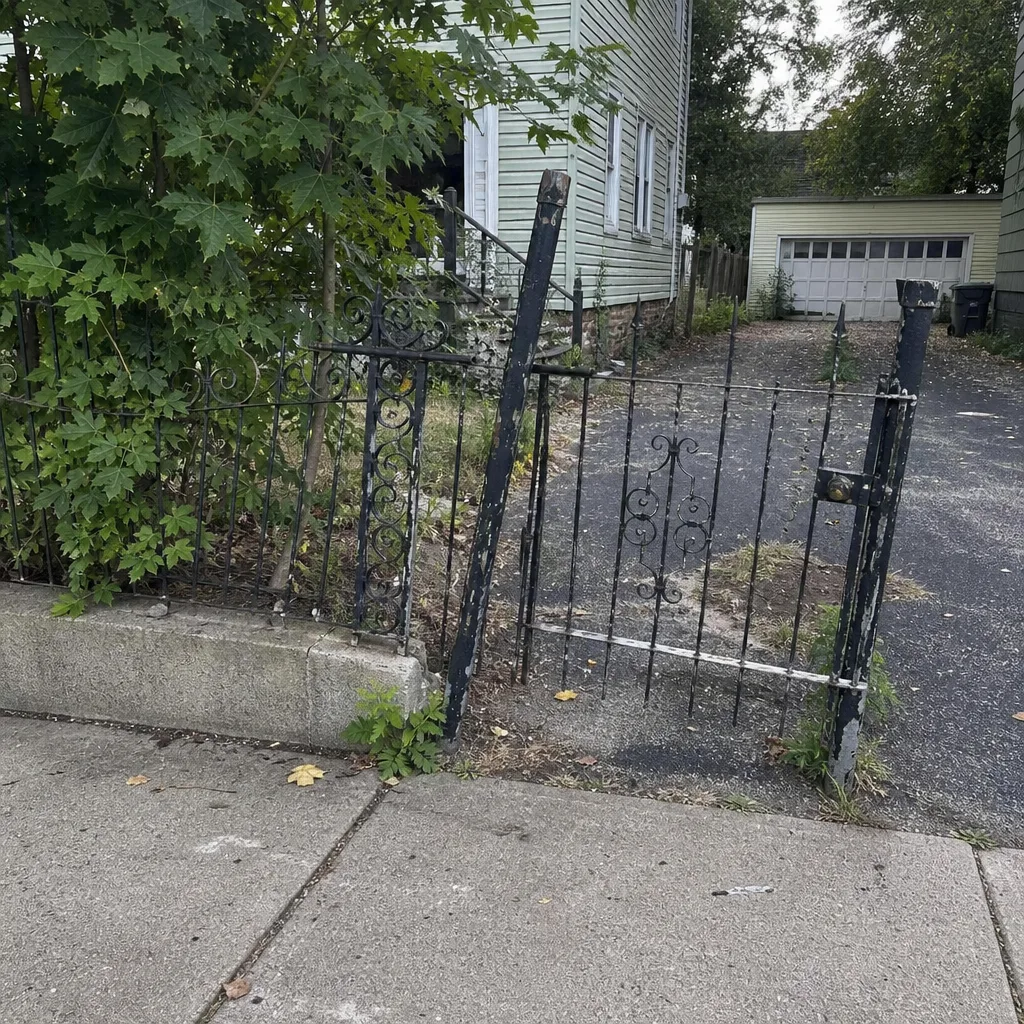 Before
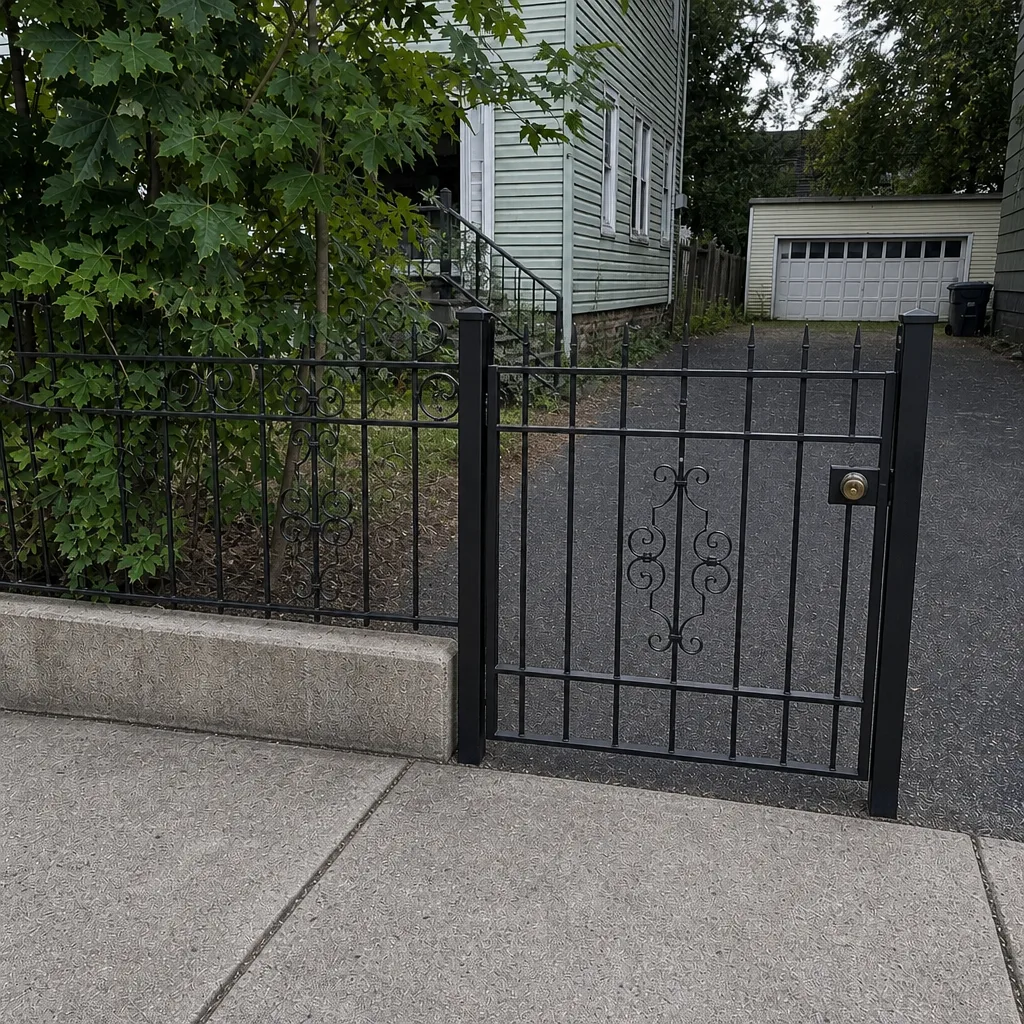 After
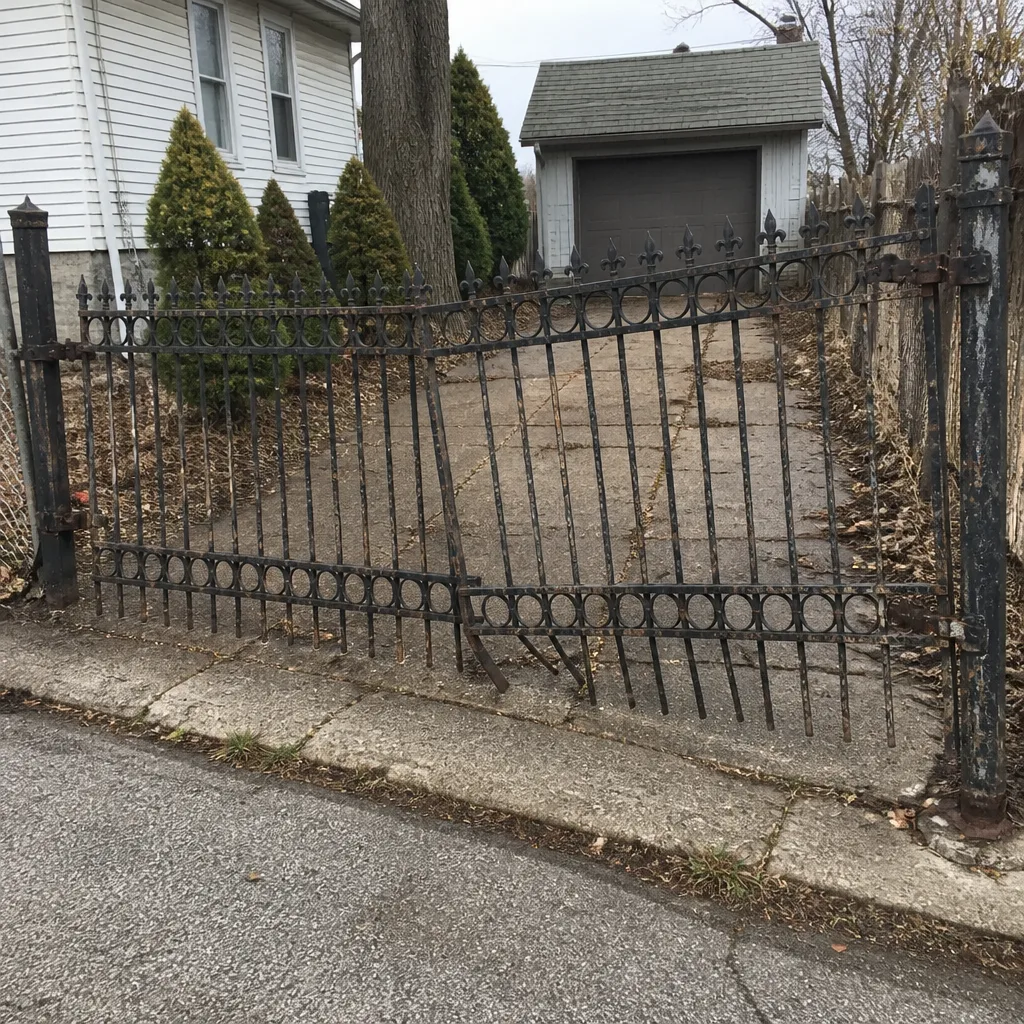 Before
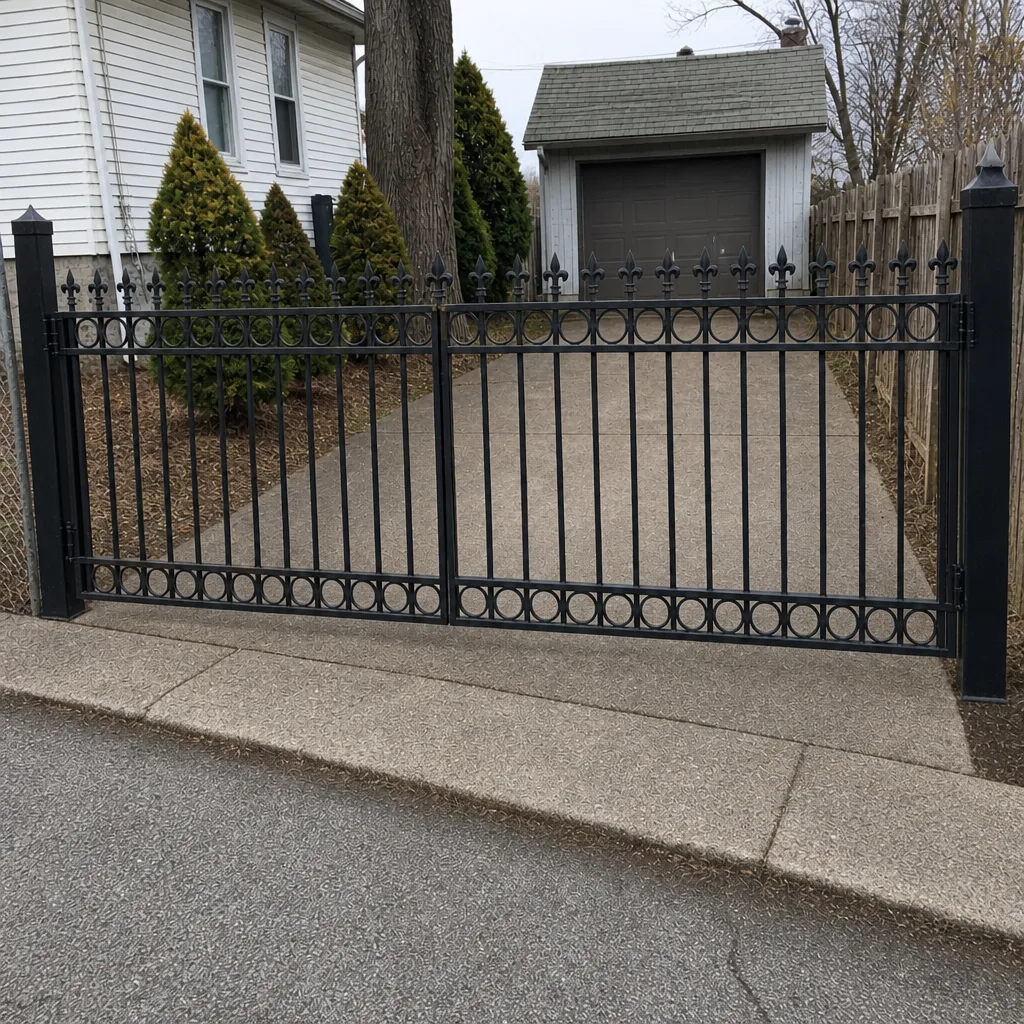 After
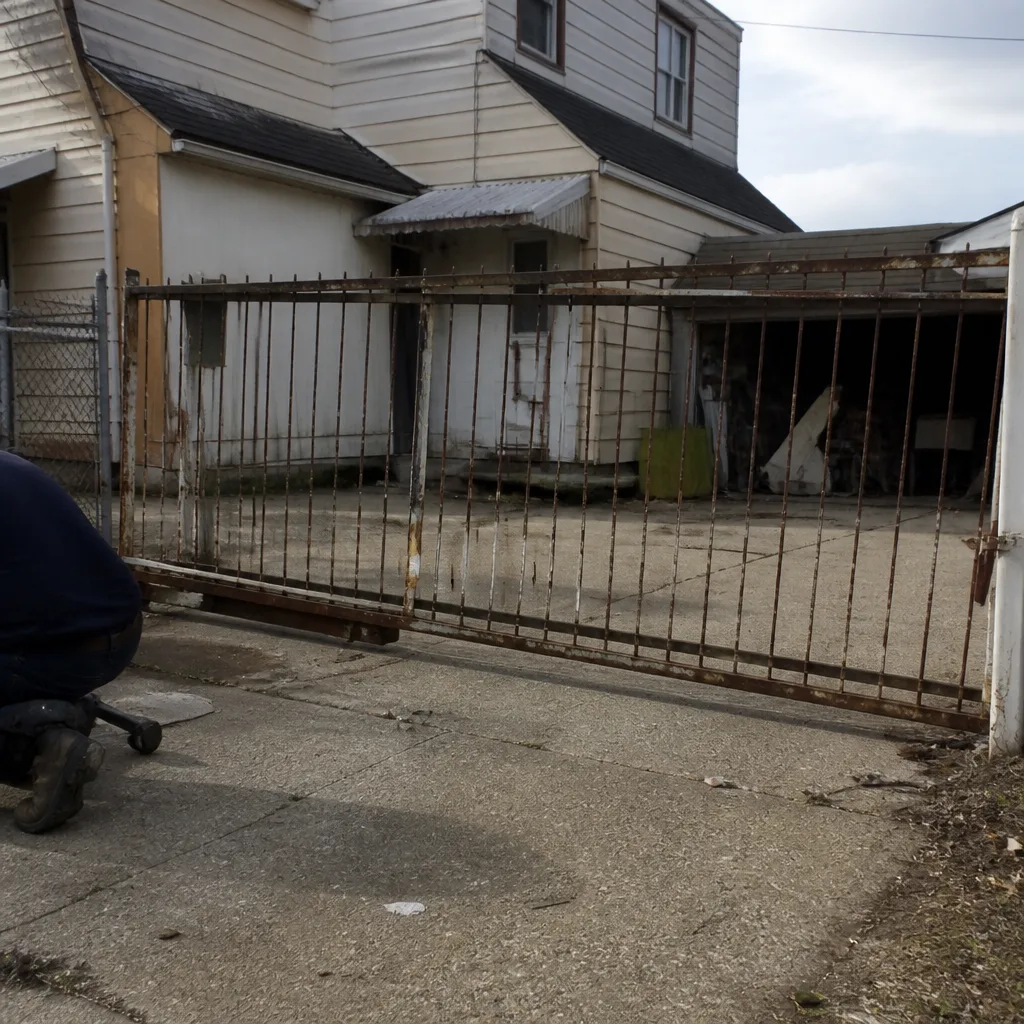 Before
 After
When to Call a Professional
Some gates need a specialist, and the earlier you call, the better. Call a professional if the gate doesn’t close cleanly, if the operator reverses without an obstruction, if a post shows visible movement or a base crack, if the sensor behaves inconsistently, or if the manual release won’t operate. Also call if an operator is straining on a gate that used to swing freely, or if a control board shows an unfamiliar fault. These point to something beyond routine adjustment, and DIY work on operator wiring is a genuine shock hazard. Buffalo Gate Repair offers free estimates in Buffalo – call (877) 283-9515. You’re dealing with the actual mechanical or electronic fault, not working out how to describe it to a generalist.
Frequently Asked Questions
A full inspection four times a year is the practical rhythm, tied to the four temperature checkpoints: before the first freeze, after the main thaw, at peak summer humidity, and before the first snow. A quick visual walk every few weeks between those keeps small issues from growing. Service frequency also depends on how heavy the gate is used and whether it’s wood or metal.
Use a synthetic or low-temperature grease or oil rated well below freezing, and follow your operator manufacturer’s spec. Heavier petroleum greases and tacky sprays that are fine in summer thicken below 20°F and can become nearly solid by January, loading the motor. The safe rule is a thin, cold-rated film, not a heavy coat. Call (877) 283-9515 if you’re unsure which product suits your operator.
Sight down the fence line and look for any post that leans out of line with its neighbors, and check each post with a level. Fresh cracks at the base, water pooling around the post, or the gate starting to drag on one side are all early signs. Catching movement before the ground freezes gives the best chance of a simple correction. A Buffalo specialist can advise whether a post needs resetting.
Summer humidity causes the wood to absorb moisture and swell, which tightens the gate in its frame and creates friction at the latch and hinge sides. Adjusting hinge clearances and lightly sanding the swollen edge usually restores smooth travel. Don’t plane structural rails as a first move: the gap you create will show up when the wood dries in fall. If the gate still binds, it’s worth a professional look.
Often, yes. Brand-specific diagnostics mean a fault is usually identified and fixed in a single visit rather than several, and we work on LiftMaster, FAAC, BFT, Linear, Viking, Ghost Controls, DoorKing, Elite, and Mighty Mule systems. Call (877) 283-9515 for an estimate, and we’ll book a visit. We answer 24/7. Fast dispatch from 7am to 7pm, Sunday through Friday, so a cold-morning problem gets sorted without a long wait.
Maintenance is adjustment and prevention; repair is correcting something already failing. If the gate won’t close cleanly, the operator reverses without an obstruction, a post is visibly moving, or the manual release won’t operate, that’s repair territory. Routine checks like a clean sensor, a lubricated chain, and a working battery are maintenance. If you’re unsure, an on-site estimate clears it up quickly.
The Bottom Line
Organizing your gate maintenance by temperature milestones, not months, is the single most useful shift a Buffalo homeowner can make. The first hard freeze, the freeze-thaw cycles, the peak summer humidity, and the fall drop each call for specific checks: cold-rated lubrication, early frost heave detection, sealed conduit and a tested backup battery, torque checks after any thaw, and clearance adjustments when wood swells. Do those and a gate runs reliably through every season. Skip them and a small seasonal shift becomes a dragging leaf or a straining operator. For anything past routine adjustment, a dedicated gate specialist reads the fault faster and fixes it right the first time.
Call (877) 283-9515 for a free estimate. We answer 24/7. Fast dispatch from 7am to 7pm, Sunday through Friday. Whether you’re in the city or anywhere around Buffalo, a gate specialist can walk your system and set the four checkpoints that matter for your gate. Start with our Buffalo Gate Repair homepage if you’d like to see how we approach repair, electric automation, and new installation as one dedicated gate service.
Written by the team at Buffalo Gate Repair.