
Last updated November 15, 2026
 Wrought iron
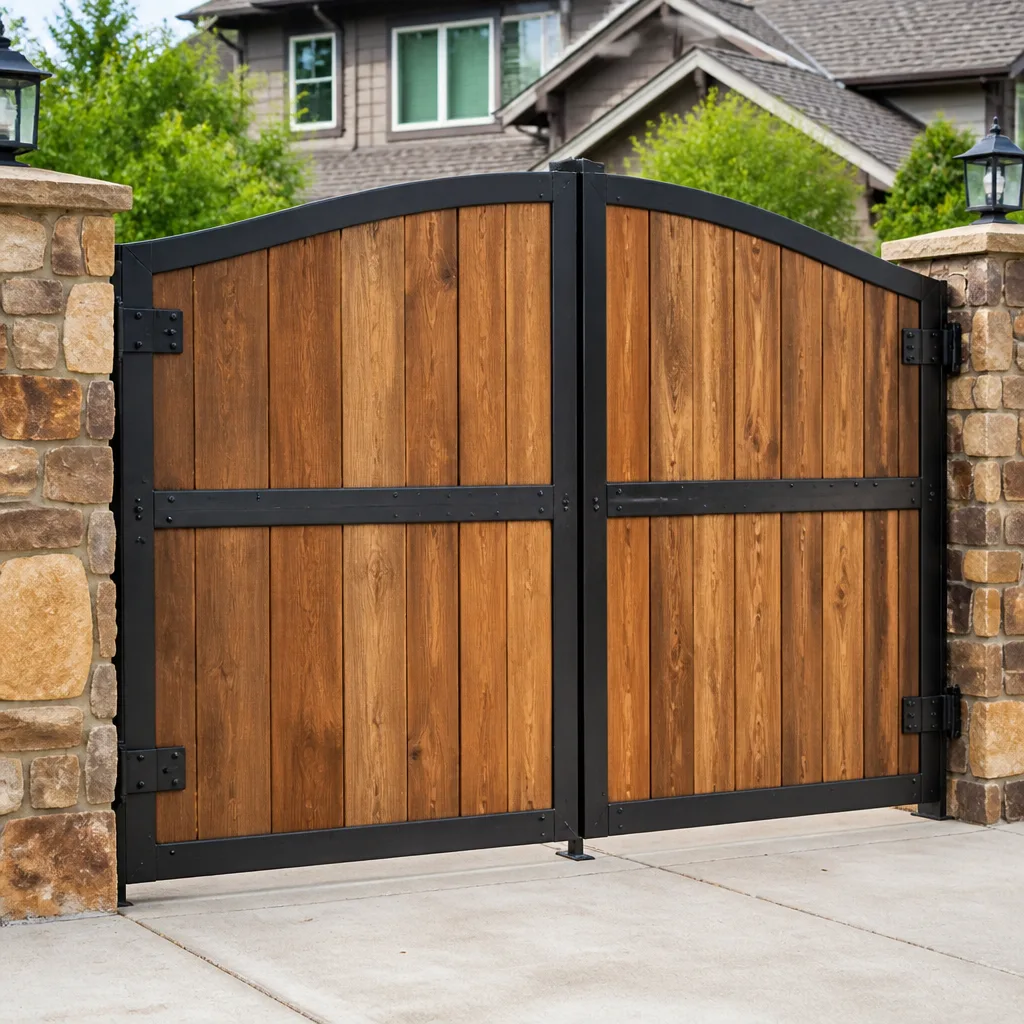 Wood & steel frame
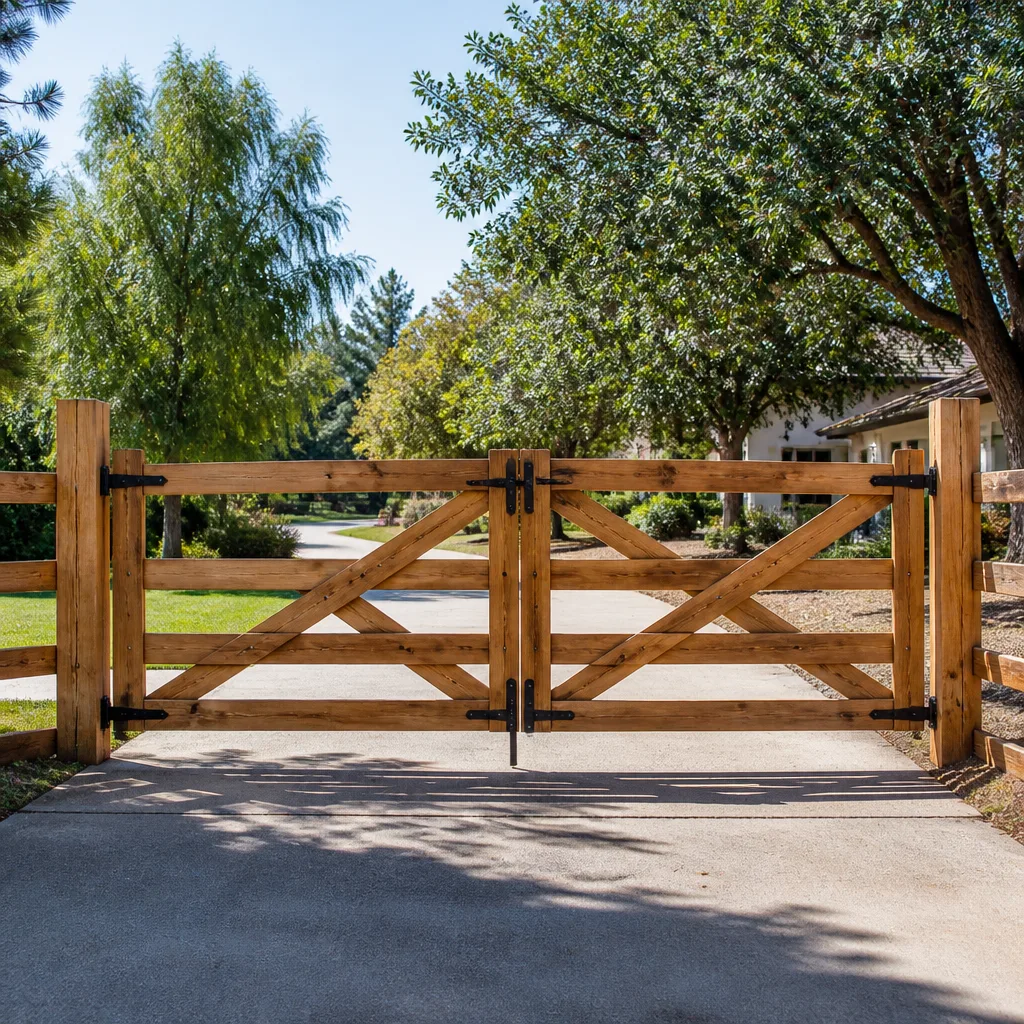 Farm & ranch
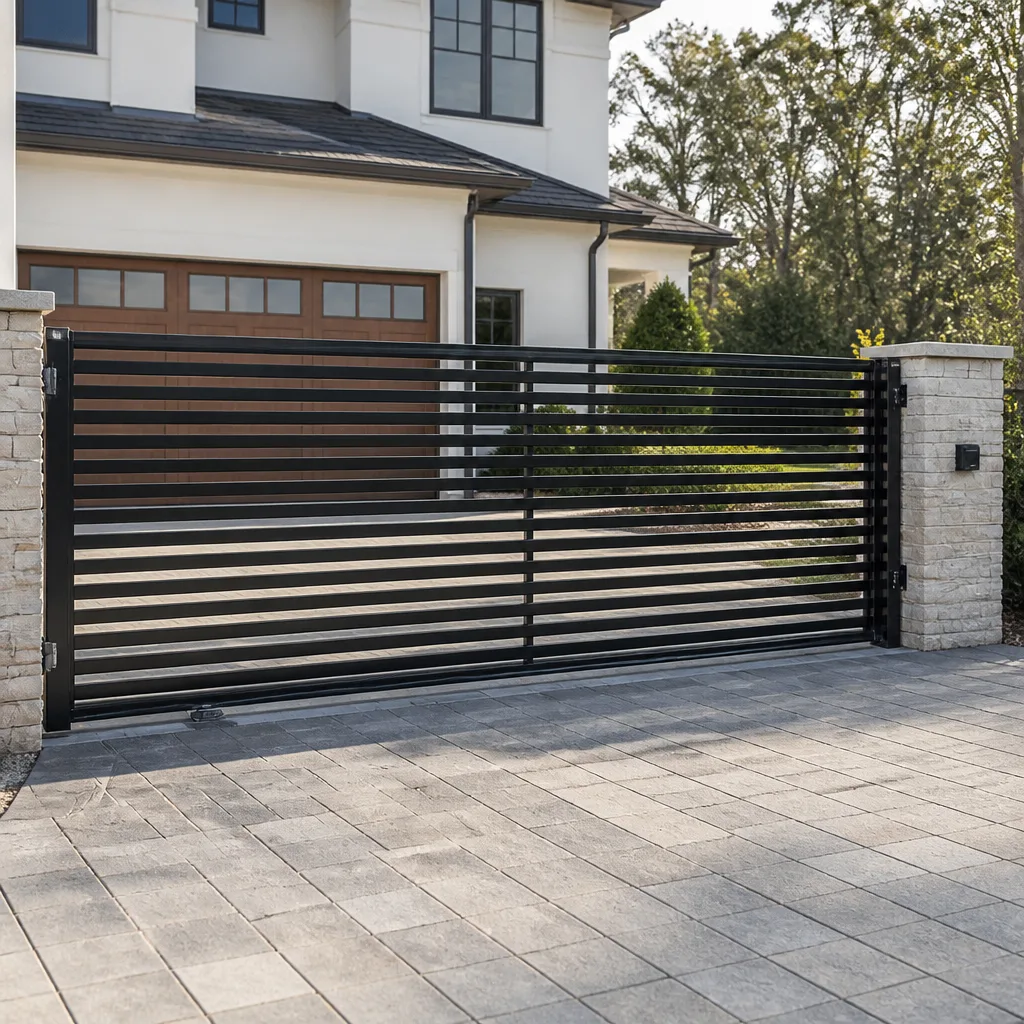 Sliding driveway gates
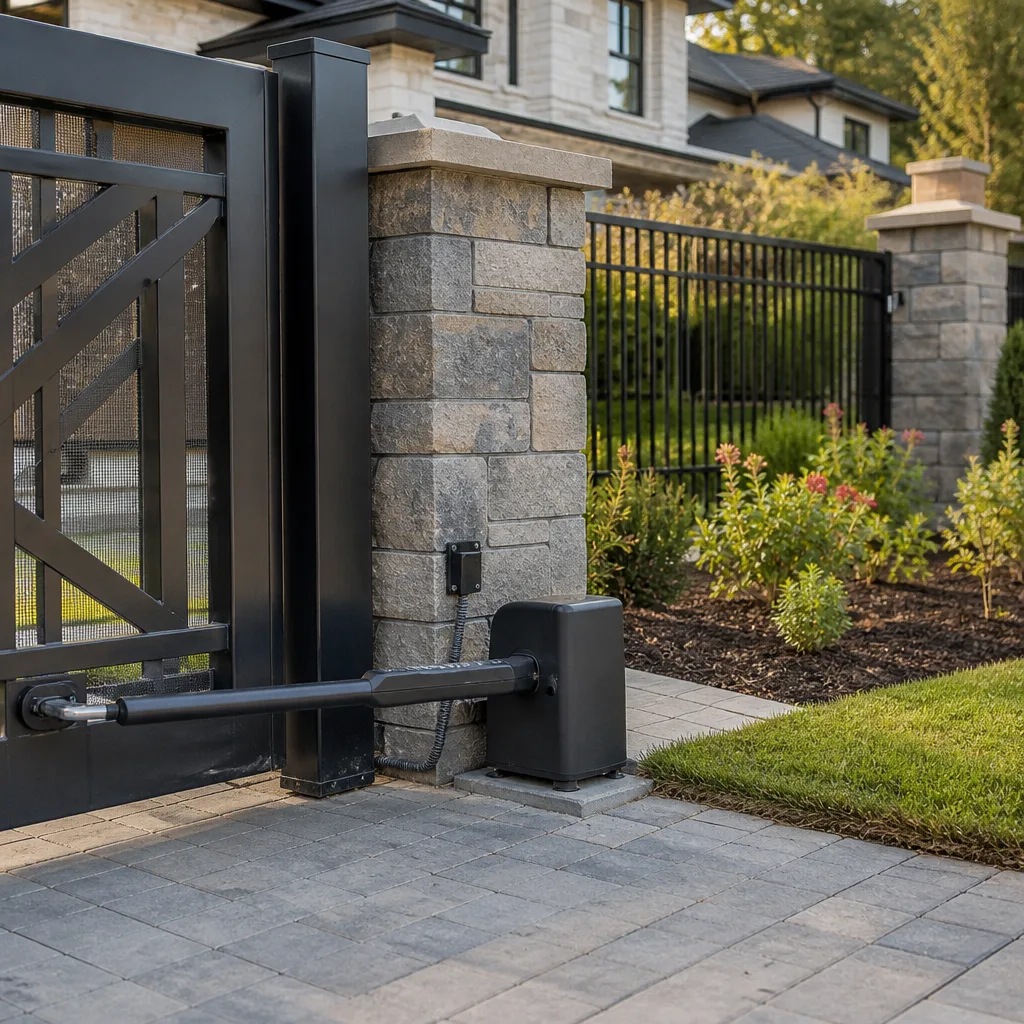 LiftMaster operators
Free on-site gate assessment - hinges, posts, and your LiftMaster or Nice gate operator checked before anything is quoted
The assessment is free and the quote is the invoice.
Get your free estimateSeasonal Gate Repair Care for Buffalo: Year-Round Homeowner’s Guide
Most gate owners think winter is the enemy. In Buffalo, that’s only half right. The failures that leave a driveway gate stuck open in January were usually locked in months earlier, on an October afternoon when the ground was still soft and the soil moisture was near its yearly high. A post settles a quarter inch in wet ground, the first hard freeze grabs it there, and the misalignment sits quietly until ice and heaved soil make it obvious. This guide treats Buffalo’s climate honestly: two damaging freeze-thaw shoulder seasons, a short working window in between, and a summer that stresses operators in ways most homeowners never consider. We’ll walk through what to check, when to check it, and why the calendar matters more than the checklist.
Quick Answer
Seasonal gate care in Buffalo comes down to a simple weight: fall and spring demand the most attention, because freeze-thaw cycles shift posts, heave foundations, and stress hardware more than deep winter does. Before the first freeze, check post stability, hardware torque, and drainage. After the thaw, check alignment and travel. Through summer, watch operator batteries, control boards, and solar sensor angles. A gate that gets checked at the right times usually skips the mid-winter emergency call entirely.
Styles & brands we work with
- Wrought iron
- Wood & steel frame
- Farm & ranch
- Sliding driveway gates
- LiftMaster operators
Table of Contents
- Why Buffalo Really Has Two Damaging Seasons
- The Fall Pre-Freeze Checklist, Ranked by Failure Impact
- The March-April Thaw: When Damage Becomes Measurable
- Summer Care for Automated Gates: Heat, Batteries, and Sun Angle
- Winterizing Operators With Battery Backup
- The Post-Storm Inspection Sequence After a Lake-Effect Event
- When to Call a Professional
- Frequently Asked Questions
Why Buffalo Really Has Two Damaging Seasons
Buffalo’s gate calendar isn’t four equal quarters. It’s two shoulder periods where freeze-thaw cycling does the real damage, a brief functional window in high summer where mechanical wear is low but electronic stress is high, and a winter that mostly reveals problems already set in motion. If you spend your maintenance attention evenly across the year, you’re spending it in the wrong place.
Here’s why the shoulders matter. Soil under a gate post behaves very differently at 34 degrees than at 14. When temperatures cross the freezing line repeatedly, water in the soil expands, contracts, and moves. Posts shift. Concrete footings hairline-crack. Hinges that were tight in October open up a few degrees by April. Around Buffalo, that cycling happens hardest in late October through early December and again from mid-March into April, when days thaw and nights refreeze. Deep January cold is stable cold, and stable cold does less mechanical damage than most people assume.
Summer brings a different problem set. Heat is hard on control board components, on sealed lead-acid batteries inside operator housings, and on anything that depends on a sun sensor reading. On an automated gate running a LiftMaster or FAAC operator, a summer afternoon can push internal cabinet temperatures well above ambient, and a battery that was fine in May can fail its first real deep cycle in August.
So the year splits into three jobs, not four:
- Pre-freeze preparation (October-November): stabilize, tighten, drain, test. Where most of your attention belongs.
- Post-thaw assessment (March-April): measure what shifted, correct alignment, fix what the freeze exposed.
- Summer thermal care (June-August): battery health, operator cooling, sensor calibration.
Deep winter and high summer need monitoring, not heavy labor. Get the shoulders right and the rest of the year mostly takes care of itself.
The Fall Pre-Freeze Checklist, Ranked by Failure Impact
Most fall gate checklists you’ll find online are alphabetical or arbitrary. That’s not useful, because the tasks are not equally important. Ranked by how much each one actually prevents a winter failure, here’s the order that matters.
1. Post and footing stability (highest impact)
Walk to each post and try to rock it by hand. It should not move. If it does even slightly, that movement gets locked into the ground by the first hard freeze, and it worsens through the winter. Soft, saturated fall soil is the last chance you have to catch a settling post before it’s committed for the season. This single check prevents more spring misalignment calls than every other item combined.
2. Hinge, latch, and hardware torque
Cold contracts metal and shrinks the clearance inside every hinge pin. A hinge that’s a hair loose in September will wear visibly by January. Tighten hardware and check the latch engagement point, since a latch that meets its strike plate slightly off in fall will miss it entirely once the gate shifts.
3. Drainage at the gate line
Standing water that freezes under a gate is worse than standing water alone. Before the ground hardens, clear any drainage path so meltwater has somewhere to go. A gate that ices into a puddle pocket every freeze will need frequent freeing and can bend hardware over time.
4. Operator battery and power check
Test the operator on battery backup. A battery that can only hold the gate open for a second or two in October will fail completely in February. This is also the time to inspect the sealed enclosure for moisture that got in during summer storms.
5. Safety sensor and photo-eye alignment
Low sun angles in fall and winter throw light across photo-eyes at angles summer never produces, which causes false triggers or phantom reverses. Clean the lenses and confirm alignment now, not after the first cold snap.
6. Lubrication on mechanical parts
Use a cold-rated lubricant on hinges, rollers, and tracks. A summer-weight grease will thicken and stiffen below freezing and add load to the operator, which is exactly the load you don’t want in the coldest weeks.
Nail those six before the ground freezes and you’ve done the highest-value work of the entire year. Most winter emergency calls we handle trace back to one of these being skipped.
The March-April Thaw: When Damage Becomes Measurable
This is the part almost no homeowner plans for. Winter doesn’t actually break gates; it hides the breaks. A post that shifted a quarter inch in November sits frozen in that shifted position until the spring melt softens the ground again, and only then does the misalignment become something you can measure, feel, and fix.
In our experience, the thaw is the single most productive window for a real assessment. That’s when you can see:
- Movement that wasn’t visible in the cold. Ground around posts softens, and a settling post shows itself clearly against the gate line.
- Hardware damage the freeze opened up. Cracked hinge plates, hairline cracks in a footing, and stretched hardware all surface once things warm.
- Operator alignment drift. Limit switches and travel stops that were correct in fall often need re-adjusting because the gate swung a few degrees off plumb over the winter. On a LiftMaster or BFT operator, this is a quick recalibration when caught in spring and a dead motor when ignored through a year of over-travel.
- Corrosion and water intrusion. Any moisture that got into an enclosure and froze may have split a gasket or cracked a control board seal. Spring is when you can open it up and check without fighting ice.
The honest advice here is counterintuitive: if your gate feels fine in April, still walk it. The thaw is the only window when early misalignment is still cheap to correct. By June the ground firms up and a shifted post feels solid again, so you stop noticing the problem while it keeps working on the hardware. Plenty of the repairs we see in gate repair calls each spring were already visible in March if someone had looked.
Summer Care for Automated Gates: Heat, Batteries, and Sun Angle
Summer is easy on the mechanical parts and hard on the electronics. If you own an automated gate, this is the season to think about the operator, not the hinges.
Heat is the quiet problem. A sealed operator cabinet baking in direct sun can reach temperatures well past the surrounding air, and the components most sensitive to it are the control board and the battery. If your operator housing sits in full afternoon sun, even a bit of shade or ventilation helps, and if the manual allows it, keep foliage trimmed back from the cabinet.
Batteries are the single most common summer failure. A sealed lead-acid battery in an operator that sat at part charge all winter can carry the gate for a month or two of light spring use and then fail on the first long summer outage. Test the battery under load in June, not after the gate stops working. Backup batteries are a consumable, and on most operators they age out on a predictable schedule.
Then there’s sun angle. A solar panel mounted for winter sun angle is under-performing by mid-summer, and a photovoltaic photo-eye that points the same way it did in December can start false-triggering as the sun shifts. On a Mighty Mule operator on a solar setup, a small seasonal tilt adjustment to the panel makes a real difference to charging through the bright months. Check panel angle and photo-eye alignment together, twice a year, at the solstices.
The short version: in summer, leave the hinges alone and put your hands on the electronics.
Winterizing Operators With Battery Backup
If your gate operator has a battery backup, the weeks before the first extended stretch of below-zero forecasts are your window to prepare it. A backup battery is there for the day mains power drops, and in a Buffalo winter that day usually arrives with ice on the gate. You don’t want to discover a weak battery by walking out to a gate that won’t move.
Here’s what winterizing actually means for a battery-backup operator:
- Load-test the battery, don’t just read the voltage. A resting voltage reading looks fine long after a battery has lost the capacity to move the gate. Put the operator through a full open and close cycle on battery alone and time it.
- Clean and inspect the enclosure. Check gaskets and seals, and clear any debris or water that’s collected inside. Moisture that freezes inside a cabinet can split a housing or short a board.
- Confirm the battery disconnect and charge circuit. Make sure the charger is actually reaching the battery and that any backup override behaves correctly.
- Check cold-rated lubrication on the gate itself. A stiff gate drains battery faster on every backup cycle, and in winter the battery is doing more of the work.
- Test the safety reverse and photo-eye. Cold weather can stiffen a gate enough to change how it stops and reverses, and on an automated gate the safety edges and sensors are what protect a person from a moving panel. Test them under winter conditions, not just on a warm fall day.
A word on safety here, and it’s a serious one. The operator’s wiring and its power supply are dangerous to work on, and the gate panels themselves are heavy enough to injure someone badly if they move unexpectedly. This is one of those jobs where a trained professional should be the one inside the cabinet. Our technicians have up to 15 years of experience with operator systems, and we test, diagnose, and repair the electrical side so you don’t have to. Read the operator manual for the sequence that shuts off power before any check, and let a specialist handle anything beyond a visual look.
The Post-Storm Inspection Sequence After a Lake-Effect Event
Lake-effect snow is Buffalo’s signature weather, and an event dropping more than 12 inches changes what a gate inspection should look like. After a heavy event, the order you check things in matters, because a hardware problem can make a foundation problem look worse, and an electrical problem can hide behind both.
Run the check in three tiers, in this order:
Tier 1: Hardware
- Look at every hinge, roller, and latch for bending or broken mounts. Heavy snow load and plow spray can shift a gate panel against its hinge and twist hardware.
- Confirm the gate swings or slides freely by hand, if it’s safe to disconnect the operator. A gate that binds by hand has a mechanical problem you want to find before the operator strains against it.
- Check that nothing has been forced out of alignment by snow piled against the gate.
Tier 2: Foundation and posts
- After the hardware, check the posts and footing. A heavy drift that sat against a post and then melted can leave the ground soft and the post shifted.
- Look at the gate line for any new sag or gap. This is where a misalignment shows up first.
- Check drainage around the base. A thaw after a storm event softens the ground, and any shifted footing will reveal itself here.
Tier 3: Electrical and operator components
- Only after hardware and foundation are cleared do you look at the electronics. Check the operator enclosure, any exposed wiring, and photo-eyes for snow damage or water intrusion.
- Confirm the safety edges and sensors work before running the operator. If a storm has knocked a photo-eye out of alignment, the gate may close on something it shouldn’t.
- Test a full open and close cycle on power and again on battery, if the operator has backup.
Handle these in order and you’ll catch the real problem on the first pass. Skip to the operator and you’ll spend an hour chasing electronics when a hinge was bent all along. When the electronics are the problem, a dedicated electric gate repair call handles the motors, controls, and safety sensors in one visit, which matters after a storm when you want everything sorted at once.
See the difference
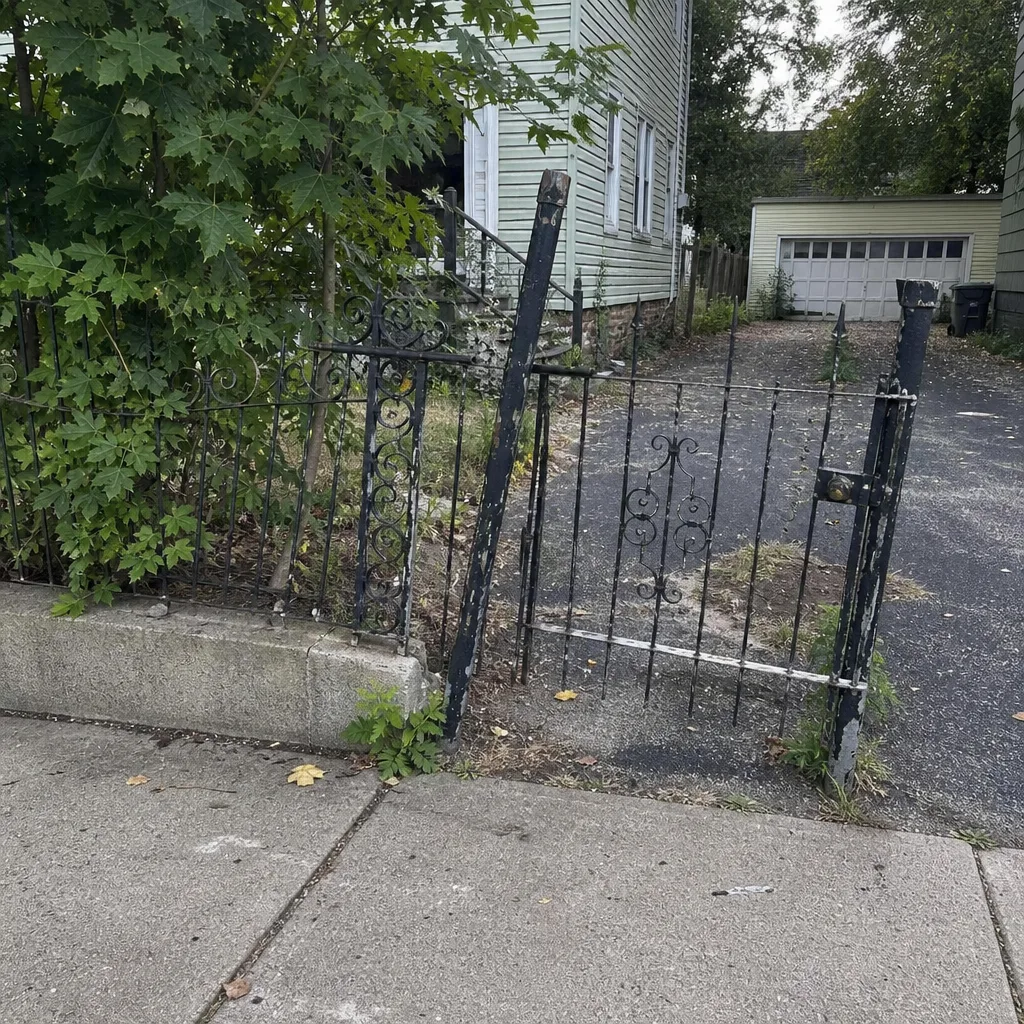 Before
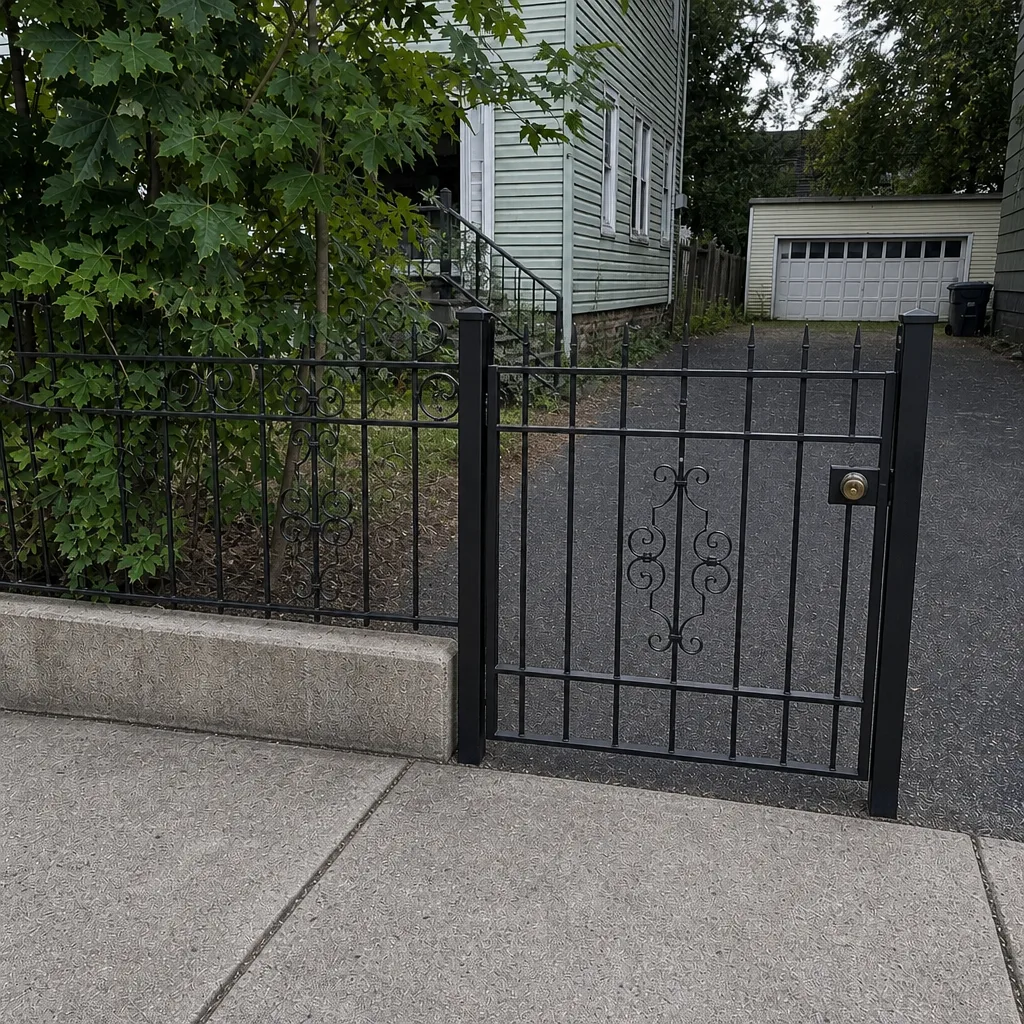 After
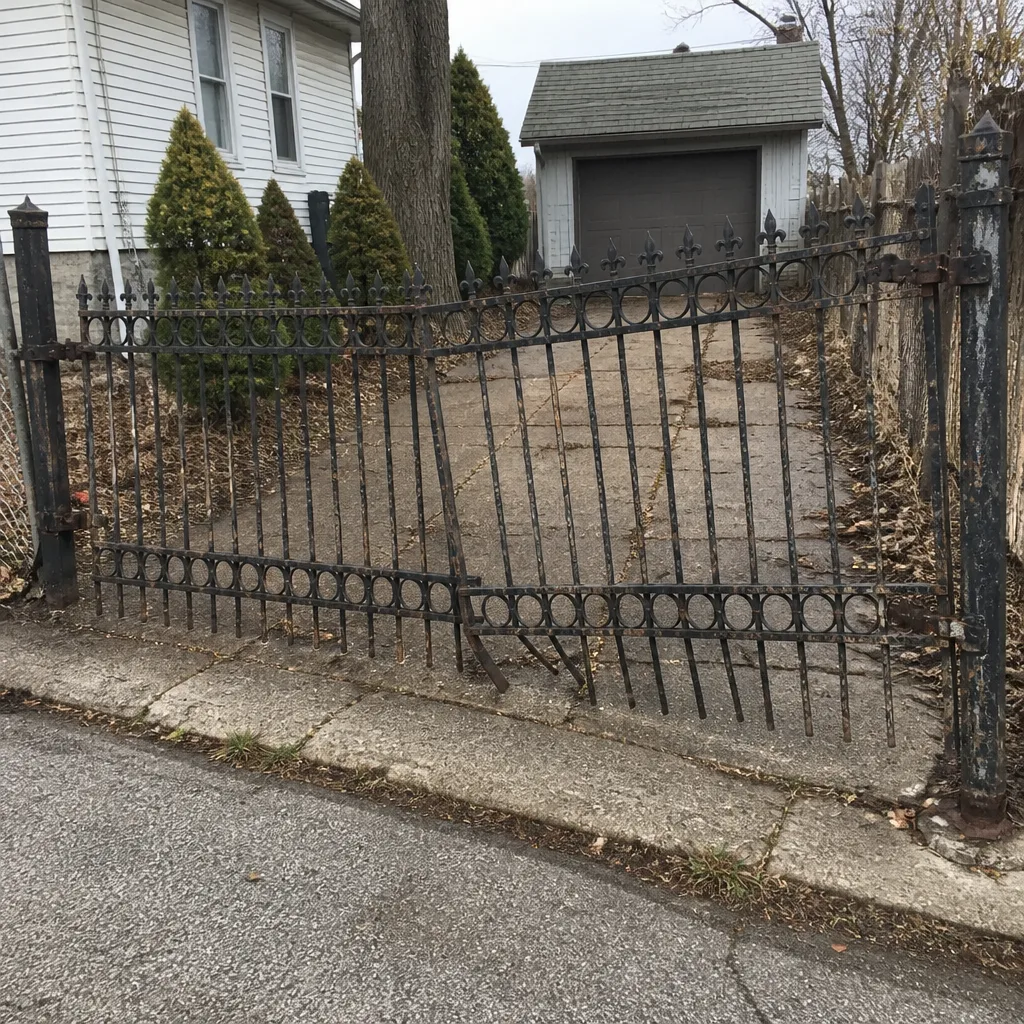 Before
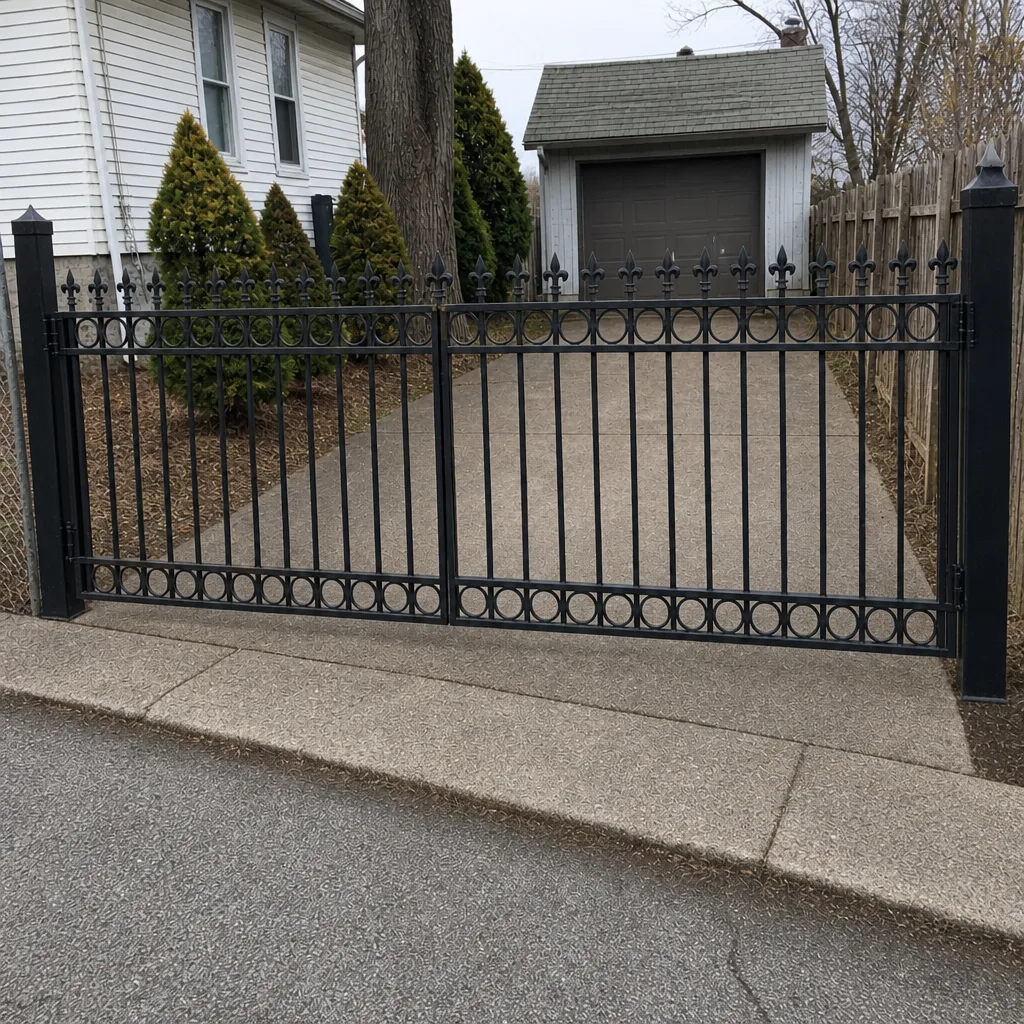 After
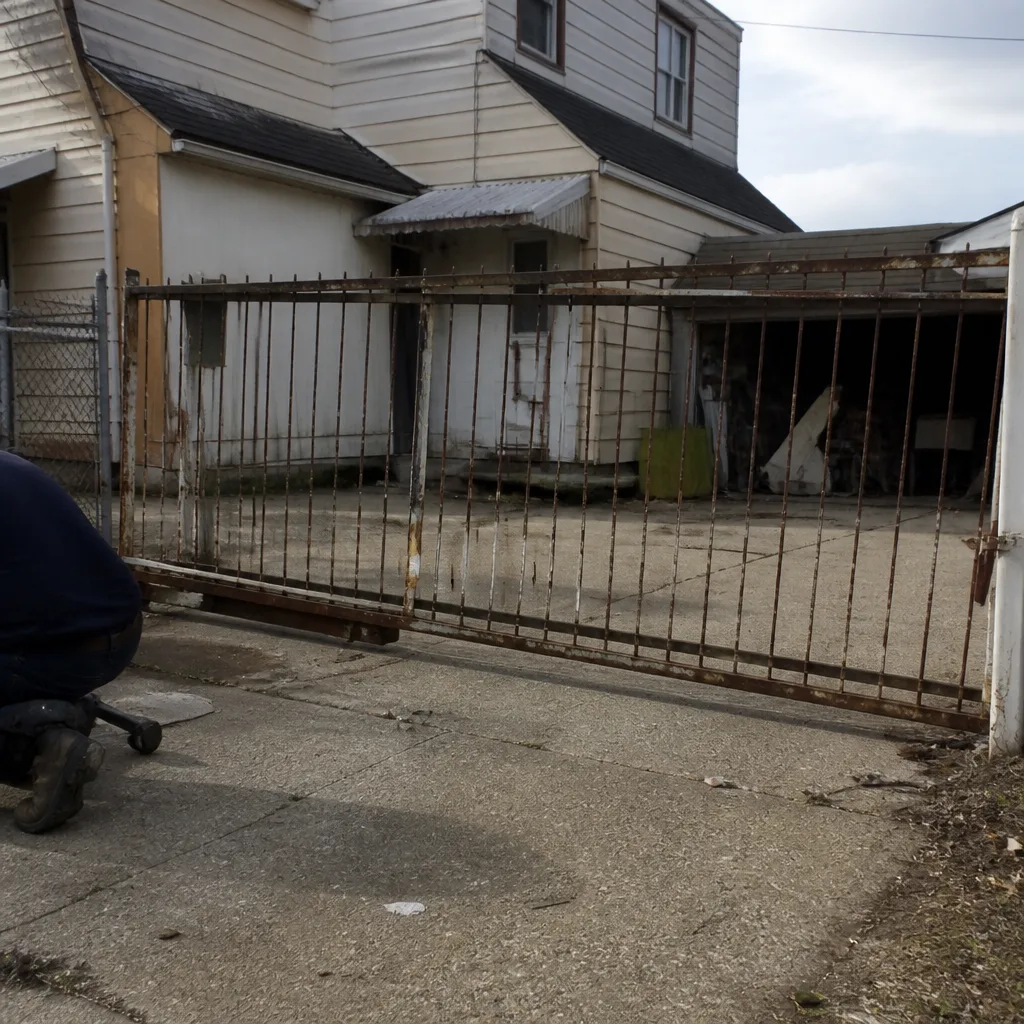 Before
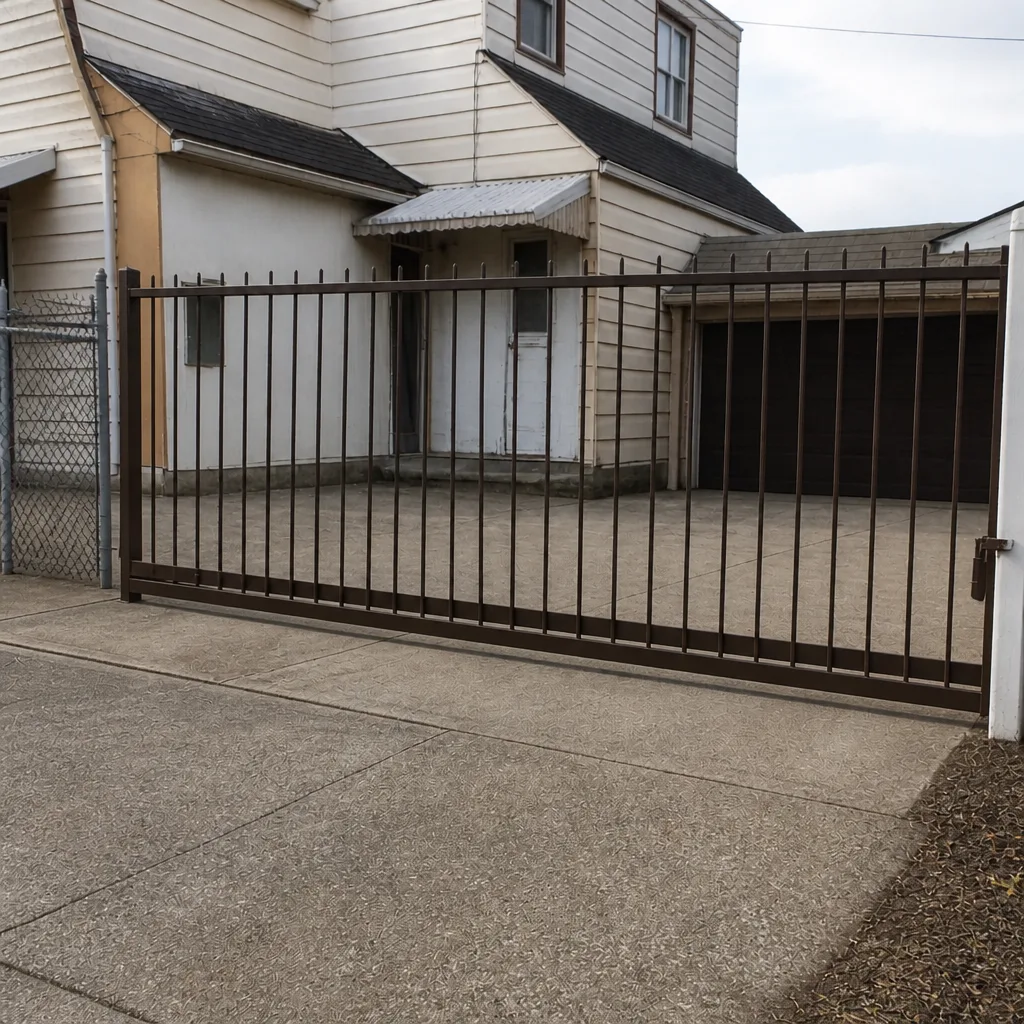 After
Common Mistakes to Avoid
- Waiting until the gate stops working to look at it. By the time an automated gate refuses to open, the underlying issue has usually been building for a season. A two-minute check in October and April catches far more than a call in January.
- Doing all the work in fall and skipping the thaw. The March-April thaw is the one window when winter shift is still measurable and cheap to correct. Skip it and the same misalignment becomes a hardware problem by summer.
- Ignoring the battery backup all summer. A backup battery on a Buffalo gate gets its real test in winter power outages. Test it under load in summer so you know it will carry you when it counts.
- Greasing mechanical parts with summer-weight lubricant. A grease that stiffens below freezing adds load to the operator every cold cycle, and the damage shows up months later.
- Assuming a heavy snowpack on the gate is harmless. Snow piled against a gate and left to melt can shift a post and soften the ground under it. Clear drifts from the gate line after big events.
- Opening an operator cabinet and poking at the wiring. The power supply and control wiring are dangerous. Visual checks and testing safeguards are fine; work inside the cabinet should go to a specialist.
- Treating a generic handyman as a gate specialist. General repair people routinely decline automated gate work because it sits outside their training. On a modern operator, a brand-specific diagnosis saves time and avoids replacing parts that aren’t broken.
When to Call a Professional
Some seasonal care is genuinely a homeowner job: clearing drifts, walking the gate line, tightening a hinge, cleaning photo-eye lenses, checking drainage. Some of it isn’t. Call a dedicated gate specialist when the gate won’t open or close reliably, when a post is shifting or a footing is cracking, when an operator’s motor, control board, or safety sensors misbehave, or when you’ve winterized a battery backup and it still won’t carry the gate. Also call if you’ve noticed a misalignment that won’t adjust out, or any binding that the operator is working against. These are the situations where a quick diagnosis prevents a bigger repair, and where a gate-only specialist catches problems a generalist would miss.
Buffalo Gate Repair offers free estimates in Buffalo. Call (877) 283-9515. We answer 24/7. Fast dispatch from 7am to 7pm, Sunday through Friday. We repair and service the brand your gate already runs on, including LiftMaster, FAAC, BFT, and Mighty Mule operators, and we price the job per written estimate before any work starts.
Frequently Asked Questions
The best time is late fall, before the ground freezes, with a second check right after the spring thaw. Fall is when you can still correct a settling post; the thaw is when winter shift becomes measurable. Those two windows catch more problems than any other time of year. For an exact quote on a seasonal check, call (877) 283-9515. Estimates are free.
Winter failures usually start in fall, when soil moisture is high and a post or footing shifts before the first hard freeze locks it in place. Cold then hides the problem until ice, snow load, or a power outage forces the gate. A pre-freeze check of posts, hardware, and battery backup prevents most of these.
Yes, especially after an event over 12 inches. Check hardware first, then posts and foundation, then electrical components and sensors, in that order. Handling them in that sequence catches the actual problem on the first pass rather than chasing electronics when a hinge was the culprit. If anything’s damaged beyond a visual check, call (877) 283-9515. Estimates are free.
Test the battery under load at least twice a year, in early summer and again before winter. A voltage reading alone won’t tell you if the battery can still move the gate. Since Buffalo winters are when a backup battery gets its real test, the pre-winter test is the more important one.
Yes. A panel set for winter sun angle under-performs in summer, and re-tilting it at the solstices keeps charging reliable. Pair the panel adjustment with a photo-eye alignment check, since both are affected by the changing sun angle.
For basic checks like clearing snow and cleaning photo-eye lenses, yes. For anything involving the operator, control board, safety sensors, or a shifting post, a dedicated gate specialist is the right call. Automated gate systems sit outside what most general repair people are trained for, and a gate-only specialist diagnoses the brand-specific issue faster.
The Bottom Line
Buffalo’s gate year is asymmetric, and treating it that way is the whole point. Put your attention on the two freeze-thaw shoulders: a pre-freeze check in October and November ranked toward posts, hardware, and drainage, and a post-thaw assessment in March and April that measures what shifted. Summer is for batteries, heat, and sun angle, not hinges. Winter is mostly about staying ahead of problems you already prevented. Do the shoulder work, do the battery test twice a year, run the post-storm sequence when a big lake-effect event rolls through, and your gate will get through Buffalo’s worst weather without an emergency call. When something does go wrong, a gate specialist diagnoses it accurately and lets you keep the system you own rather than replacing it. Call (877) 283-9515 for a free estimate with the team at Buffalo Gate Repair.
Written by the team at Buffalo Gate Repair.