
Last updated November 15, 2026
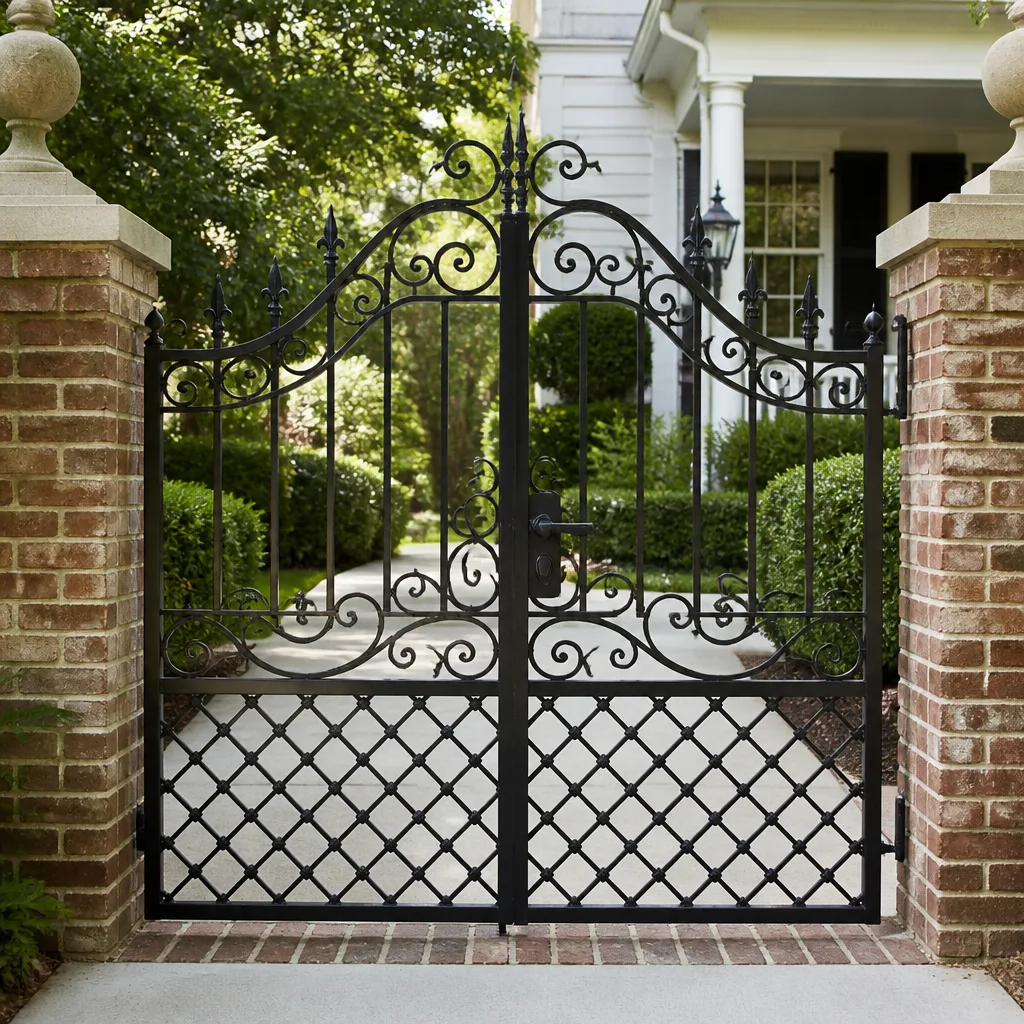 Wrought iron
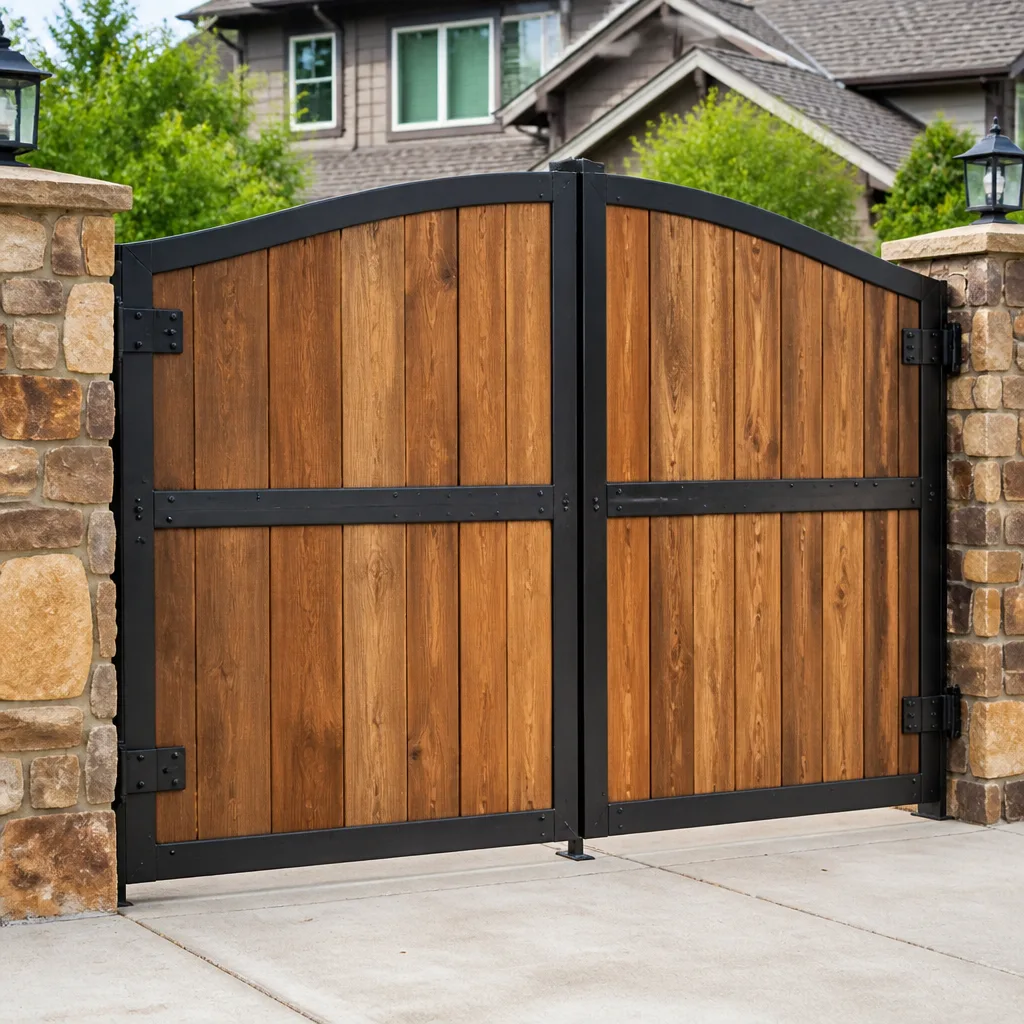 Wood & steel frame
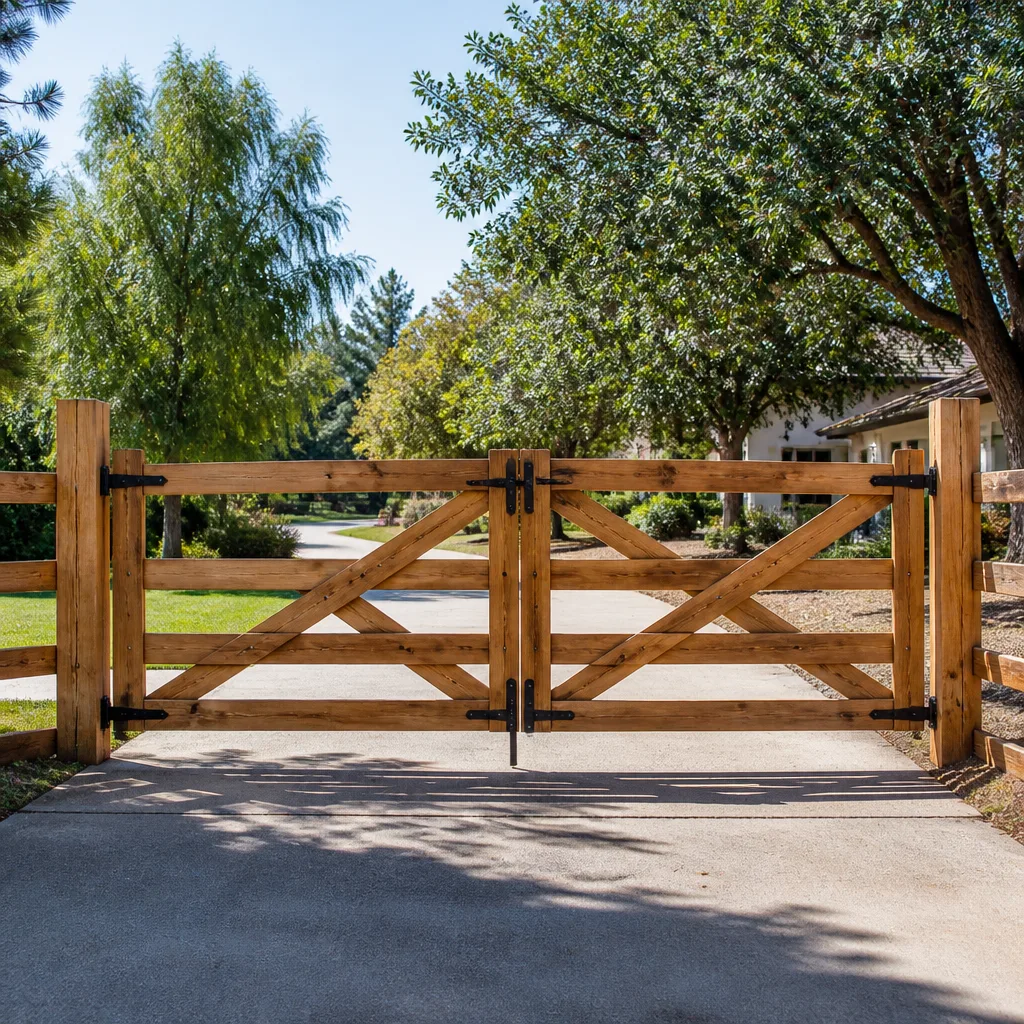 Farm & ranch
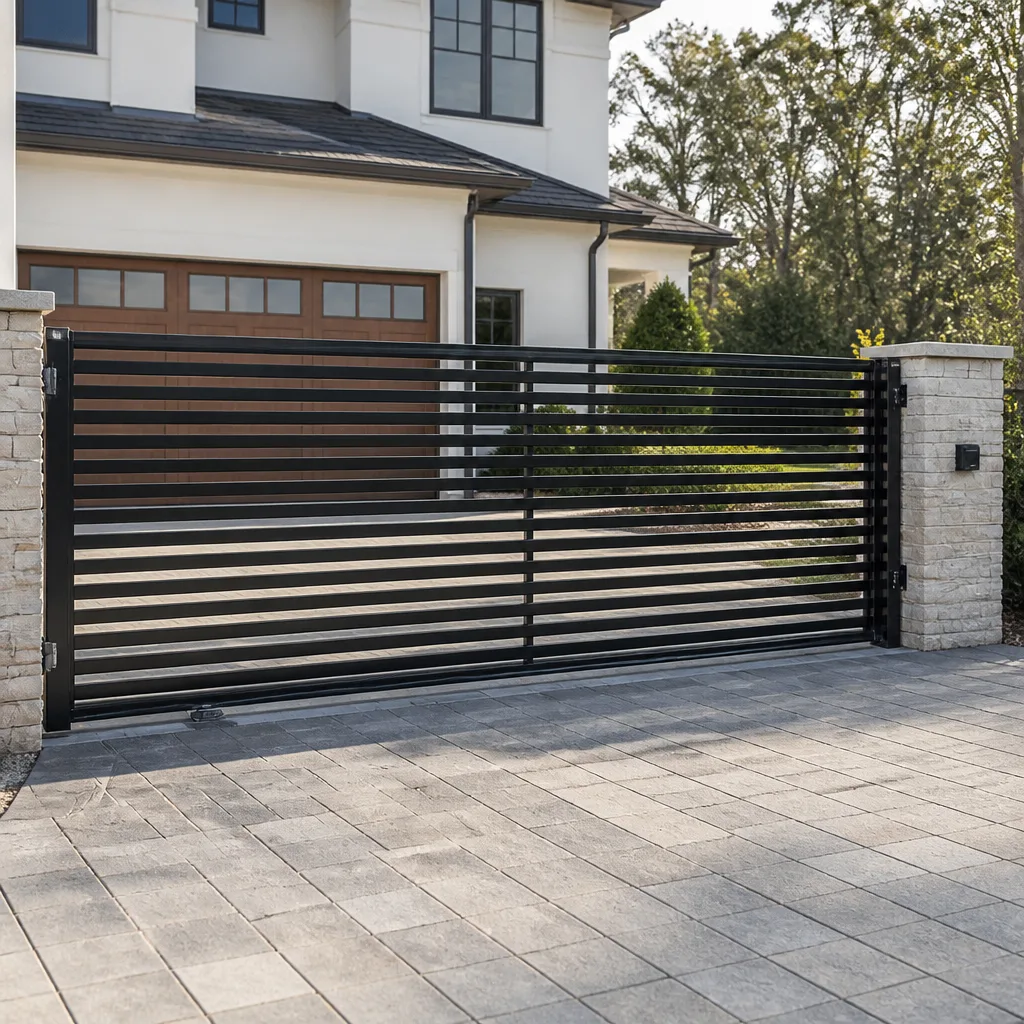 Sliding driveway gates
 LiftMaster operators
Free on-site gate assessment - hinges, posts, and your LiftMaster or Nice gate operator checked before anything is quoted
The assessment is free and the quote is the invoice.
Get your free estimateGate Repair Emergency Preparedness Guide for Buffalo Homes
A gate frozen shut in a Buffalo winter is a minor inconvenience. You chip the ice, wait for a thaw, and life goes on. A gate stuck open during a lake-effect snow event or a nor’easter, with no way to reach a gate technician for hours, is a property security event. The gate won’t close. The driveway stands open to the street. And the difference between a ten-minute fix and a long, cold night usually comes down to what you set up before the storm arrived. This guide covers the specific failures Buffalo weather causes, the manual release on the operators most local homes run, a pre-winter checklist, cold battery backup, and how to document plow or vehicle damage. Mention Buffalo once more: everything here assumes a gate that has to survive a real winter.
Quick Answer
Gate emergencies in Buffalo come from three predictable sources: a gate stuck open during a lake-effect or nor’easter storm, an operator that fails in a hard freeze, and a gate struck by a snowplow or vehicle. Preparing for each means knowing where your operator’s manual release is, building a pre-winter checklist, and having a cold-rated battery backup rather than a standard one. A dedicated gate specialist restores most of these faster than a general handyman because the diagnosis starts from brand knowledge, not guesswork.
Styles & brands we work with
- Wrought iron
- Wood & steel frame
- Farm & ranch
- Sliding driveway gates
- LiftMaster operators
Table of Contents
- Why Buffalo Gate Emergencies Are Predictable
- How to Manually Release the Most Common Gate Operators
- The Pre-Winter Gate Setup Checklist
- When a Plow or Vehicle Strikes Your Gate
- Battery Backup for Gate Operators in Buffalo Cold
- Choosing a 24/7 Gate Specialist vs. a Handyman
- What to Do in the First Ten Minutes of a Failure
- Common Mistakes to Avoid
Why Buffalo Gate Emergencies Are Predictable
Most gate failures in Buffalo follow a pattern set by the weather and by how gates are built. Lake-effect snow dumps heavy, wet accumulation in narrow bands, and that weight lands on gate panels, hinges, and the tracks of slide gates. A nor’easter brings wind that catches a partially open swing gate and pushes the operator past its limit. A deep freeze turns a little trapped moisture into a seized hinge or a frozen latch. None of these are surprises. They’re seasonal constants, which means you can plan for each one instead of reacting in the middle of a storm.
The second half of the pattern is the operator itself. Automated gates fail in cold for mechanical and electrical reasons at the same time. Grease thickens, batteries lose cranking power, and control boards that were fine in October behave differently when the temperature drops well below freezing. When you know which failure your gate is prone to, you can address it before the season turns.
We treat gate work as the only job we do, and that focus matters here. A technician who works on gates every day recognizes a DoorKing control board fault or a Ghost Controls limit-switch issue quickly, because those systems come up repeatedly. That recognition shortens the time between “the gate won’t move” and “here’s what’s wrong.” For homeowners across Buffalo, that speed is the whole point of being prepared. Call (877) 283-9515 when something fails. We answer 24/7, with fast dispatch from 7am to 7pm, Sunday through Friday.
How to Manually Release the Most Common Gate Operators
Every automatic gate operator has a manual release, and knowing where it is before you need it is the single most useful piece of preparedness you can build. When the power goes out or the operator dies, the release lets you move the gate by hand so you can close it, secure the property, or clear a stuck panel. The mechanism differs by type and by brand, so locate yours now rather than in the dark.
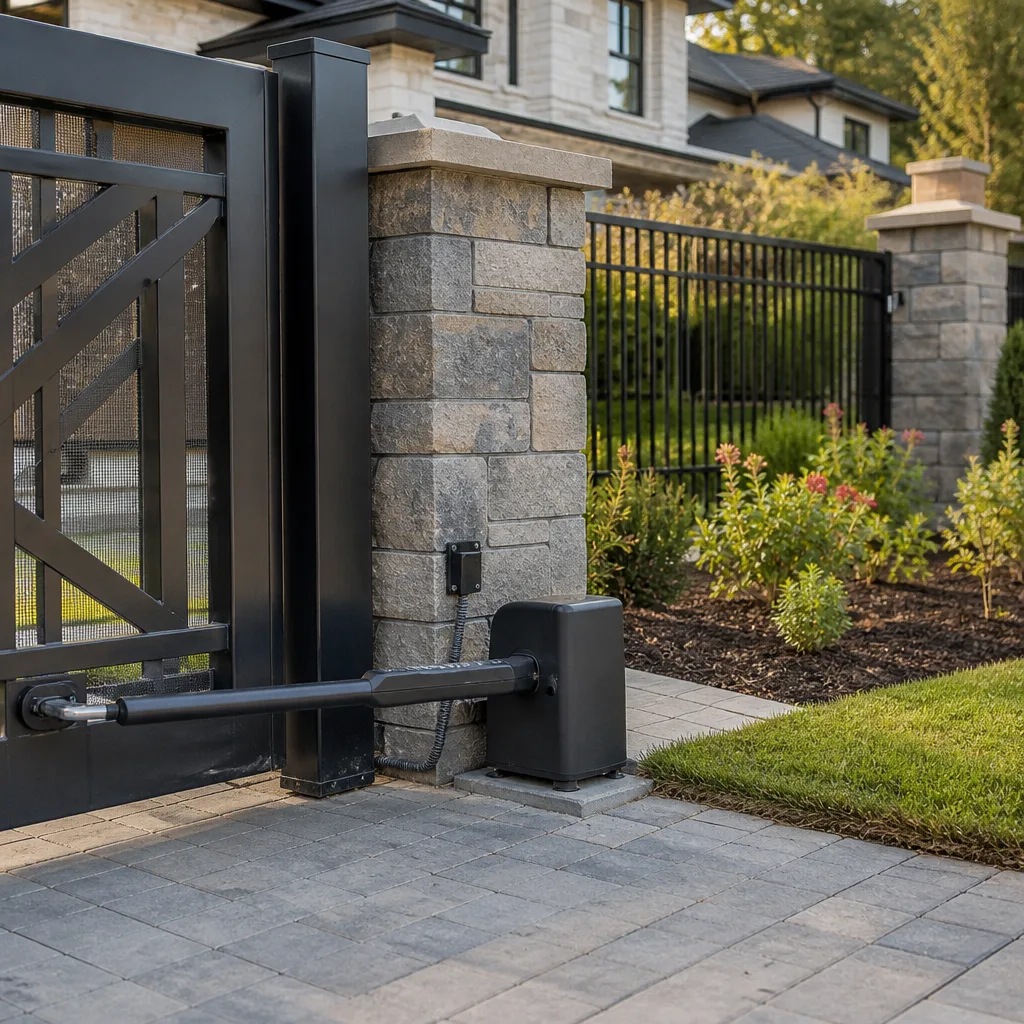
For slide gates, the release is almost always a lever or a keyed handle on the operator housing, sometimes under a cover. Pulling or turning it disengages the drive gear so the gate rolls freely along its track. For swing gates, look for a manual release lever on the arm operator or, on underground operators, a release key that lifts the drive from the pivot. On a LiftMaster or Elite arm operator, the release is typically a pull handle or a keyed release on the housing. On a Viking or Ghost Controls system, check the operator body for a labeled release lever. DoorKing commercial operators often use a keyed release for security, and the key should be somewhere the property manager can reach it fast.
Walk through this sequence once, in good weather, so it’s second nature:
- Find your operator’s manual and confirm the release type for your model.
- Locate the release on the housing and test that it moves freely.
- With the release engaged, push the gate by hand along its full travel to confirm nothing binds.
- Re-engage the release and confirm the operator takes control again.
- Store the release key or tool where you can reach it without a flashlight hunt.
If the release won’t budge or the gate still won’t move by hand, something mechanical is jammed, and forcing it can bend panels or damage the operator. That’s the moment to stop and call a gate specialist. As a Buffalo gate repair company, we can walk a property manager through the release over the phone and send a technician when the mechanism itself is the problem.
The Pre-Winter Gate Setup Checklist
The speed at which a gate can be restored after a winter failure is mostly decided before the first hard freeze. A gate that went into winter with clean tracks, fresh lubrication, and a charged battery comes back fast. A gate that went in with grit in the track and a tired battery turns a small failure into a long outage. Run this checklist in the fall, ideally before the first lasting snow, so you’re not doing it during a storm.
- Clear and inspect the track. On slide gates, sweep grit, leaves, and debris from the track so ice has nothing to grip. Check for bent sections or loose anchors.
- Lubricate hinges and moving parts with a cold-rated product. Standard grease thickens in deep cold. Use a lubricant rated for low temperatures on hinges, rollers, and latches.
- Test the manual release. Confirm it works, then re-engage it, as covered above.
- Check the battery and its age. A battery that starts the operator easily in October can fail at the first deep cold. Test it and plan for a cold-rated replacement if it’s aging.
- Inspect safety edges and sensors. Clear snow and ice from photo-eye lenses and test that the gate reverses when the safety edge is triggered.
- Look at the control board and wiring. Check for loose connections, moisture in enclosures, and any sign of rodent damage before winter drives animals to shelter.
- Clear the gate’s swing or slide path. Mark the edges of the travel so plow operators and shoveling don’t pile snow where the gate needs to move.
- Save your operator brand and model. Write down the make and model (LiftMaster, FAAC, BFT, Linear, Viking, Ghost Controls, DoorKing, Elite, Mighty Mule) so a specialist knows what they’re dealing with on the first call.
Doing this once a year is the difference between a gate that shrugs off a Buffalo winter and one that quits the first time the temperature drops. If you’d rather have a technician handle it, that’s exactly the kind of one-time visit we make, and it’s priced per job by a written estimate.
When a Plow or Vehicle Strikes Your Gate
A plow clipping a gate or a vehicle backing into a panel is one of the most common winter gate problems in Buffalo, and the response has two tracks: safety and documentation. Handle the safety checks first, then protect your insurance claim. Don’t operate the gate again until you’ve worked through both.
Start with the safety side. A struck gate can have bent hinges, a twisted track, a compromised panel, or damage to the operator arm that you can’t see from the driveway. Running the operator on a damaged gate can turn a repairable panel into a full replacement or, worse, cause a heavy swing gate to fall. The dangerous parts here are the operator’s wiring and power, heavy panels that can crush, and a slide gate that has come off its track. If the gate is hanging, leaning, or off its track, keep people and vehicles clear and leave it alone.
Then document, in this order:
- Photograph everything before you touch it. Wide shots of the whole gate, close-ups of the impact point, the track, the hinges, and the operator. Include something for scale if you can.
- Note the time, date, and what hit the gate. Get plow company or driver details if they’re available, and any witness information.
- Check for power and wiring damage. If the operator enclosure is cracked or wiring is exposed, don’t touch it. Treat it as an electrical hazard and call a professional.
- Photograph the surrounding property (driveway, snowbanks, grading) so the scene is clear.
- Call your insurer and a gate specialist, and keep the photos and notes together. A written assessment from a gate specialist helps support the claim.
We can assess strike damage and give you a written estimate you can hand to your insurer. Call (877) 283-9515 for a free estimate. We answer 24/7, with fast dispatch from 7am to 7pm, Sunday through Friday.
Battery Backup for Gate Operators in Buffalo Cold
A gate operator battery that works fine in October can fail at ten below zero, because cold cuts a battery’s usable capacity. That’s why battery backup has to be planned for cold, not just for convenience. A standard battery sized for mild weather can leave a Buffalo gate dead exactly when the power is out and the temperature is lowest, which is the worst possible combination.
Two things matter for cold-weather backup. First, the battery’s chemistry and rating: a battery rated for cold cranking and for low-temperature operation holds up far better than a bargain unit. Second, where the battery lives. An operator enclosure that’s exposed to wind and drifting snow runs colder than one that’s sheltered, so placement affects how much capacity you actually get. As batteries age, their cold-weather margin shrinks first, which is why an old battery can seem fine until the first real freeze and then let you down.
What to do before winter:
- Check the battery’s age and test it. If it’s getting on in years, plan a replacement before the cold arrives rather than after a failure.
- Choose a cold-rated battery for your operator brand. The right spec depends on the operator (a Ghost Controls or Mighty Mule residential unit differs from a DoorKing commercial system), so match it to the model.
- Confirm the backup actually engages. Test that the gate runs on battery when mains power is off, not just that the battery holds a charge.
- Keep the enclosure clear. Don’t let snow pile against the operator housing where it adds cold and moisture.
If your gate has no battery backup at all, that’s the single biggest preparedness gap to close. Our technicians have up to 15 years of experience with these systems, and we can spec the right cold-rated backup for your operator. For a deeper look at the electronic side of things, see our guide to electric gate repair.
Choosing a 24/7 Gate Specialist vs. a Handyman
A handyman who advertises emergency service and a dedicated gate specialist are not the same thing, and the difference shows up on the first call. A generalist often arrives without gate-specific parts, diagnoses by trial and error, and may recommend replacing a unit simply because the brand is unfamiliar. A specialist works gate systems every day, recognizes brand-specific faults quickly, and repairs what you already own.
Here’s how to tell them apart before you need one:
- Ask what brands they work on. A genuine specialist can name the systems they know (LiftMaster, FAAC, BFT, Linear, Viking, Ghost Controls, DoorKing, Elite, Mighty Mule) and diagnose by brand. A generalist will say “we’ll figure it out.”
- Ask whether they handle both mechanical and electronic failures. A good specialist diagnoses a bent hinge and a failed control board in the same visit.
- Ask about part availability. A specialist keeps gate-specific components in reach rather than ordering blind after the fact.
- Ask if they cover both residential driveways and commercial access control. A commercial DoorKing system needs different knowledge than a residential swing gate.
- Watch for pressure to replace. A specialist repairs what’s there and only recommends replacement when the repair genuinely doesn’t make sense.
We’re a gate repair company and nothing else, and every call, tool, and technician is focused on gates. That focus is what shortens diagnostic time and improves repair accuracy. If you want a specialist who knows your brand the first time, call (877) 283-9515 for a free estimate.
What to Do in the First Ten Minutes of a Failure
The first ten minutes after a gate fails set the tone for everything that follows. Whether it’s stuck open in a storm, dead in a freeze, or damaged by a plow, a calm, ordered response keeps you safe and gets the gate working again sooner.
- Make the property safe first. If the gate is stuck open, secure the area and, if you can, use the manual release to close it. If anything looks damaged or hanging, keep clear.
- Don’t force the operator. Repeatedly running an operator against a jam or a frozen part can burn out the motor or control board and turn a cheap fix into an expensive one.
- Find the model and brand. Check the operator label and note it down. A specialist can start diagnosis from the model alone.
- Check the obvious: power and battery. Confirm the operator has power, and if it has battery backup, check whether it’s engaging.
- Call a gate specialist. Call (877) 283-9515 with the brand, model, and a description of the symptom. We answer 24/7, and a call outside dispatch hours is booked into the next opening, Sunday through Friday, 7am to 7pm.
Having this sequence written down and posted near the gate is real preparedness. In a storm, you won’t be inventing it on the spot.
Common Mistakes to Avoid
- Forcing a frozen gate open or shut. Prying a gate iced into place can bend panels or strip the operator. Clear the ice gently and use the manual release instead.
- Running the operator on a damaged gate after a plow strike. A bent gate that looks fine can fold under power. Stop and have it checked before restoring operation.
- Leaving a standard battery in place through winter. A battery that works in October can fail in deep cold. Plan a cold-rated replacement before the freeze.
- Never testing the manual release. Discovering the release is seized in the middle of a storm is the worst time to find out. Test it in good weather.
- Calling a general handyman for a brand-specific fault. A handyman unfamiliar with your operator brand may misdiagnose and push a replacement you don’t need.
- Skipping the fall checklist. Allowing grit to build in the track and snow to pile against the enclosure turns small problems into winter failures.
- Documenting storm or strike damage after the fact. Take photos before you touch anything, so an insurance claim is backed by clear evidence.
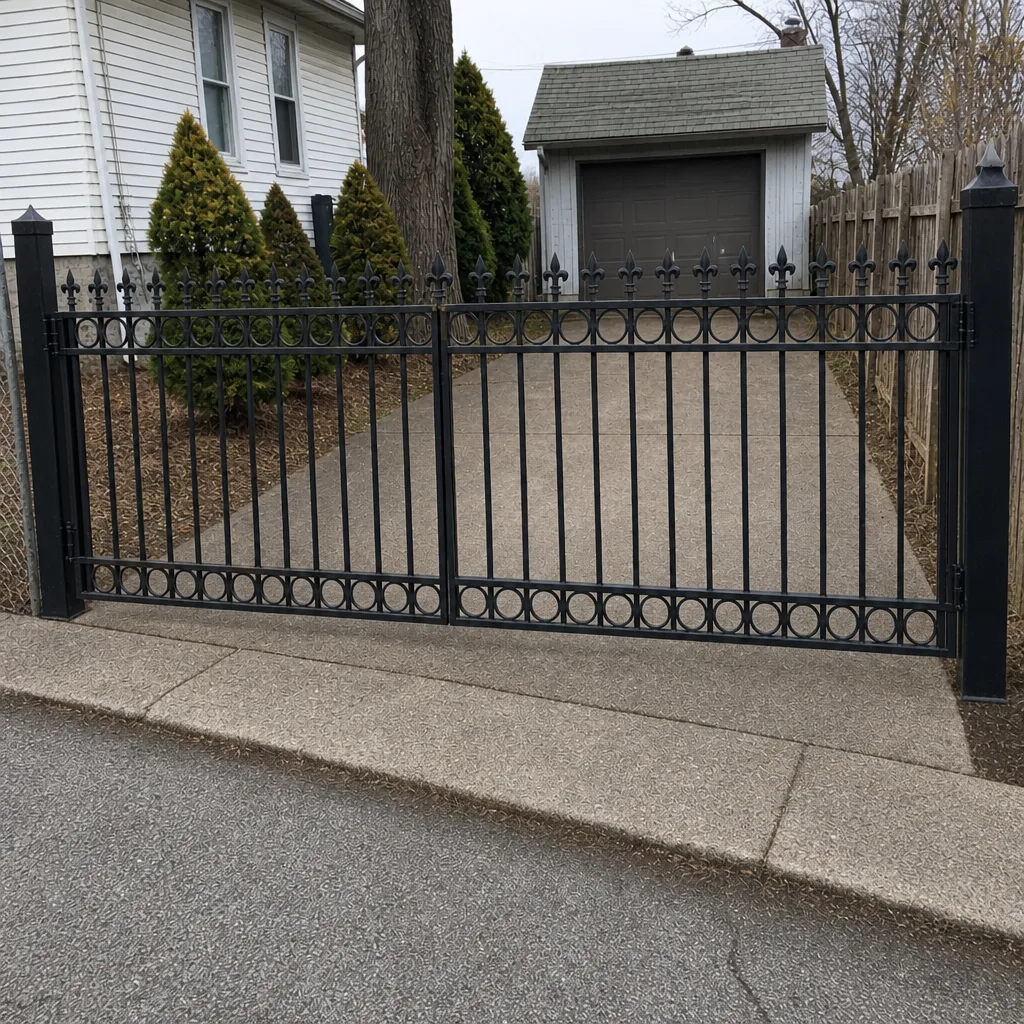
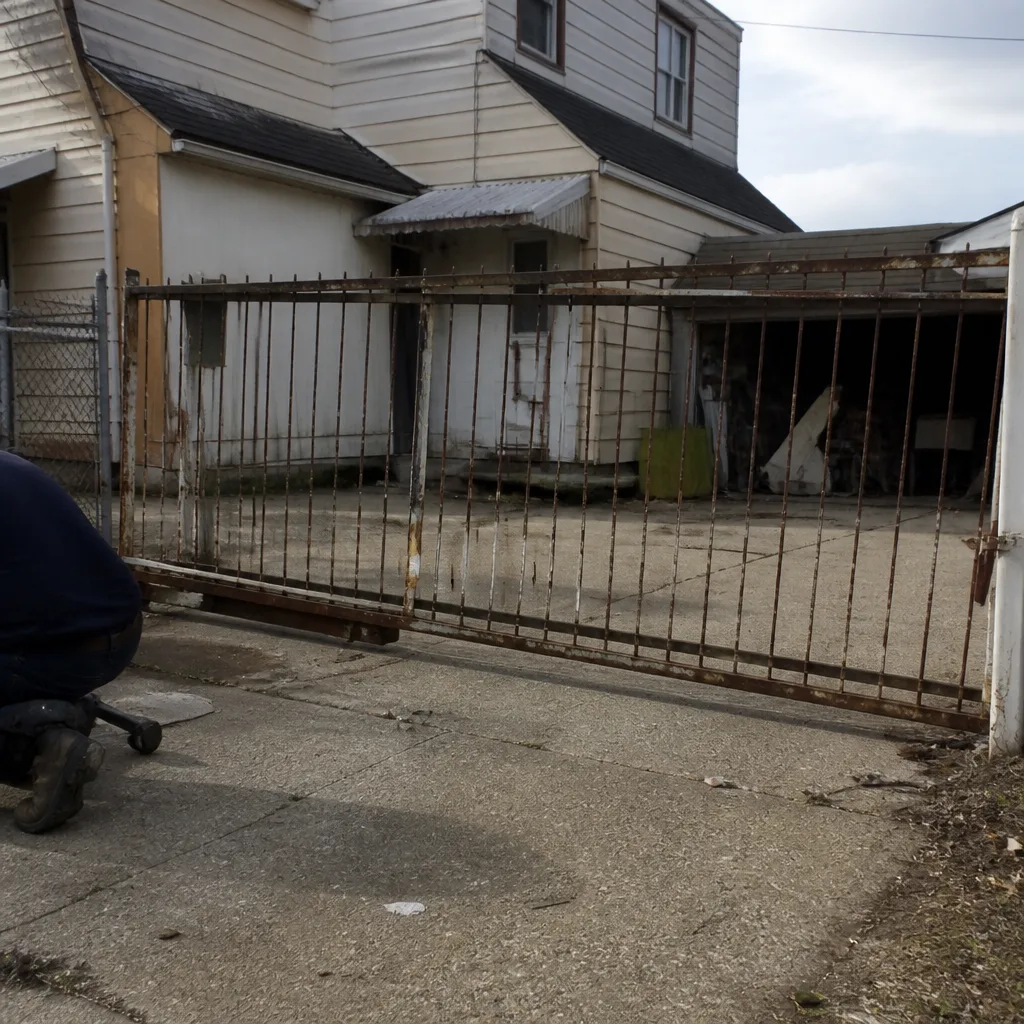
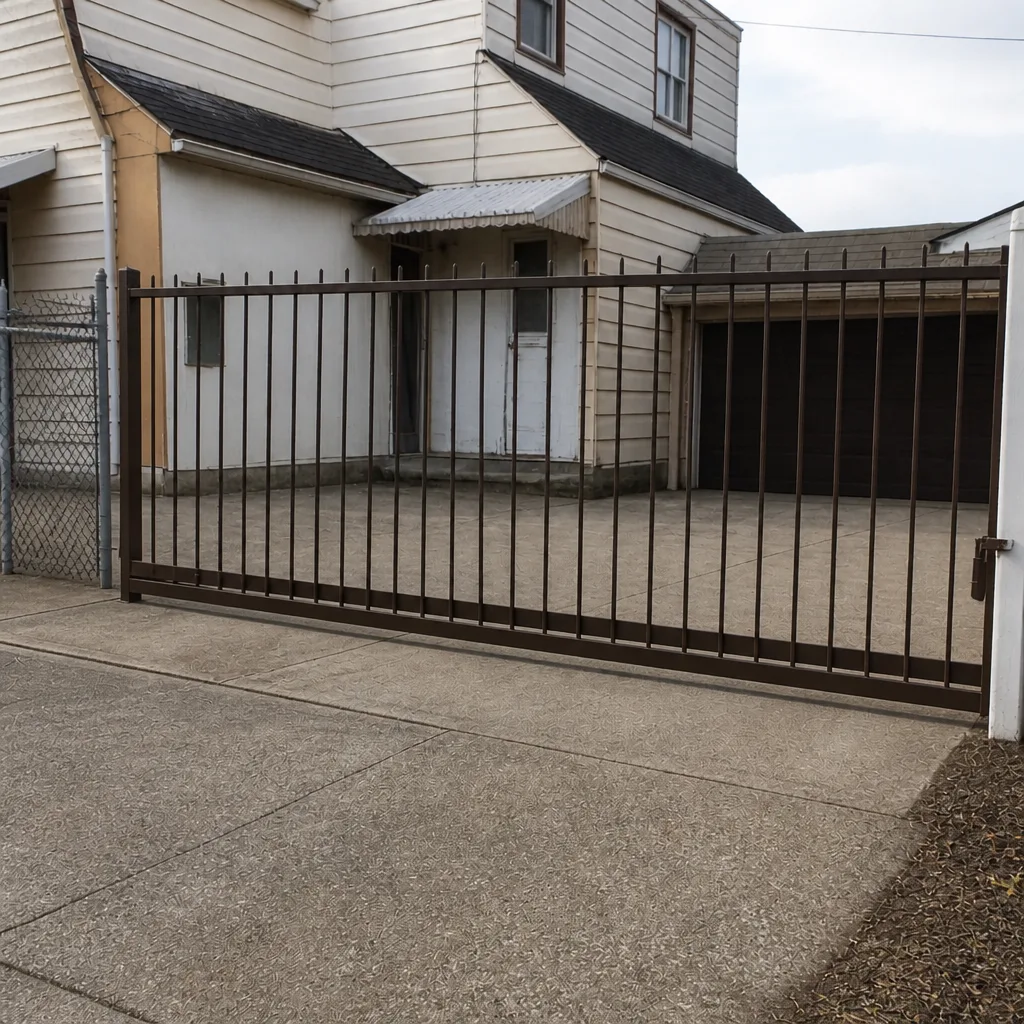
See the difference
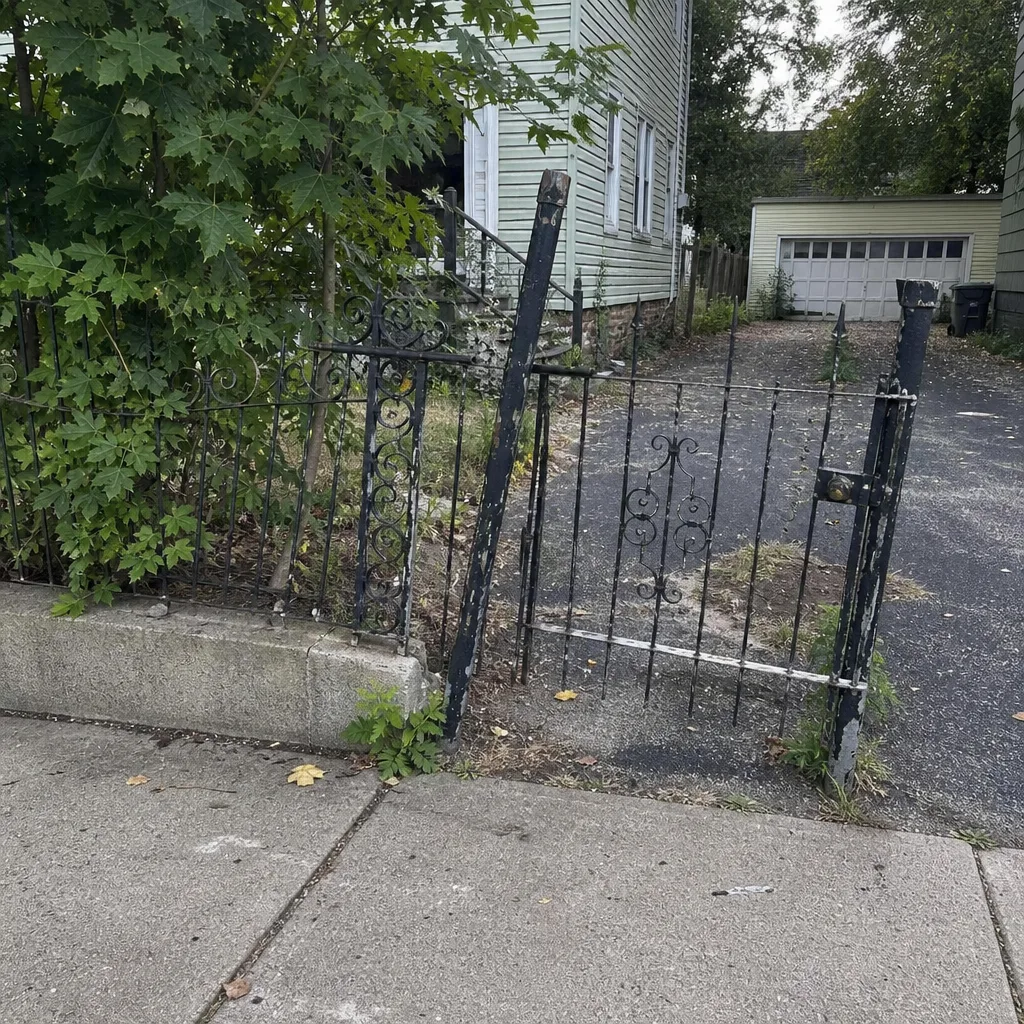 Before
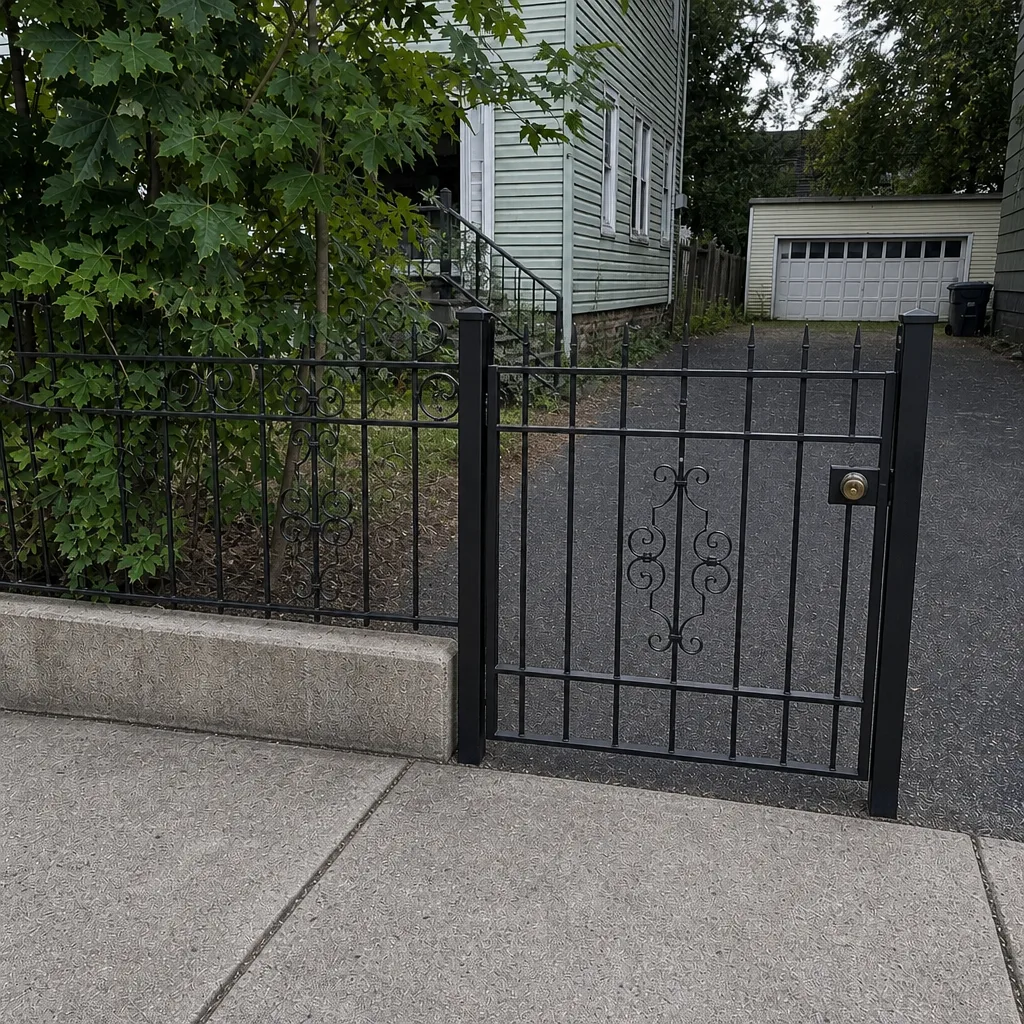 After
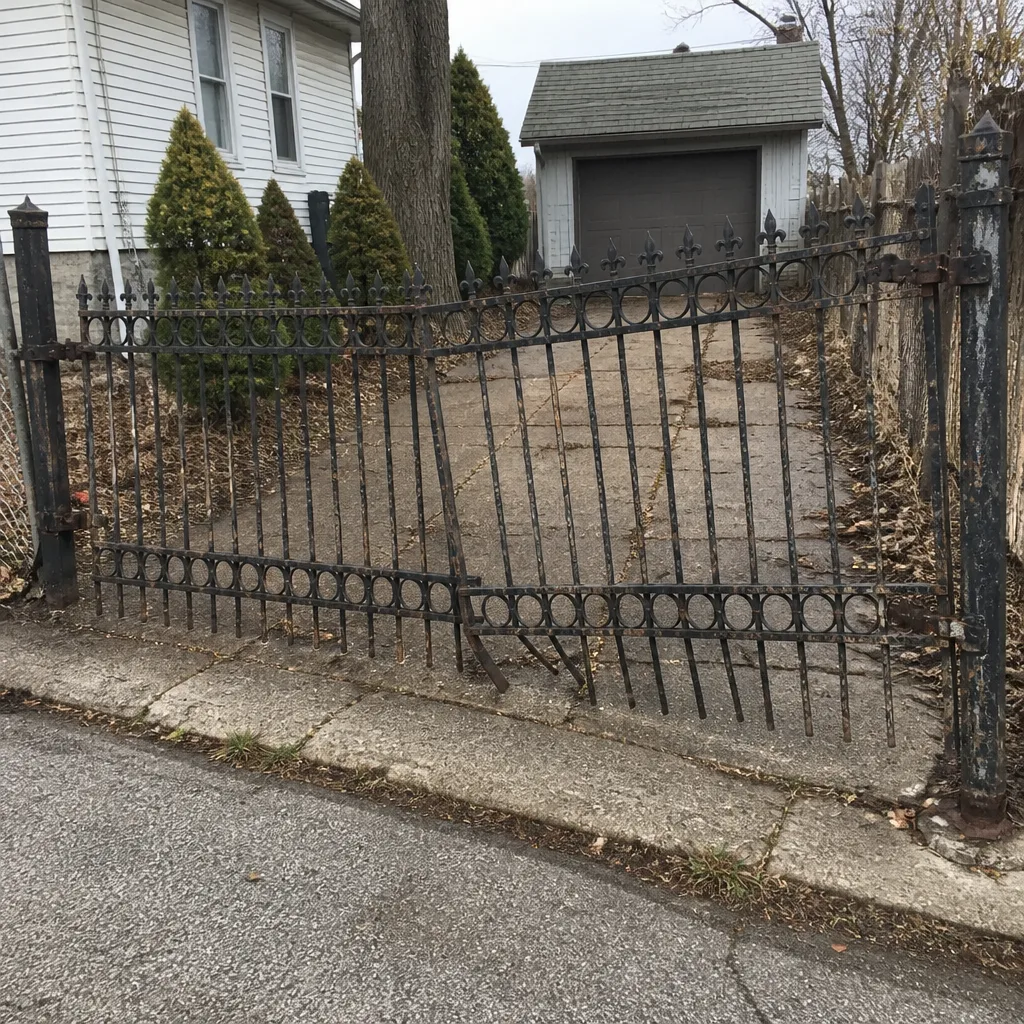 Before
 After
 Before
 After
When to Call a Professional
Call a professional when the failure involves anything you can’t safely handle yourself. That includes a gate hanging or off its track, a damaged operator arm, exposed or damaged wiring, or a control board that won’t respond. Call if the manual release won’t move or the gate stays stuck after you’ve cleared ice and snow. Call after any vehicle or plow strike, even if the gate seems fine, because hidden damage can show up later. And call if you simply don’t know your operator brand or model, because that knowledge is where a specialist starts. Buffalo Gate Repair offers free estimates in Buffalo – call (877) 283-9515. We answer 24/7, with fast dispatch from 7am to 7pm, Sunday through Friday.
Frequently Asked Questions
Every operator has a manual release: a lever or keyed handle on the housing for slide gates, or a release lever or key on the arm or underground operator for swing gates. Find yours in good weather, test that it moves, and store the key or tool where you can reach it fast. If it won’t move, call a specialist rather than forcing it.
Cold causes both mechanical and electrical failures at once. Grease thickens, batteries lose cold-weather capacity, and control boards can misbehave below freezing. The most common culprit is an aging battery that seemed fine in October but failed at the first deep freeze. Call (877) 283-9515 for a diagnosis.
Photograph everything before you touch it, note the time and what hit the gate, and don’t operate the gate again until it’s been checked. If wiring or the operator enclosure is damaged, treat it as an electrical hazard and keep clear. Then call your insurer and a gate specialist for a written assessment.
Yes. A battery that works in mild weather can fail at ten below zero, so cold-weather backup should be matched to your operator brand and model. A technician can spec the right cold-rated battery and test that the backup engages when mains power drops.
Sometimes, but a generalist often arrives without gate-specific parts and diagnoses by trial and error. A dedicated gate specialist diagnoses by brand and repairs both mechanical and electronic failures in one visit. If your gate is brand-specific, call (877) 283-9515 for a specialist.
Restoration speed depends mostly on your pre-winter setup: a clean track, a healthy cold-rated battery, and a tested manual release all shorten the outage. We answer 24/7, and a call outside dispatch hours is booked into the next opening, Sunday through Friday, 7am to 7pm.
The Bottom Line
Buffalo gate emergencies are predictable, and that’s good news. The gate stuck open in a lake-effect storm, the operator that dies in a freeze, the gate clipped by a plow: each has a known cause and a known response. Prepare by finding and testing your manual release, running the fall checklist, fitting a cold-rated battery backup, and knowing how to document damage before you touch anything. When a failure goes beyond what you can safely handle, call a dedicated gate specialist who knows your brand. Call (877) 283-9515 for a free estimate. We answer 24/7, with fast dispatch from 7am to 7pm, Sunday through Friday.
Written by the team at Buffalo Gate Repair.